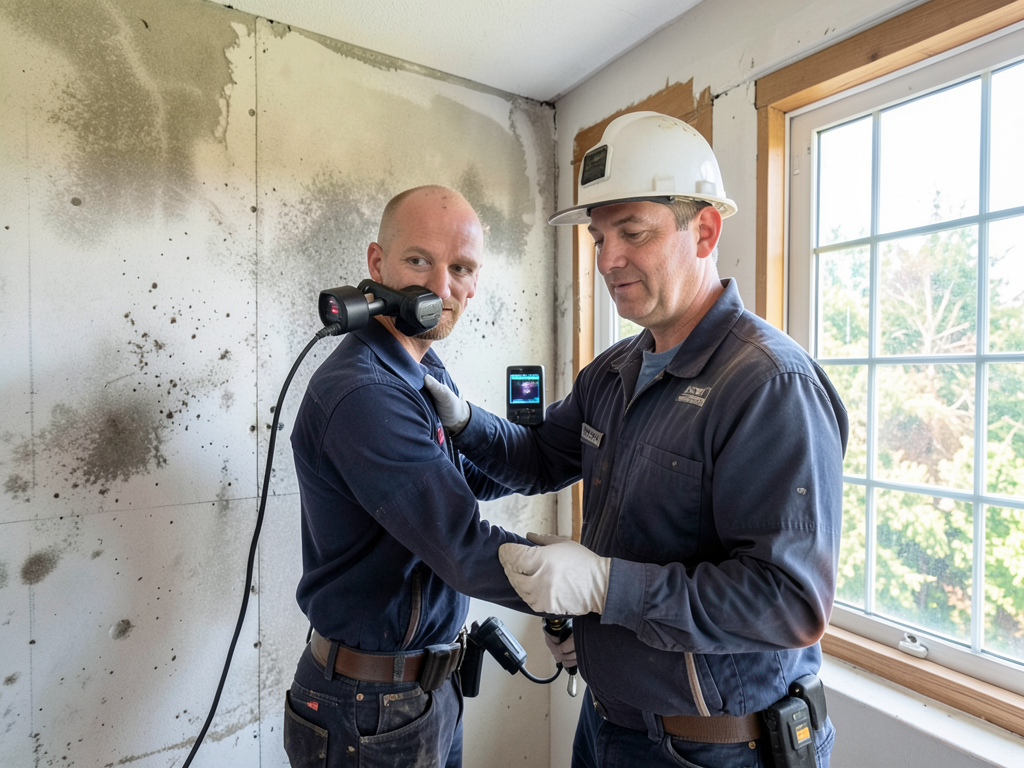







Jacksonville sits in a humid subtropical zone where summer humidity regularly exceeds 75 percent. This ambient moisture works against drying efforts and accelerates mold colonization. After water damage, mold spores begin germinating on wet organic materials within 24 to 48 hours. That window shrinks in summer heat. A flooded room in July can develop visible mold growth in under 36 hours if not properly dried. Coastal properties near Jacksonville Beach, Atlantic Beach, and Neptune Beach face additional challenges from salt air, which increases corrosion risk on metal fixtures and fasteners exposed during water damage. Urgent water mitigation is not optional in this climate. It is the difference between a drying bill and a mold remediation project.
Local expertise matters because Jacksonville building types vary dramatically by neighborhood and era. Historic Springfield homes feature pier-and-beam foundations with crawl spaces prone to standing water. Riverside bungalows have original plaster walls that require different drying techniques than modern drywall. Southside suburban construction from the 1970s and 1980s often used particle board subflooring that degrades rapidly when wet. Newer Nocatee and Julington Creek properties have engineered wood products with specific moisture tolerances. A crew unfamiliar with Jacksonville construction makes costly mistakes. We have dried properties in every Jacksonville neighborhood and understand how local building methods affect water damage restoration. That knowledge protects your investment and speeds insurance approval.