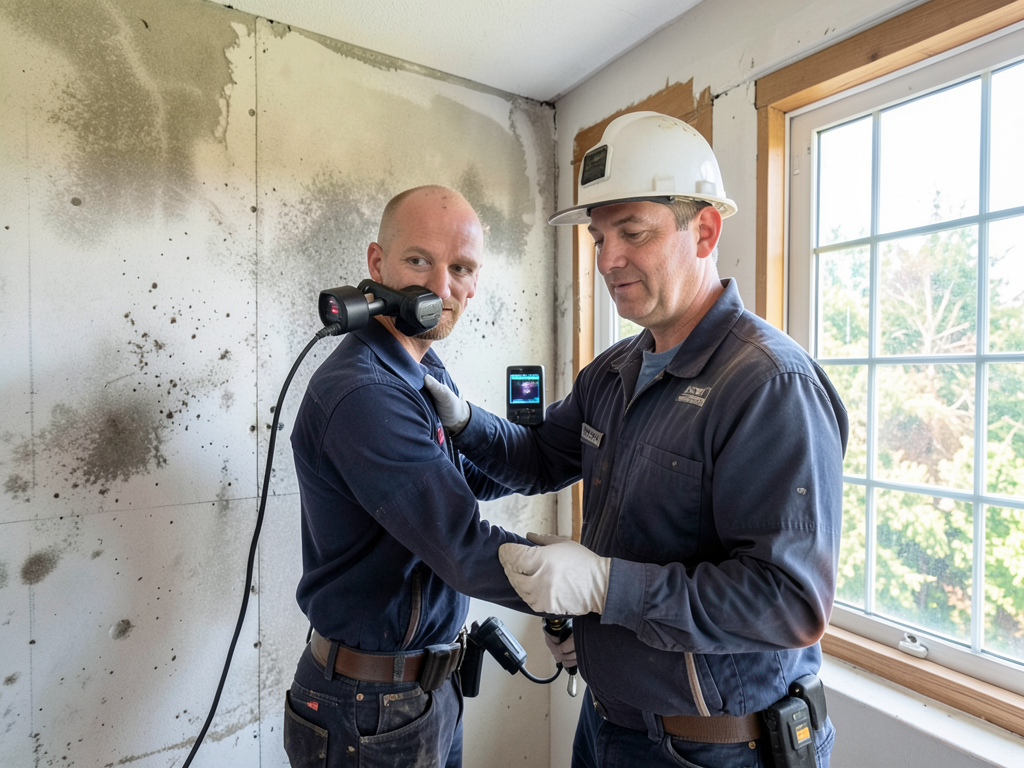






Jacksonville's location at the mouth of the St. Johns River creates year-round humidity levels that hover between 70 and 85 percent. When water intrudes into your retail space, whether from a roof leak, burst pipe, or storm surge, the ambient humidity slows natural evaporation. This extends drying time and increases the risk of mold colonization. Coastal wind-driven rain also creates unique penetration patterns in older masonry buildings common in neighborhoods like Riverside and Springfield. Water enters through mortar joints, window frames, and parapet walls, then migrates downward through wall cavities. You may see staining on your interior walls days after the rain stops. This delayed manifestation complicates insurance claims and requires specialized moisture mapping to identify the full extent of saturation.
Florida Building Code and Jacksonville's floodplain regulations create specific compliance requirements for commercial water damage restoration. If your property sits in a designated flood zone, any reconstruction work must meet current base flood elevation standards. This can trigger costly upgrades if your building predates current code adoption. We work with local building officials and understand Jacksonville's permitting process. We also know which insurance carriers operate in the Jacksonville market and how they handle commercial water claims. This local knowledge reduces delays and helps you avoid compliance issues that can stall reopening.