



Menu

Peeling Paint & Wallpaper in Jacksonville – Expert Diagnosis of Hidden Water Damage Before It Spreads

Jacksonville's humid climate and sudden thunderstorms create the perfect conditions for moisture intrusion that shows up as peeling paint and wallpaper, and we pinpoint the source before cosmetic damage becomes a structural nightmare.

Slider Image 1
Slider Image 2
Slider Image 3
Slider Image 4
Slider Image 5
Slider Image 7
Slider Image 8
Slider Image 9
Slider Image 10
Slider Image 11

Why Your Walls Are Failing in Jacksonville's Climate

You walk past that bubbling paint every day. Maybe you notice the wallpaper lifting in the corner of your dining room. You tell yourself it's just cosmetic, something to fix later.

It's not cosmetic. It's a symptom.

Jacksonville sits in a humidity belt that averages 74 percent year-round. Add in our position along the St. Johns River and proximity to the Atlantic, and you have constant moisture pressure against every building surface. When paint starts blistering or wallpaper begins peeling, water has already penetrated the substrate. The adhesion failure you see on the surface started behind the wall days or weeks ago.

Blistering wall paint happens when moisture vapor pushes through from behind, breaking the bond between paint and drywall. Flaking paint signals that the substrate itself has become compromised. Loose wallpaper means the adhesive has been saturated and weakened. These are not paint problems. They are water problems.

Most Jacksonville homes built before 2000 lack adequate vapor barriers. Combine that with aging HVAC systems that struggle to dehumidify, and interior moisture builds. A slow roof leak, a pinhole pipe failure in the wall cavity, or even condensation from temperature differentials can trigger widespread coating failure.

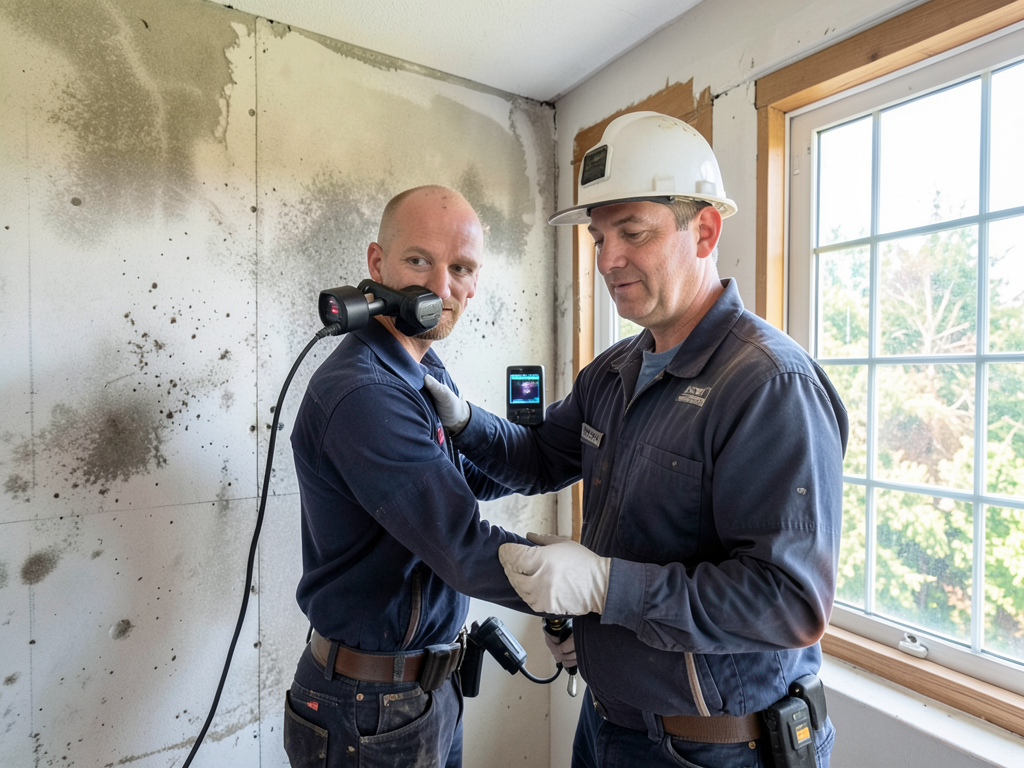
The longer you wait, the more expensive the fix becomes. What starts as peeling paint becomes mold colonization, then drywall replacement, then framing rot. Fortress Water Damage Restoration Jacksonville approaches these symptoms as diagnostics, not decoration failures. We find the moisture source, measure the saturation levels with thermal imaging and moisture meters, and solve the problem at the root.

Why Your Walls Are Failing in Jacksonville's Climate
How We Diagnose and Remediate the Real Problem

How We Diagnose and Remediate the Real Problem

Paint and wallpaper do not fail on their own. They fail because water found a path it should not have taken. Our process is investigative, not superficial.

We start with moisture mapping using infrared thermal cameras and pin-type moisture meters. Bubbling paint creates a thermal signature because trapped moisture changes surface temperature. We scan the entire affected wall and adjacent areas to trace the moisture back to its entry point. If your bathroom wallpaper is lifting, we check the shower pan integrity, the drain boot seal, and the vent fan ducting for condensation leaks.

Once we locate the source, we document the saturation levels in the drywall, insulation, and framing. Drywall should read below 15 percent moisture content. Anything above 18 percent supports microbial growth. We use this data to determine if materials need removal or if controlled drying will suffice.

For active leaks, we stop the water immediately. For passive moisture intrusion like condensation or vapor drive, we eliminate the condition causing it. That might mean sealing a crawl space vent, upgrading attic ventilation, or repairing a compromised building envelope.

We then extract moisture using commercial dehumidifiers and air movers positioned to create negative pressure drying. This pulls moisture out of the wall cavity without opening it unless saturation levels or visible mold require it. We monitor daily with moisture readings until all materials return to dry standard.

Only after complete drying do we address the cosmetic damage. Applying new paint over wet drywall just resets the clock on failure. We verify dry conditions, treat any microbial contamination with antimicrobial agents, prime with stain-blocking sealer, and restore the surface to pre-loss condition.

What Happens When You Call About Peeling Paint

Peeling Paint & Wallpaper in Jacksonville – Expert Diagnosis of Hidden Water Damage Before It Spreads
01

Initial Moisture Assessment

We arrive with thermal imaging cameras and calibrated moisture meters to scan all affected areas. You show us the peeling paint or loose wallpaper, and we map the moisture field behind it. This reveals whether the problem is localized or part of a larger intrusion pattern. We document baseline moisture readings in adjacent unaffected areas for comparison and identify the most likely water source based on saturation distribution.
02

Source Identification and Containment

Once we know where the moisture is concentrated, we trace it to the entry point. That could be a roof penetration above, a supply line leak inside the wall, or exterior water intrusion through failed flashing. We stop active water flow immediately and isolate the affected area with plastic sheeting if needed to prevent cross-contamination. For condensation issues, we identify the thermal bridge or ventilation deficiency allowing it to form and plan corrective measures.
03

Controlled Drying and Restoration

We deploy dehumidifiers and air movers calibrated to the cubic footage of the drying zone. High-velocity airflow across wall surfaces accelerates evaporation while dehumidifiers pull vapor from the air. We monitor moisture levels daily, adjusting equipment placement as readings drop. When materials reach dry standard and pass final inspection, we remove equipment, treat surfaces with antimicrobial solution if needed, and coordinate finish restoration to return your walls to their original appearance.

Why Jacksonville Residents Trust Fortress for Hidden Moisture Problems

Most painting contractors will scrape your blistering wall paint, apply primer, and repaint. Six months later, the bubbling returns because nobody fixed the leak. We are not painters. We are water damage specialists who understand that cosmetic failure is always a clue to a deeper problem.

Jacksonville's building stock ranges from historic Riverside bungalows with plaster walls to Southside subdivisions with modern drywall and vapor barriers. Each construction type responds differently to moisture intrusion. Plaster over wood lath holds water longer than drywall and requires different drying strategies. Homes near the Intracoastal or in flood zones face higher hydrostatic pressure and need foundation moisture management.

We have worked in every Jacksonville neighborhood from Springfield to Mandarin, and we understand how local construction methods and environmental factors create specific vulnerabilities. A 1920s Avondale home with single-pane windows will have different condensation patterns than a 2010 Nocatee build with Low-E glass. We adjust our diagnostic approach accordingly.

When you call Fortress Water Damage Restoration Jacksonville, you get a team trained in forensic moisture investigation, not just surface repair. We carry the equipment to see inside your walls without opening them. We understand the relationship between dew point, relative humidity, and vapor drive. We know that flaking paint in a bathroom usually points to a shower leak, while lifting wallpaper in a bedroom often indicates an exterior envelope breach.

We also work directly with your insurance carrier. Most homeowner policies cover sudden and accidental water damage. If a pipe leaked inside your wall and caused the paint to peel, that is typically a covered event. We document the loss with photos, moisture readings, and a detailed scope of damage to support your claim.

What to Expect When We Address Your Wall Damage

Rapid Response Availability

We dispatch technicians to Jacksonville properties within hours of your call. Peeling paint might seem non-urgent, but the water causing it is actively degrading your building materials every hour it remains. We prioritize diagnostic visits because early intervention prevents exponential damage growth. Our teams work evenings and weekends to accommodate your schedule. Most initial assessments take 45 to 90 minutes depending on the size of the affected area and complexity of the moisture source. You get a written report with moisture readings and our findings the same day.

Comprehensive Moisture Investigation

You pay for answers, not guesses. We use FLIR thermal cameras that detect temperature differentials as small as 0.1 degrees, revealing wet areas invisible to the eye. Pin-type and pinless moisture meters give us exact moisture content percentages in drywall, wood, and concrete. We inspect attics, crawl spaces, and wall cavities to trace the water path. If the source is not immediately obvious, we perform dye testing on plumbing fixtures or conduct blower door tests to find air leaks that allow moisture infiltration. You receive documentation of all findings with annotated thermal images.

Complete Drying and Verification

We do not declare a job complete based on time elapsed. We declare it complete based on verified dry readings. Our equipment stays in place until every affected material measures below 15 percent moisture content. We generate daily logs showing moisture reduction trends. For wall cavities, we use penetrating meters to check framing moisture without removing drywall. Once all readings pass, we conduct a final thermal scan to confirm no hidden pockets remain. You get a certificate of completion with final moisture documentation that satisfies insurance requirements and protects your property value.

Post-Remediation Monitoring Options

After we restore your walls, we offer optional follow-up inspections at 30 and 90 days to verify the problem has not returned. This is particularly valuable if the moisture source was environmental rather than a discrete leak. We also provide humidity monitoring recommendations and can install whole-home dehumidification systems if your HVAC system cannot maintain proper indoor humidity levels. Jacksonville's climate makes humidity control critical for long-term wall surface integrity. We educate you on early warning signs so you can catch future issues before they escalate.

Frequently Asked Questions

You Have Questions,
We Have Answers

Why is my paint peeling like wallpaper? +

Paint peeling like wallpaper signals a moisture problem or poor adhesion. In Jacksonville, high humidity and water intrusion from storms are common culprits. When moisture gets trapped behind paint, it breaks the bond between the paint and the surface. This often happens after water damage, roof leaks, or plumbing failures. Poor surface prep during the original paint job also causes this. The paint lifts in sheets because water has migrated across a wide area beneath the coating. You need to identify and fix the moisture source first, or the problem will return after repainting.

What to do if paint is peeling off the wall? +

First, stop the moisture source. Check for leaks, flooding, or condensation issues common in Jacksonville homes. Scrape off all loose paint using a putty knife or paint scraper. Sand the edges smooth so the transition is not visible. Let the wall dry completely, which can take several days in humid conditions. Prime the bare areas with a moisture-blocking primer. Then repaint with quality exterior or interior paint designed for high-humidity climates. If you see widespread peeling or suspect hidden water damage behind walls, call a water damage restoration specialist to inspect before repainting.

Is it cheaper to paint or peel and stick wallpaper? +

Painting is cheaper upfront than quality peel-and-stick wallpaper. A gallon of good paint covers roughly 400 square feet and costs less than premium wallpaper per square foot. Peel-and-stick can run significantly more per square foot, especially for durable products. However, both options fail if you do not fix the root cause. In Jacksonville, moisture from humidity, leaks, or past flooding will destroy either finish. If your walls have peeling paint from water damage, you must dry out and repair the substrate first. Skipping this step wastes money on both paint and wallpaper.

Can I just paint over peeling paint? +

No. Painting over peeling paint traps the problem and guarantees failure. The new coat will not bond properly and will peel along with the old layers. You must scrape off all loose material first. In Jacksonville, moisture issues cause most peeling, so painting over it without fixing the source invites mold growth and further damage. Remove the compromised paint, sand smooth, prime bare spots, and ensure the surface is dry before applying fresh paint. Shortcuts here cost more in the long run, especially if hidden water damage worsens behind the fresh coat.

What does peeling paint indicate? +

Peeling paint indicates moisture intrusion, poor surface prep, or age-related failure. In Jacksonville, the number one cause is water damage from leaks, flooding, hurricanes, or chronic humidity. When water gets behind paint, it destroys adhesion. Peeling can also signal mold growth on drywall or wood beneath the surface. Check for soft spots, discoloration, or musty odors. If the peeling is widespread or you have had recent water events, inspect the wall cavity for hidden damage. Ignoring peeling paint allows mold, rot, and structural issues to develop behind the finish.

Will Kilz stop peeling paint? +

Kilz primer will not stop paint that is already peeling. It blocks stains and seals surfaces, but it cannot reattach loose paint. You must scrape off all peeling material first. Once the surface is clean, dry, and stable, Kilz can prevent stains from bleeding through and improve adhesion for the topcoat. In Jacksonville, choose a moisture-blocking or mold-resistant Kilz formula to handle high humidity. Kilz works best as part of proper prep, not as a magic fix for active moisture problems. If water is still entering the wall, even Kilz will fail.

What is the difference between flaking and peeling paint? +

Flaking is surface-level deterioration where small chips or curls break off the top layer of paint. Peeling involves larger sections lifting away from the substrate, often in sheets. Flaking is usually caused by age, UV exposure, or minor moisture. Peeling indicates deeper adhesion failure, typically from trapped moisture or poor prep. In Jacksonville, peeling is more common due to high humidity and water damage from storms. Both need scraping and repainting, but peeling often requires investigating the wall behind the paint to rule out hidden water damage or mold.

Should I scrape off all the peeling paint? +

Yes. Remove all loose, peeling paint before repainting. Scrape until you reach paint that is firmly bonded to the surface. Any loose material left behind will cause the new coat to fail. Use a putty knife, scraper, or wire brush. Sand the edges smooth to feather the transition. In Jacksonville, peeling is often widespread due to moisture, so you may need to strip entire walls. If the substrate beneath feels soft, crumbly, or shows water stains, you have underlying damage that requires repair before priming and painting.

Can peeling paint be fixed? +

Yes, but only if you fix the cause. Scrape off all peeling paint, repair any water damage, and ensure the surface is dry. Sand smooth, prime with a moisture-blocking product, and repaint. In Jacksonville, most peeling results from water intrusion, so inspect for leaks, flooding, or humidity issues. If you skip the moisture fix, the peeling will return. Severe cases with mold, rot, or saturated drywall may need professional water damage restoration. Surface repairs alone do not solve structural moisture problems hidden behind walls.

What is the cost of painting a 1000 sq ft house? +

Painting a 1000 square foot house varies widely based on prep work, paint quality, and condition. In Jacksonville, homes with peeling paint from water damage cost more because you pay for scraping, repairs, priming, and mold remediation before any paint goes on. If the peeling is severe or you find hidden moisture damage, expect the scope to grow. Get multiple quotes from contractors who inspect the walls, not just measure square footage. Skipping proper prep to save money guarantees the paint fails again within months.

How Jacksonville's River Proximity and Hurricane Season Accelerate Wall Coating Failures

Jacksonville sits at the convergence of the St. Johns River and the Atlantic Ocean, creating year-round atmospheric moisture levels that stress building envelopes. Homes in Riverside, San Marco, and Ortega face direct river humidity. Properties east of the Intracoastal get salt-laden air that accelerates corrosion of flashing and fasteners, creating new leak points. During hurricane season, wind-driven rain penetrates siding and window assemblies that would shed water under normal conditions. The result is episodic moisture intrusion that saturates wall cavities, breaks paint adhesion, and compromises wallpaper bonds before you notice exterior damage.

Jacksonville's rapid growth has created a mix of construction quality and age. Homes in newer developments like Nocatee often have Tyvek house wrap and proper flashing details. Older neighborhoods like Springfield or Murray Hill may have little to no moisture barriers. Understanding these local building practices matters when diagnosing why your walls are failing. We have worked with every vintage of Jacksonville construction and know which failure modes to expect. That local knowledge speeds diagnosis and prevents unnecessary demolition. We also understand local permitting requirements if structural repairs become necessary during remediation.

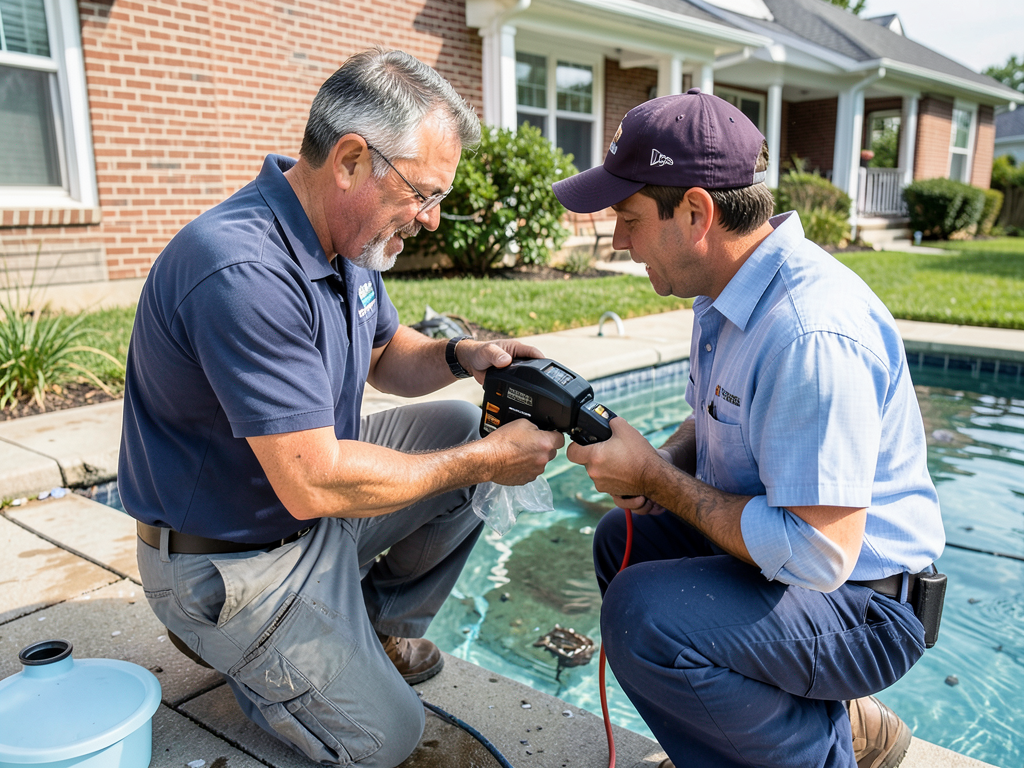
Water Damage Restoration Services in The Jacksonville Area

Conveniently located to serve the entire region, Fortress is committed to reaching you swiftly when water damage strikes. Our centralized presence allows us to deploy rapid response teams across the service area, ensuring that expert assistance is always just a call away. Explore our location and service radius to see how we can provide immediate, professional water damage restoration solutions directly to your doorstep, minimizing disruption and expediting recovery.

Address:
Fortress Water Damage Restoration Jacksonville, 10752 Deerwood Park Blvd Suit 100, Jacksonville, FL, 32256

Additional Services We Offer

Our news updates

Latest Articles & News from The Blogs

Why Your New Bidet Attachment Might Be Slowly Flooding Your Girvin Bathroom Floor Your bathroom floor feels damp and you…

Why Your New Bidet Attachment Might Be Slowly Flooding Your Girvin Bathroom Floor

Why Your New Bidet Attachment Might Be Slowly Flooding Your Girvin Bathroom Floor Your bathroom floor feels damp and you…

How to Properly Shut Down Your Plumbing Before Leaving Isle of Palms for the Summer

How to Properly Shut Down Your Plumbing Before Leaving Isle of Palms for the Summer Summer vacation should mean relaxation…

The Hidden Meaning Behind Peeling Wallpaper and Bubbling Paint in Lackawanna Homes

The Hidden Meaning Behind Peeling Wallpaper and Bubbling Paint in Lackawanna Homes Peeling wallpaper and bubbling paint in Lackawanna homes…

Contact Us

Peeling paint will not fix itself. The water causing it is spreading right now. Call Fortress Water Damage Restoration Jacksonville at (904) 839-6500 for a professional moisture assessment. We find the source, stop the damage, and restore your walls the right way.