




Menu

Water Stains on Drywall in Jacksonville – Expert Diagnosis and Permanent Moisture Remediation

Jacksonville homeowners dealing with water stains on drywall get comprehensive moisture detection, structural drying, and complete restoration that prevents mold growth and recurring damage.

Slider Image 1
Slider Image 2
Slider Image 3
Slider Image 4
Slider Image 5
Slider Image 7
Slider Image 8
Slider Image 9
Slider Image 10
Slider Image 11

Why Water Stains Appear on Jacksonville Drywall

You see brown water spots on walls in your bedroom. Yellow stains on drywall creep across the ceiling above your kitchen. Moisture discoloration on sheetrock spreads near your bathroom. These water marks on ceiling surfaces and wet patches on plasterboard signal active water intrusion, and Jacksonville's subtropical humidity makes the problem worse.

Jacksonville's average annual humidity hovers near 75 percent. That moisture-saturated air slows evaporation after roof leaks, plumbing failures, or HVAC condensation problems. The result is persistent dampness that feeds mold spores and degrades paper-backed drywall. The St. Johns River watershed and low elevation across Duval County mean groundwater sits close to foundation slabs. When plumbing leaks occur beneath concrete slabs or behind walls, capillary action wicks moisture upward into drywall, creating those telltale brown water spots on walls.

Many homeowners assume a single stain means a small problem. The visible discoloration is only the symptom. Behind that yellow stain on drywall, you often find saturated insulation, corroded studs, or active mold colonies. Jacksonville's warm temperatures accelerate microbial growth. Within 48 hours of water exposure, mold begins colonizing wet drywall. By the time you notice moisture discoloration on sheetrock, the damage often extends several feet beyond the visible stain.

Ignoring water marks on ceiling surfaces or wet patches on plasterboard leads to structural deterioration, compromised indoor air quality, and insurance complications. The longer water sits in wall cavities, the more expensive the restoration becomes.

Why Water Stains Appear on Jacksonville Drywall
How We Trace and Remediate Hidden Moisture

How We Trace and Remediate Hidden Moisture

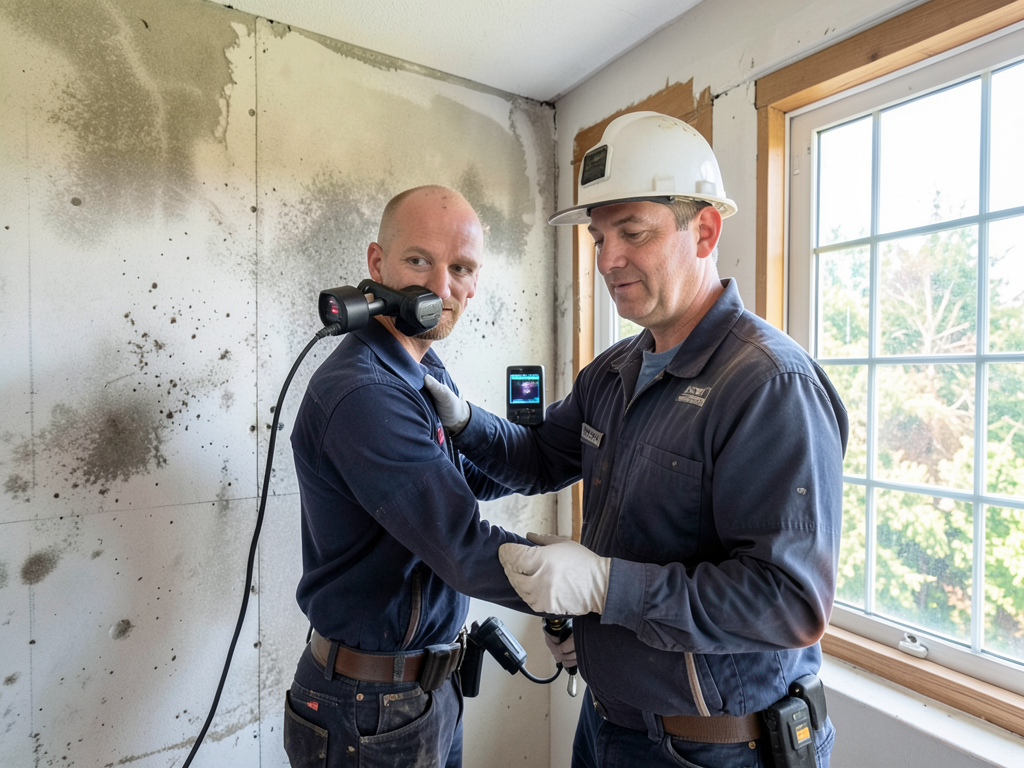
Water stains on drywall are exit wounds. The real damage hides behind the surface. Fortress Water Damage Restoration Jacksonville uses thermal imaging cameras to map temperature differentials that indicate moisture trapped in wall cavities. Wet building materials show cooler temperatures than dry areas. We scan entire rooms, not just the visible stain, to identify the full extent of saturation.

Once we map the moisture, we use pin-type and non-invasive moisture meters to quantify water content in drywall, studs, and insulation. Industry standards require materials to reach equilibrium moisture content before reconstruction begins. We document moisture readings at multiple depths to ensure thorough drying. If moisture levels exceed 17 percent in wood framing or 1 percent in gypsum board, we deploy desiccant dehumidifiers and air movers to accelerate evaporation.

We trace the water source simultaneously. Brown water spots on walls near second-floor bathrooms often indicate toilet wax ring failures or supply line leaks. Yellow stains on drywall below attics suggest roof penetration failures or condensation on ductwork. Water marks on ceiling surfaces near exterior walls point to compromised flashing or clogged gutters. Jacksonville's frequent afternoon thunderstorms and hurricane season expose every weakness in building envelopes.

After identifying the source, we perform controlled demolition. We remove only the compromised drywall necessary to access wet framing and insulation. Precision matters. Removing too much drywall increases reconstruction costs. Removing too little leaves hidden moisture that breeds mold. We balance thorough remediation with cost efficiency, giving you a scope that addresses the entire problem without unnecessary demolition.

What Happens During Drywall Water Damage Restoration

Water Stains on Drywall in Jacksonville – Expert Diagnosis and Permanent Moisture Remediation
01

Moisture Detection and Mapping

We arrive with thermal imaging cameras and moisture meters to identify every area of saturation. The initial assessment maps moisture migration patterns and identifies the water source. You receive documentation showing moisture readings, thermal images, and the scope of affected materials. This diagnostic phase typically takes 45 to 90 minutes depending on the size of the affected area.
02

Controlled Drying and Demolition

We remove wet drywall, insulation, and baseboards to expose framing for thorough drying. Air movers and dehumidifiers run continuously to bring materials to equilibrium moisture content. We monitor humidity levels and moisture readings daily. Most structural drying takes three to five days. During this phase, we also repair the water source to prevent recurring damage. You get daily updates on drying progress.
03

Reconstruction and Final Inspection

Once framing reaches safe moisture levels, we install new drywall, apply joint compound, sand seams, prime, and paint to match existing finishes. Baseboards and trim are replaced. We perform a final moisture check and visual inspection to confirm complete remediation. You receive a certificate of completion documenting final moisture readings and confirming your home is dry, safe, and ready for occupancy.

Why Jacksonville Property Owners Choose Fortress for Drywall Water Damage

Fortress Water Damage Restoration Jacksonville understands how coastal humidity and seasonal storms create unique moisture challenges. We work throughout Riverside, San Marco, Avondale, and the Beaches, where historic homes with plaster walls and newer construction with modern building envelopes both face water intrusion risks. Our technicians know how Jacksonville's building codes address moisture barriers and ventilation requirements. That local knowledge prevents code violations during reconstruction.

We coordinate directly with insurance adjusters. Water damage claims often involve disputes over coverage scope. We provide detailed documentation, including thermal images, moisture logs, and itemized scopes of work that support your claim. Many homeowners discover their adjuster underestimated the damage after relying on visual inspection alone. Our moisture mapping reveals hidden saturation that adjusters miss, ensuring you receive fair claim settlements.

Speed matters with water damage. We respond to calls within two hours. Jacksonville's heat and humidity create ideal conditions for mold growth. Every hour of delay increases remediation costs and health risks. Our trucks carry industrial dehumidifiers, air movers, moisture meters, and thermal cameras. We begin mitigation immediately, not after scheduling a follow-up visit.

You also get transparent communication. We explain what we find, why specific steps are necessary, and what each phase costs before starting work. No surprise charges. No upselling. If you only need drying and minor drywall replacement, we tell you that. If the damage extends into framing or requires mold remediation, we show you the evidence and explain your options. You make informed decisions based on facts, not fear.

What to Expect During Water Damage Restoration

Response Time and Availability

We answer calls 24 hours a day, seven days a week. Water damage does not wait for business hours. When you call, you speak with a trained technician who asks about the water source, visible damage, and your immediate concerns. We dispatch a crew within two hours. For active leaks causing ongoing damage, we arrive faster. Emergency mitigation begins the moment we walk through your door. We stop the water source, extract standing water, and set up drying equipment during the first visit.

Initial Assessment and Scope Development

The initial assessment includes thermal imaging, moisture testing, and visual inspection of all potentially affected areas. We check adjacent rooms, floors above and below the visible damage, and wall cavities. You receive a written scope detailing moisture readings, affected materials, recommended repairs, and estimated timeline. We explain each line item so you understand what work is necessary and why. If insurance is involved, we provide documentation formatted for claim submission.

Quality of Completed Work

Reconstructed drywall is finished to match surrounding walls. We use the same texture patterns and paint sheens as existing surfaces. Seams are invisible after finishing. Baseboards and trim are reinstalled with precision. We sand, prime, and apply two finish coats of paint. Color matching is done under natural and artificial light to ensure accuracy. Final moisture readings confirm materials are completely dry before reconstruction begins. You receive a home that looks and functions as it did before the water damage occurred.

Post-Restoration Support and Monitoring

After completing restoration, we provide guidance on preventing future water damage. This includes checking for plumbing leaks, maintaining gutters, and monitoring humidity levels. If you notice any concerns after restoration, we return to investigate at no charge within 30 days of project completion. We also offer annual moisture inspections for clients who want proactive monitoring. These inspections use thermal imaging and moisture meters to detect problems before visible damage occurs, protecting your investment and preventing costly emergency repairs.

Frequently Asked Questions

You Have Questions,
We Have Answers

How do you get water stains out of drywall? +

You cannot just remove water stains from drywall without addressing the source. First, fix the leak. Let the drywall dry completely, which takes 3-5 days in Jacksonville's humid climate. Use fans and dehumidifiers to speed drying. Once dry, apply a stain-blocking primer like Kilz or BIN to seal the stain. Then paint with two coats of matching wall paint. If the drywall is soft, warped, or crumbling, you need replacement. Painting over wet or damaged drywall traps moisture and creates mold growth.

How to tell if water is leaking behind drywall? +

Check for soft or spongy spots when you press the drywall. Look for discoloration, bubbling paint, or peeling texture. Run your hand along the wall to feel temperature differences. Cold spots indicate trapped moisture. Use a moisture meter to test suspect areas. Readings above 16 percent confirm active water intrusion. In Jacksonville homes, check exterior walls after heavy rain and interior walls near bathrooms or kitchens. Listen for dripping sounds inside walls. Musty odors signal hidden water damage. Professional inspection finds leaks before structural damage occurs.

Can I paint over water stained drywall? +

No. Painting over water-stained drywall without proper prep causes the stain to bleed through in weeks. The tannins and minerals in the water will seep through standard paint. You must first ensure the drywall is completely dry, then apply a stain-blocking primer. Use oil-based or shellac-based primers, not latex. These seal the stain and prevent bleed-through. After priming, you can paint normally. If you skip the primer step, you waste time and money repainting. Jacksonville's humidity makes this problem worse without proper sealing.

Why do I have water marks on my walls but no leak? +

You likely have condensation from high humidity, not an active leak. Jacksonville's humidity creates moisture on cold surfaces like exterior walls with poor insulation or bathrooms without proper ventilation. Check for inadequate attic ventilation causing temperature imbalances. HVAC ducts sweating inside walls create water marks without visible leaks. Capillary action pulls ground moisture up through concrete block walls in older Jacksonville homes. Ice dams on air conditioning lines drip inside walls during summer. A thermal imaging camera identifies cold spots and moisture sources. Fix ventilation and insulation to stop condensation.

Is drywall ruined once it gets wet? +

Not always, but speed matters. Drywall exposed to clean water for under 48 hours can often be saved if dried quickly. Use industrial fans and dehumidifiers immediately. Jacksonville's humidity slows drying, so professional equipment helps. Category 2 or 3 water (sewage or flood water) requires removal regardless of drying time due to contamination. Check for soft spots, warping, or crumbling edges. If the paper facing delaminates or the gypsum core crumbles, replacement is necessary. Mold growth starts within 24-48 hours in wet drywall, making professional assessment critical.

Will magic eraser remove water stains on walls? +

No. Magic erasers cannot remove water stains from drywall. They only clean surface dirt and scuffs. Water stains penetrate deep into the drywall's gypsum core and paper facing. The discoloration comes from minerals, tannins, and mold spores that migrate through the material. Scrubbing with abrasive cleaners damages the paint and paper surface without fixing the stain. You need stain-blocking primer and paint after the wall dries completely. Using magic erasers wastes effort and can roughen the surface, making proper painting harder. Address the moisture source first, then prime and paint.

How Jacksonville's Coastal Climate Accelerates Drywall Water Damage

Jacksonville sits at sea level along the Atlantic coast and St. Johns River. Groundwater tables remain high year-round, and hydrostatic pressure pushes moisture through foundation slabs. When plumbing leaks occur beneath concrete, capillary action wicks water upward into wall cavities. The city's 52 inches of annual rainfall, concentrated during summer thunderstorm season and hurricane months, overwhelms gutters and tests roof penetrations. Brown water spots on walls often appear after heavy rain events when flashing fails or soffit vents allow wind-driven rain into attic spaces. High humidity slows evaporation, allowing wet patches on plasterboard to remain saturated for weeks, creating ideal mold growth conditions.

Fortress Water Damage Restoration Jacksonville operates throughout Duval County, from historic Riverside neighborhoods with 1920s plaster walls to Ponte Vedra Beach oceanfront properties facing salt air corrosion. We understand how Jacksonville's building codes address moisture barriers in flood zones and coastal construction. Our technicians recognize the difference between surface condensation common in poorly insulated homes and active leaks requiring immediate plumbing repair. Local expertise matters when insurance adjusters unfamiliar with coastal moisture challenges underestimate damage scope. We provide documentation that supports accurate claims and ensures you receive the coverage you paid for.

Water Damage Restoration Services in The Jacksonville Area

Conveniently located to serve the entire region, Fortress is committed to reaching you swiftly when water damage strikes. Our centralized presence allows us to deploy rapid response teams across the service area, ensuring that expert assistance is always just a call away. Explore our location and service radius to see how we can provide immediate, professional water damage restoration solutions directly to your doorstep, minimizing disruption and expediting recovery.

Address:
Fortress Water Damage Restoration Jacksonville, 10752 Deerwood Park Blvd Suit 100, Jacksonville, FL, 32256

Additional Services We Offer

Our news updates

Latest Articles & News from The Blogs

Why Your New Bidet Attachment Might Be Slowly Flooding Your Girvin Bathroom Floor Your bathroom floor feels damp and you…

Why Your New Bidet Attachment Might Be Slowly Flooding Your Girvin Bathroom Floor

Why Your New Bidet Attachment Might Be Slowly Flooding Your Girvin Bathroom Floor Your bathroom floor feels damp and you…

How to Properly Shut Down Your Plumbing Before Leaving Isle of Palms for the Summer

How to Properly Shut Down Your Plumbing Before Leaving Isle of Palms for the Summer Summer vacation should mean relaxation…

The Hidden Meaning Behind Peeling Wallpaper and Bubbling Paint in Lackawanna Homes

The Hidden Meaning Behind Peeling Wallpaper and Bubbling Paint in Lackawanna Homes Peeling wallpaper and bubbling paint in Lackawanna homes…

Contact Us

Call (904) 839-6500 now for immediate response. Our technicians arrive with thermal imaging cameras and moisture meters to map the full extent of damage. We provide written scopes and start mitigation the same day.