



Menu

Signs of Hidden Mold in Jacksonville – Expert Detection and Remediation by Certified Specialists

Fortress Water Damage Restoration Jacksonville provides professional mold inspection services using thermal imaging and moisture meters to detect concealed mold growth behind walls, under floors, and in hidden cavities before it compromises your property or health.

Slider Image 1
Slider Image 2
Slider Image 3
Slider Image 4
Slider Image 5
Slider Image 7
Slider Image 8
Slider Image 9
Slider Image 10
Slider Image 11

Jacksonville's Climate Creates Perfect Conditions for Hidden Mold Growth

Jacksonville's subtropical humidity and frequent rainfall create an environment where mold thrives in places you cannot see. Average humidity levels above 60 percent for eight months of the year mean moisture accumulates inside wall cavities, beneath flooring, and behind cabinetry without any visible water damage on the surface.

The symptoms of concealed mold often appear as health issues before you notice physical evidence. Persistent allergies, respiratory irritation, and unexplained headaches can signal invisible mold colonies growing in your HVAC system or behind drywall. You may smell a musty odor in specific rooms but see no visible growth. That stale smell is the volatile organic compounds released by active mold colonies feeding on organic materials like wood framing, insulation paper backing, or cardboard.

Detecting hidden mold requires more than a visual inspection. Indicators of invisible mold include discoloration on walls that looks like shadows or dirt, peeling paint in areas without apparent moisture exposure, and warping baseboards. Water intrusion from Jacksonville's heavy summer thunderstorms can penetrate roof flashings, window seals, and foundation cracks. The water travels through wall cavities and creates ideal conditions for mold growth in spaces you never inspect.

Evidence of unseen mold also appears as condensation patterns on windows, increased dust accumulation, and worsening asthma symptoms in household members. The signs of mold behind walls become obvious only after colonies spread large enough to produce visible surface growth or cause structural damage. By that point, remediation costs increase significantly and health exposure has already occurred.

Jacksonville's Climate Creates Perfect Conditions for Hidden Mold Growth
Our Scientific Approach to Mold Detection and Remediation

Our Scientific Approach to Mold Detection and Remediation

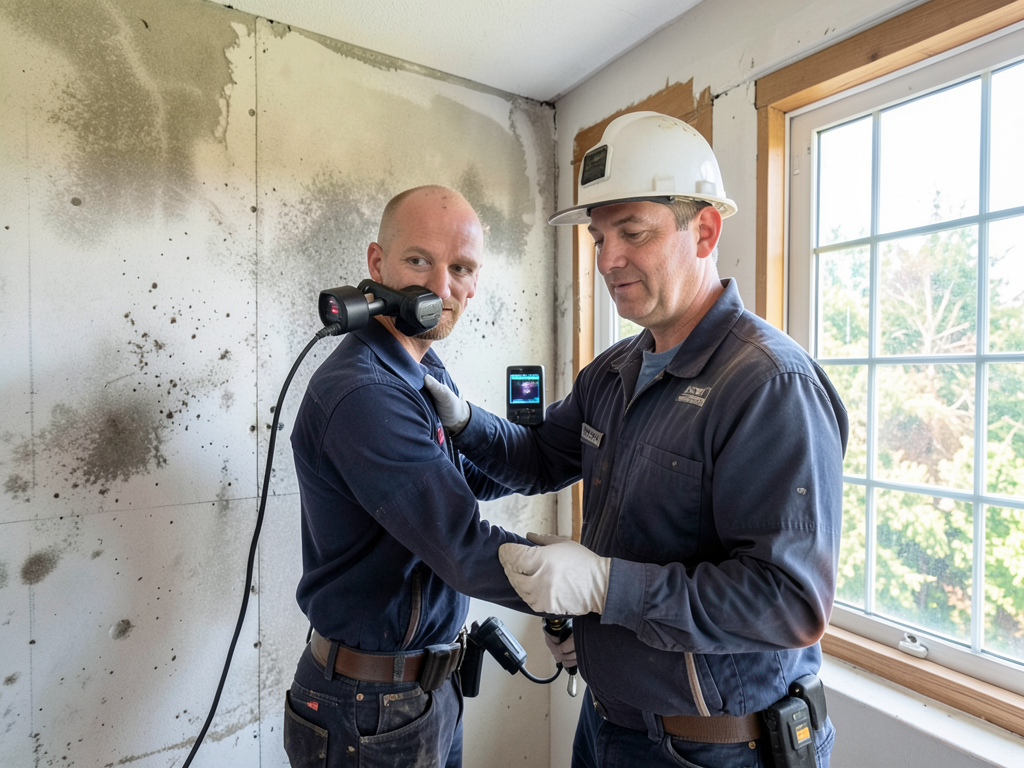
We use thermal imaging cameras to identify temperature differentials that indicate moisture accumulation behind finished surfaces. Mold growth creates heat signatures different from surrounding dry materials. This technology reveals moisture patterns invisible to standard inspections, allowing us to map the full extent of water intrusion before we open a single wall cavity.

Our moisture meters provide exact readings of material water content. We test drywall, wood framing, insulation, and subflooring to determine if moisture levels exceed the threshold where mold colonization occurs. Materials with moisture content above 16 percent support active mold growth. We document these readings to establish a baseline and verify successful drying after remediation.

Air sampling identifies mold spore concentrations and species types present in your indoor environment. We collect samples from suspected contamination areas and compare them to outdoor baseline samples. Elevated indoor spore counts confirm active mold growth even when you cannot see colonies. Laboratory analysis identifies specific mold species, which determines the remediation protocol and health risk level.

We perform invasive inspection when non-invasive methods indicate hidden growth. This involves creating small access points in walls, ceilings, or floors to visually confirm mold presence and assess colony size. We document findings with photography and detailed notes that support insurance claims and guide our remediation strategy.

Our containment procedures prevent cross-contamination during remediation. We establish negative air pressure barriers, seal HVAC registers, and use HEPA filtration to capture airborne spores. This protects unaffected areas of your property and prevents mold spread during the removal process. We follow IICRC S520 standards for all remediation work.

How We Identify and Eliminate Hidden Mold in Your Property

Signs of Hidden Mold in Jacksonville – Expert Detection and Remediation by Certified Specialists
01

Comprehensive Property Assessment

We conduct a full property walkthrough examining areas prone to moisture intrusion in Jacksonville homes, including crawl spaces, attics, bathrooms, and exterior wall penetrations. Our technicians use thermal imaging and moisture detection equipment to identify temperature and humidity anomalies that indicate concealed water damage. We inspect HVAC systems, plumbing penetrations, and roof valleys where water commonly infiltrates without obvious interior signs. This diagnostic phase reveals the source and extent of moisture problems fueling mold growth.
02

Laboratory Analysis and Remediation Planning

Air and surface samples go to an independent laboratory for species identification and spore count quantification. Results determine whether mold growth is pathogenic, allergenic, or toxigenic, which dictates our containment and removal protocols. We create a detailed remediation plan specifying affected materials, removal methods, containment boundaries, and drying procedures. This plan includes antimicrobial application schedules and post-remediation verification testing. You receive a written scope of work before we begin physical remediation, ensuring transparency in our process and pricing.
03

Remediation and Clearance Testing

Our crew removes contaminated materials using contained demolition methods that prevent spore dispersal. We treat affected structural components with antimicrobial solutions and dry all materials to moisture content below 16 percent. HEPA air scrubbers run continuously during remediation to capture airborne particles. After completing physical remediation, we conduct clearance testing to verify spore counts return to normal background levels. You receive laboratory documentation confirming successful remediation before we begin reconstruction. This verification protects your health and satisfies insurance documentation requirements.

Why Jacksonville Property Owners Trust Our Mold Expertise

Jacksonville's unique challenges require local knowledge that out-of-town companies lack. We understand how the St. Johns River's proximity affects humidity levels in Riverside and San Marco properties. We know that homes in Mandarin and Southside neighborhoods built on poorly compacted fill dirt experience foundation settling that creates wall cracks where water enters. Our experience with Jacksonville's building stock, from historic Springfield bungalows to newer Nocatee developments, informs our inspection approach.

We work directly with Jacksonville-area insurance adjusters who recognize our documentation standards. Our detailed photo logs, moisture readings, and laboratory reports satisfy adjuster requirements for claim approval. We provide accurate estimates that prevent claim underpayment and help you receive fair compensation for remediation costs. Our familiarity with local insurers' preferred documentation formats streamlines the claims process and reduces approval delays.

Fortress Water Damage Restoration Jacksonville maintains relationships with local general contractors, plumbers, and roofers who address the underlying causes of water intrusion. We coordinate repairs that fix source problems, not just symptoms. This integrated approach prevents recurring mold growth and protects your property investment. You receive a complete solution instead of temporary remediation that fails within months.

Our technicians receive continuous training in evolving remediation techniques and safety protocols. We stay current with IICRC certification requirements and EPA guidelines for mold remediation. This expertise matters when dealing with contaminated HVAC systems or Category 3 water damage that requires specialized handling. You benefit from professional-grade equipment and proven methodologies that DIY approaches cannot replicate.

We provide honest assessments without unnecessary upselling. If surface mold requires simple cleaning instead of full remediation, we tell you. Our reputation depends on integrity, not maximizing job costs. Jacksonville homeowners and business operators recommend us because we deliver transparent service and lasting solutions.

What You Can Expect from Our Mold Inspection and Remediation Service

Same-Day Emergency Response

We dispatch technicians within two hours for mold emergencies involving active water intrusion or confirmed pathogenic growth. Our crews work evenings and weekends because mold does not wait for business hours. You receive a preliminary assessment the same day you call, including moisture readings and visual inspection findings. We begin emergency containment immediately if mold poses health risks or threatens property damage. Our rapid response limits contamination spread and reduces overall remediation costs by addressing problems before they escalate.

Detailed Diagnostic Inspection Process

Our initial inspection takes between one and three hours depending on property size and complexity. We document every finding with photographs, moisture readings, and written notes. You walk through the property with our inspector who explains what we find and why it matters. We identify all moisture sources and trace water migration pathways through building cavities. Air sampling occurs during this phase if we detect indicators of invisible mold. You receive a written inspection report within 24 hours detailing our findings, recommended actions, and estimated costs. This report provides the information you need for insurance claims and remediation decisions.

Complete Mold Elimination and Restoration

We remove mold colonies and contaminated materials using industry-standard protocols that protect your property and health. Our work area remains contained throughout the project, preventing contamination spread to clean areas. We dry structural components to verified safe moisture levels using commercial dehumidifiers and air movers. Antimicrobial treatments eliminate remaining spores on surfaces we cannot remove. Post-remediation clearance testing confirms successful mold elimination before we begin reconstruction. You receive laboratory results showing your property meets safe indoor air quality standards. Our reconstruction team returns affected areas to pre-damage condition using materials that resist future mold growth.

Ongoing Monitoring and Prevention Guidance

We provide follow-up inspections at 30 and 90 days after remediation to verify conditions remain dry and mold-free. These complimentary checks catch any moisture recurrence before new colonies establish. You receive practical guidance on humidity control, ventilation improvements, and maintenance practices that prevent future mold problems. We educate you on recognizing early warning signs so you can address moisture issues before they become remediation projects. Our team remains available for questions and concerns long after completing your project. This ongoing support gives you confidence that your mold problem has a permanent solution.

Frequently Asked Questions

You Have Questions,
We Have Answers

How do you know if you have hidden mold in your house? +

You know hidden mold exists when you smell persistent musty odors, especially in bathrooms, crawl spaces, or behind walls. Look for unexplained water stains, peeling paint, or warping baseboards. In Jacksonville's humid climate, mold thrives in concealed areas after roof leaks or AC condensation issues. You may notice worsening allergies or respiratory symptoms when indoors. Check behind appliances, under sinks, and in attics where moisture accumulates. Visible discoloration on drywall or ceiling tiles often signals hidden growth deeper inside. If you suspect hidden mold, professional inspection with moisture meters and thermal imaging reveals contamination you cannot see.

What are signs of mold sickness? +

Mold sickness presents as chronic sinus congestion, persistent coughing, wheezing, and throat irritation. You may experience headaches, fatigue, and difficulty concentrating. Skin rashes or itchy eyes often develop after prolonged exposure. In Jacksonville homes with high humidity and poor ventilation, residents report worsening asthma symptoms or new respiratory issues. Some people develop nosebleeds or experience memory problems. Symptoms worsen indoors and improve when you leave the building. If you notice these patterns, mold exposure may be the cause. Medical testing and professional mold remediation address the source and reduce health risks.

Can mold cause a baby to cough? +

Yes, mold spores can trigger coughing in babies and young children. Their developing respiratory systems react strongly to airborne irritants common in Jacksonville's humid environment. You may notice persistent dry cough, congestion, or wheezing without other illness symptoms. Babies exposed to mold often have trouble sleeping due to breathing difficulties. If the cough worsens at home but improves elsewhere, mold exposure is likely. Check nurseries, carpeted areas, and around AC vents where spores accumulate. Remove the baby from the contaminated space immediately and consult your pediatrician. Professional mold testing and remediation protect your child's health.

Can mold cause twitching? +

Mold exposure can cause muscle twitching in some individuals, though this symptom is less common. Mycotoxins produced by certain mold species affect the nervous system, leading to involuntary muscle spasms or tremors. You may also experience tingling sensations or numbness. In Jacksonville properties with severe water damage and prolonged mold growth, neurological symptoms sometimes develop alongside respiratory issues. If you notice unexplained twitching with other mold sickness signs like headaches or fatigue, seek medical evaluation. Blood tests can detect mycotoxin exposure. Eliminating the mold source through professional remediation stops further neurological impact.

Can I test for mold in the air myself? +

You can purchase DIY mold test kits that collect air samples using Petri dishes or spore traps. These kits capture airborne particles over several hours, then you mail samples to a lab for analysis. However, results often lack accuracy because mold spore counts fluctuate throughout the day. In Jacksonville's climate, outdoor spores easily contaminate samples. Professional testing uses calibrated equipment and controlled sampling methods that account for environmental variables. Inspectors also identify moisture sources and hidden growth behind walls. For reliable results that guide proper remediation, hire certified mold assessors who understand local building construction and humidity patterns.

Can doctors check if you've been exposed to mold? +

Yes, doctors can test for mold exposure through blood work, urine analysis, or skin prick tests. Blood tests detect mold-specific antibodies called immunoglobulin E or immunoglobulin G that indicate immune response to spores. Urine tests measure mycotoxins your body is processing. Your doctor may order a complete blood count to check for elevated eosinophils, which signal allergic reactions. In Jacksonville, allergists and environmental medicine specialists frequently treat mold-related illnesses. Be prepared to describe your home environment and symptoms timeline. Medical testing confirms exposure but does not locate the source. You still need professional property inspection.

What kills mold permanently? +

Nothing kills mold permanently if moisture remains present. Effective treatment requires removing contaminated materials like drywall, insulation, or carpeting. For hard surfaces, scrubbing with detergent and water physically removes mold. Biocides and antimicrobial treatments kill surface growth but do not prevent recurrence. In Jacksonville properties, you must fix roof leaks, improve ventilation, and control indoor humidity below 60 percent. Encapsulation coatings seal porous surfaces after cleaning. Professional remediation follows IICRC S520 standards, removing mold at the source and correcting moisture problems. Without moisture control, mold always returns regardless of cleaning methods used.

How do I test my house for mold? +

Start with a visual inspection of bathrooms, kitchens, crawl spaces, and attics. Look for water stains, discoloration, or musty odors. In Jacksonville homes, check AC drip pans, window seals, and areas where humidity condenses. Use a moisture meter to detect elevated readings in walls or floors. You can buy surface test kits that collect samples with tape or swabs. For comprehensive assessment, hire certified mold inspectors who use thermal imaging cameras to locate hidden moisture and concealed growth. They collect air samples and provide lab reports detailing spore types and concentrations, guiding proper remediation.

Can air purifiers remove mold spores? +

Air purifiers with HEPA filters capture airborne mold spores, reducing concentrations in treated rooms. These devices trap particles as small as 0.3 microns, including most mold spores. However, purifiers only address airborne spores, not mold growing on surfaces or inside walls. In Jacksonville's humid climate, purifiers help control spore spread during remediation but cannot eliminate the source. You must still fix moisture problems and remove contaminated materials. Use purifiers as part of your strategy, not as the sole solution. Models with UV light or activated carbon provide additional filtration but require professional mold removal for complete resolution.

How do I tell if mold is in my lungs? +

You cannot self-diagnose mold in your lungs. Pulmonary symptoms like persistent cough, chest tightness, shortness of breath, or wheezing suggest possible lung involvement. Coughing up dark or bloody mucus indicates serious infection. Your doctor orders chest X-rays, CT scans, or sputum cultures to detect fungal growth in lung tissue. Pulmonary function tests measure breathing capacity. In Jacksonville, pulmonologists treat aspergillosis and other mold-related lung conditions. If you experience breathing difficulties after known mold exposure, seek immediate medical attention. Early diagnosis prevents complications like chronic fungal pneumonia or hypersensitivity pneumonitis.

How Jacksonville's Subtropical Climate Accelerates Hidden Mold Growth

Jacksonville receives an average of 52 inches of rain annually, with the wettest months from June through September coinciding with peak humidity levels above 75 percent. This combination creates constant moisture loading on building envelopes. Afternoon thunderstorms drive wind-driven rain into roof valleys, window casings, and foundation cracks. The moisture penetrates exterior cladding and remains trapped in wall cavities where inadequate ventilation prevents drying. Evidence of unseen mold becomes inevitable when materials stay damp for more than 48 hours. Properties near the Intracoastal Waterway and Atlantic Beach face additional moisture exposure from salt-laden coastal air that corrodes flashings and sealants, creating entry points for water intrusion.

Fortress Water Damage Restoration Jacksonville has served Duval County property owners for years, building expertise in local construction methods and common failure points. We know that homes in older neighborhoods like Avondale and Ortega use pier and beam foundations that create crawl spaces prone to moisture accumulation. We understand that newer construction in Durbin Crossing and Julington Creek uses oriented strand board sheathing that supports mold growth when exposed to moisture. Our familiarity with Jacksonville's building history and climate patterns makes us more effective at detecting hidden mold than companies without local experience. We maintain relationships with local building inspectors and code enforcement officials who respect our work quality and documentation standards.

Water Damage Restoration Services in The Jacksonville Area

Conveniently located to serve the entire region, Fortress is committed to reaching you swiftly when water damage strikes. Our centralized presence allows us to deploy rapid response teams across the service area, ensuring that expert assistance is always just a call away. Explore our location and service radius to see how we can provide immediate, professional water damage restoration solutions directly to your doorstep, minimizing disruption and expediting recovery.

Address:
Fortress Water Damage Restoration Jacksonville, 10752 Deerwood Park Blvd Suit 100, Jacksonville, FL, 32256

Additional Services We Offer

Our news updates

Latest Articles & News from The Blogs

Why Your New Bidet Attachment Might Be Slowly Flooding Your Girvin Bathroom Floor Your bathroom floor feels damp and you…

Why Your New Bidet Attachment Might Be Slowly Flooding Your Girvin Bathroom Floor

Why Your New Bidet Attachment Might Be Slowly Flooding Your Girvin Bathroom Floor Your bathroom floor feels damp and you…

How to Properly Shut Down Your Plumbing Before Leaving Isle of Palms for the Summer

How to Properly Shut Down Your Plumbing Before Leaving Isle of Palms for the Summer Summer vacation should mean relaxation…

The Hidden Meaning Behind Peeling Wallpaper and Bubbling Paint in Lackawanna Homes

The Hidden Meaning Behind Peeling Wallpaper and Bubbling Paint in Lackawanna Homes Peeling wallpaper and bubbling paint in Lackawanna homes…

Contact Us

Hidden mold compromises indoor air quality and causes expensive structural damage when left untreated. Call Fortress Water Damage Restoration Jacksonville at (904) 839-6500 now for immediate inspection scheduling. Our certified technicians will identify concealed mold growth and provide clear remediation solutions. Do not wait until symptoms worsen or damage spreads.