


Menu

Large Scale Water Extraction in Jacksonville | Industrial-Grade Solutions That Minimize Business Downtime

When your facility floods, every hour of delay compounds losses. Our large scale water extraction services deploy truck-mounted pumps and commercial-grade equipment to remove thousands of gallons fast, protecting your assets and keeping operations online.

Slider Image 1
Slider Image 2
Slider Image 3
Slider Image 4
Slider Image 5
Slider Image 7
Slider Image 8
Slider Image 9
Slider Image 10
Slider Image 11

Why Jacksonville Facilities Face Catastrophic Water Loss Events

Jacksonville's coastal position and subtropical humidity create a perfect storm for large-scale water intrusions. The city sits at near sea level with a high water table, making commercial properties vulnerable to storm surge, heavy rainfall events, and catastrophic plumbing failures. When Hurricane season peaks between August and October, facilities near the St. Johns River face serious flooding risk that can submerge entire ground floors.

Your warehouse, manufacturing plant, or office complex does not have time for residential-grade equipment when a pipe bursts or storm water breaches your loading dock. Standard shop vacs and portable extractors cannot handle the volume. You need industrial water extraction with truck-mounted pumps that move 500 gallons per minute, not 50.

The real damage starts after the first 24 hours. Standing water seeps into concrete slabs, wicks up drywall, and penetrates wood framing. Mold colonies establish in 48 to 72 hours. Your HVAC system spreads contaminated air. Electrical systems corrode. Inventory becomes unsalvageable. The financial clock ticks loudest during the first critical hours.

Jacksonville's clay-heavy soil compounds drainage issues. Water does not percolate naturally, so surface flooding persists longer than in sandy soil regions. Your facility needs high volume water pumping that coordinates with your building's drainage infrastructure, not a piecemeal approach that leaves water pooled in low spots.

Commercial water removal requires understanding your facility's unique layout, knowing where water will migrate, and deploying enough extraction capacity to match the scale of your loss.

Why Jacksonville Facilities Face Catastrophic Water Loss Events
How We Execute Large Loss Water Mitigation for Commercial Properties

How We Execute Large Loss Water Mitigation for Commercial Properties

We do not show up with household equipment. Our large scale water extraction process starts with a facility assessment that maps water migration patterns, identifies structural vulnerabilities, and calculates total water volume. We deploy truck-mounted extractors with submersible pumps capable of removing thousands of gallons per hour, not per day.

For multilevel facilities, we stage equipment at strategic extraction points. Water follows gravity and seeks the lowest level. We position pumps in elevator shafts, stairwells, and basement access points where water accumulates. Our bulk water removal services use diesel-powered units that operate independently of your facility's electrical system, which may be compromised during flooding.

We coordinate with your facility manager to protect critical infrastructure. Server rooms get priority containment. Production lines receive temporary barriers. We extract water in zones to prevent cross-contamination between clean areas and contaminated zones. Our industrial water extraction follows IICRC S500 standards for commercial drying, which requires different protocols than residential work.

After bulk removal, we deploy commercial air movers and LGR dehumidifiers sized for your square footage. A 50,000 square foot warehouse needs 40 to 60 air movers and multiple trailer-mounted dehumidifiers, not the 10-unit setup used in homes. We monitor moisture levels in concrete slabs using deep-probe hygrometers, checking readings at 24-hour intervals until we hit the IICRC dry standard of 15 percent moisture content or less.

Documentation matters for your insurance claim and business continuity plan. We photograph extraction zones, log equipment placement, track moisture readings, and provide daily progress reports your risk management team can submit to carriers without delay.

What Happens During Emergency Commercial Water Extraction

Large Scale Water Extraction in Jacksonville | Industrial-Grade Solutions That Minimize Business Downtime
01

Immediate Site Assessment

Our project manager arrives within two hours to assess water volume, identify the source, and determine facility-specific extraction requirements. We evaluate electrical hazards, structural integrity, and contamination classification. You receive an extraction plan with equipment staging locations, estimated removal timeline, and crew size before we deploy pumps. This assessment determines whether we need one truck-mounted unit or four, plus specialized submersibles for confined spaces.
02

High-Volume Water Removal

We position truck-mounted extractors and deploy submersible pumps to remove standing water. Our pumps discharge directly to storm drains or designated disposal areas per Jacksonville municipal code. We extract water in phases, starting with areas that threaten critical operations, then moving to secondary zones. For contaminated water from sewage backups or storm surge, we follow Category 3 protocols with separate pump systems to prevent cross-contamination. Extraction continues 24 hours if needed to meet your timeline.
03

Structural Drying and Verification

After bulk removal, we transition to commercial drying with trailer-mounted dehumidifiers and airflow systems. We drill relief holes in baseboards to dry wall cavities and use injectidry systems for hard-to-reach spaces. Moisture readings get logged daily until all materials reach IICRC dry standards. You receive a completion certificate with final moisture maps, equipment logs, and documentation proving your facility is dry and safe to resume full operations without hidden moisture damage.

Why Jacksonville Businesses Choose Fortress Water Damage Restoration

When your facility floods, you need a contractor who understands commercial liability, not just residential restoration. We work with Jacksonville businesses because we know local building codes, understand the permitting process for emergency demolition, and coordinate with the city's commercial inspectors to keep your project moving.

Our equipment inventory includes truck-mounted extractors, diesel generators, and commercial air handling systems sized for large loss scenarios. We do not rent equipment or scramble to source pumps during your emergency. Everything deploys from our Jacksonville facility within hours, not days.

We understand the St. Johns River flood plain regulations and FEMA requirements for substantial improvement determinations. If your facility sits in a Special Flood Hazard Area, we document the restoration to meet compliance standards your lender and insurance carrier require. Our estimates separate emergency mitigation from reconstruction, giving you the documentation needed for phased billing and separate claims processing.

Your business cannot afford a crew learning on the job. Our technicians hold IICRC Commercial Drying Specialist certifications and understand the difference between drying a 2,000 square foot home and a 50,000 square foot distribution center. We know how to calculate grain depression and vapor pressure in large air volumes, not just point a fan at wet carpet.

We work directly with commercial carriers and third-party administrators. You receive documentation formatted for Xactimate, with line items that match your policy language. We attend adjuster meetings, provide loss documentation, and handle the technical explanations so your team can focus on business continuity, not restoration logistics.

Fortress Water Damage Restoration Jacksonville has extracted water from manufacturing facilities near Dames Point, warehouses in the Arlington area, and office complexes downtown. We know Jacksonville's commercial building stock and the unique challenges each property type presents during large-scale water events.

What to Expect When You Call for Emergency Extraction

Response Time and Equipment Deployment

We dispatch a project manager to your facility within two hours of your call, 24 hours a day. Initial assessment takes 30 to 60 minutes depending on facility size. Equipment arrives within four hours for most Jacksonville locations. Larger facilities requiring multiple truck-mounted units may need six to eight hours for full deployment. We begin extraction the same day you call. You receive hourly updates during the first 24 hours, then daily progress reports until completion. Our crews work in shifts to maintain continuous extraction and drying without downtime.

Facility Assessment and Extraction Planning

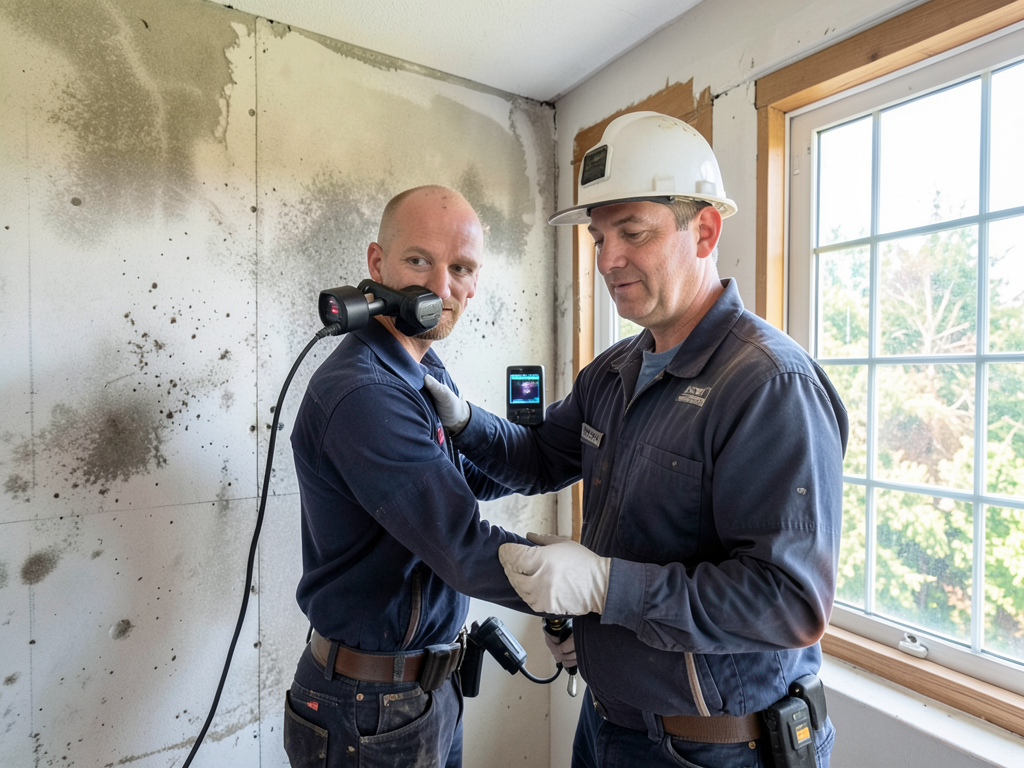
Our initial assessment maps water distribution, measures affected square footage, and identifies contamination sources. We use thermal imaging cameras to detect water in wall cavities and under flooring systems. You receive a detailed extraction plan showing equipment locations, crew assignments, and estimated completion timeline. We identify which areas require priority extraction to minimize business interruption. The assessment includes moisture readings, photo documentation, and a preliminary scope of drying equipment needed. This information goes directly to your insurance carrier and risk management team within 24 hours.

Facility Restoration and Dry Standards

We extract water until standing water is eliminated, then transition to structural drying. Your facility reaches IICRC dry standards when materials test at or below 15 percent moisture content for wood, 18 percent for drywall, and the concrete returns to baseline readings. Drying timelines vary based on materials, but most commercial facilities reach dry standard in five to ten days with proper equipment deployment. You receive a completion certificate with final moisture readings, equipment removal confirmation, and clearance documentation for business resumption. No guesswork, just verified dry conditions.

Post-Extraction Monitoring and Follow-Up

After your facility reaches dry standard, we conduct a final walkthrough to verify no hidden moisture remains. You receive complete documentation including daily moisture logs, equipment runtime records, and photo evidence of pre-loss and post-drying conditions. We provide recommendations for preventing future water intrusion based on what we observed during extraction. If reconstruction is needed, we coordinate with your general contractor or provide in-house rebuild services. Our team remains available for 30 days post-completion to address any questions about the drying process or documentation your insurance carrier requests.

Frequently Asked Questions

You Have Questions,
We Have Answers

How to purify 1000 gallons of water? +

For commercial facilities in Jacksonville, purifying 1000 gallons requires industrial-grade reverse osmosis systems, UV filtration, or chemical treatment depending on source water quality. Most businesses partner with certified water treatment contractors who assess contamination levels, install appropriate filtration arrays, and ensure compliance with Florida DEP standards. High-capacity systems handle batch processing or continuous flow. Jacksonville's municipal water already meets potability standards, but manufacturing or food service operations often need additional purification steps. Professional water treatment companies provide turnkey solutions including installation, monitoring, and maintenance to meet your facility's specific requirements and regulatory obligations.

How to soak up large amounts of water? +

Commercial water extraction in Jacksonville uses truck-mounted extractors, submersible pumps, and industrial wet vacuums depending on volume and access. For flooded warehouses or commercial buildings, submersible pumps remove standing water at 50-100 gallons per minute. Truck-mounted extraction units provide sustained suction power for carpeted areas and tight spaces. High-velocity air movers and commercial dehumidifiers follow extraction to prevent secondary moisture damage in Jacksonville's humid climate. Time matters with commercial flooding. Immediate extraction within 24-48 hours prevents mold growth, structural damage, and business interruption costs that escalate rapidly in subtropical conditions.

How to purify water on a large scale? +

Large scale water purification for commercial or industrial use involves multi-stage filtration systems, chemical dosing, and continuous monitoring. Reverse osmosis membranes remove dissolved solids. UV sterilization kills pathogens without chemicals. Ozone treatment oxidizes contaminants. Commercial facilities in Jacksonville often require customized systems based on source water chemistry, daily volume needs, and end-use applications. Industrial operations processing thousands of gallons daily need automated systems with redundancy, real-time quality monitoring, and compliance documentation. Professional water treatment engineers design systems meeting NSF standards and Florida environmental regulations. Regular maintenance and testing ensure consistent output quality and operational reliability.

How to remove large amounts of water? +

Removing large water volumes from commercial properties requires industrial pumping equipment rated for high flow rates. Submersible trash pumps handle debris-laden water at 100-200 gallons per minute. Truck-mounted extraction units provide continuous suction for carpeted areas. For Jacksonville commercial properties experiencing flooding from storm surge or broken mains, rapid water removal prevents structural damage to drywall, flooring systems, and electrical components. Professional restoration teams deploy multiple pumps simultaneously, establish drainage pathways, and document moisture levels throughout extraction. Speed directly impacts total loss costs. Every hour of standing water increases damage severity and restoration expenses exponentially.

How to store water for 10 years? +

Long-term water storage for commercial or emergency preparedness requires food-grade containers, proper treatment, and controlled environments. Commercial facilities use polyethylene tanks with rotating stock systems. Water stored beyond six months needs chemical stabilization or UV protection. Jacksonville's heat and humidity accelerate biological growth in stored water. Professional storage solutions include sealed tanks, automated circulation systems, and regular quality testing. Most businesses maintain 72-hour emergency supplies rather than decade-long reserves. For true long-term storage, commercial water treatment companies provide preservation protocols, container specifications, and monitoring schedules ensuring water remains potable when needed.

Is it cheaper to purify or buy bottled water? +

For commercial operations in Jacksonville, purification costs less than bottled water when volume exceeds 500 gallons monthly. Initial filtration system investment pays back within 12-24 months for most businesses. Commercial reverse osmosis systems produce purified water at 2-5 cents per gallon versus 50 cents-dollar for bottled. Restaurants, medical facilities, and manufacturing operations save thousands annually while reducing plastic waste and logistics costs. Maintenance and filter replacement add operational expenses but remain fractional compared to bottled water procurement. ROI analysis depends on daily consumption, system capacity, and local water quality. Professional water treatment companies provide cost-benefit assessments.

What is the 10 gulp rule? +

The 10 gulp rule estimates emergency water needs at roughly one liter per 10 swallows, helping individuals gauge hydration without measuring tools. This survival guideline helps estimate consumption rates during disasters. For commercial emergency preparedness in Jacksonville, OSHA and FEMA recommend one gallon per person daily for drinking and sanitation. Businesses must calculate employee counts, building occupancy, and potential shelter-in-place duration. Commercial facilities stock emergency water supplies based on headcount and local hurricane risk. Professional emergency management consultants help Jacksonville businesses develop compliant water storage plans meeting Florida Building Code requirements for occupied structures during extended power outages.

What soaks up the most water? +

Commercial absorbent materials include polymer crystals that hold 300 times their weight, clay-based granules, and cellulose products. For emergency spill response in Jacksonville commercial facilities, oil-absorbent pads handle hydrocarbons while universal absorbents tackle water-based liquids. Industrial facilities stock absorbent socks, pads, and loose fill for containment. For building water damage, professional extraction equipment removes water faster than passive absorption. Desiccant dehumidifiers and air movers actively pull moisture from materials. Commercial restoration prioritizes mechanical extraction over absorption because speed prevents secondary damage. Absorbents serve as supplemental tools for residual moisture in confined spaces after primary extraction.

How do I get rid of standing water in my yard? +

Standing water in commercial properties results from poor grading, compacted soil, or inadequate drainage systems. Jacksonville's clay soils and flat topography worsen drainage problems. Solutions include French drains, catch basins, and regrading to establish positive slope away from structures. Commercial properties need engineered drainage plans meeting stormwater management codes. Retention ponds, permeable pavement, and underground detention systems handle high-volume runoff. For immediate removal, commercial pumping services extract standing water while drainage contractors address root causes. Site assessment identifies low spots, soil permeability issues, and required improvements. Professional civil engineers design compliant drainage solutions.

How do preppers purify water? +

Preppers use multi-stage filtration combining ceramic filters, activated carbon, and chemical treatment. Portable systems like gravity filters remove bacteria and protozoa. Bleach dosing at 8 drops per gallon provides chemical disinfection. Boiling remains the most reliable purification method. For commercial emergency preparedness in Jacksonville, businesses install point-of-use filtration systems, stock purification tablets, and maintain backup water supplies. Hurricane preparedness plans include water treatment protocols for extended outages. Commercial facilities consult emergency management professionals who specify appropriate filtration capacity, chemical storage, and testing procedures ensuring employee safety during disasters affecting municipal water systems.

How Jacksonville's Coastal Water Table Complicates Large Scale Extraction

Jacksonville sits at an average elevation of 16 feet above sea level with a high water table that creates unique challenges for commercial water extraction. The St. Johns River flows north, making it one of the few rivers in North America that reverses direction. During storm events, tidal surge pushes river water inland, flooding properties miles from the riverbank. This tidal influence means your facility can experience flooding hours after the rain stops. Commercial properties near Southside, Arlington, and the Beaches face the highest risk during hurricane season. Large scale water extraction requires understanding how tidal patterns affect drainage and coordinating pump discharge to prevent water from flowing back into your building.

Local building codes in Jacksonville require commercial properties in flood zones to maintain specific documentation for substantial improvement determinations. When water damage exceeds 50 percent of your building's pre-loss value, FEMA regulations trigger elevation requirements that affect your restoration approach. Fortress Water Damage Restoration Jacksonville understands these local compliance requirements and provides the documentation your commercial lender needs to approve rebuilding permits. We work with city inspectors, coordinate with Duval County permitting offices, and ensure your large loss water mitigation meets both insurance requirements and local code standards. Choosing a local contractor who knows Jacksonville's regulatory environment protects you from compliance issues that delay business resumption.
Water Damage Restoration Services in The Jacksonville Area

Conveniently located to serve the entire region, Fortress is committed to reaching you swiftly when water damage strikes. Our centralized presence allows us to deploy rapid response teams across the service area, ensuring that expert assistance is always just a call away. Explore our location and service radius to see how we can provide immediate, professional water damage restoration solutions directly to your doorstep, minimizing disruption and expediting recovery.

Address:
Fortress Water Damage Restoration Jacksonville, 10752 Deerwood Park Blvd Suit 100, Jacksonville, FL, 32256

Additional Services We Offer

Our news updates

Latest Articles & News from The Blogs

Why Your New Bidet Attachment Might Be Slowly Flooding Your Girvin Bathroom Floor Your bathroom floor feels damp and you…

Why Your New Bidet Attachment Might Be Slowly Flooding Your Girvin Bathroom Floor

Why Your New Bidet Attachment Might Be Slowly Flooding Your Girvin Bathroom Floor Your bathroom floor feels damp and you…

How to Properly Shut Down Your Plumbing Before Leaving Isle of Palms for the Summer

How to Properly Shut Down Your Plumbing Before Leaving Isle of Palms for the Summer Summer vacation should mean relaxation…

The Hidden Meaning Behind Peeling Wallpaper and Bubbling Paint in Lackawanna Homes

The Hidden Meaning Behind Peeling Wallpaper and Bubbling Paint in Lackawanna Homes Peeling wallpaper and bubbling paint in Lackawanna homes…

Contact Us

Every hour of standing water increases restoration costs and extends your downtime. Call Fortress Water Damage Restoration Jacksonville now at (904) 839-6500. Our trucks deploy immediately, our crews work around the clock, and your facility gets back online fast.