Fast Flood Water Extraction for Jacksonville Beach Homeowners
Flooding hits Jacksonville Beach hard during hurricane season. When storm surge pushes water through your doors or a broken pipe floods your living room, every minute counts. Standing water destroys flooring, weakens walls, and creates perfect conditions for toxic mold growth within 24-48 hours. You need professionals who understand local flood patterns, building codes, and can mobilize fast with commercial-grade equipment.. Read more about Getting 24 Hour Emergency Water Extraction in Downtown Jacksonville.
Fortress Water Damage Restoration provides 24/7 emergency flood water extraction throughout Jacksonville Beach and surrounding coastal areas. Our certified technicians arrive within 60 minutes, equipped to handle everything from clean water pipe breaks to contaminated storm surge. We don’t just remove water—we restore your home’s safety and structural integrity using proven drying methods that meet IICRC S500 standards.. Read more about Fixing Attic Water Damage After a Northside Jacksonville Storm.
Immediate Response for Jacksonville Beach Flood Emergencies
Water damage doesn’t wait for business hours. When you call Fortress at (904) 839-6500, our emergency dispatch team mobilizes immediately. We understand Jacksonville Beach’s unique flooding challenges—from A1A corridor storm surges to low-lying areas near the Intracoastal Waterway where water tables remain high year-round.. Read more about Who to Call for Emergency Water Removal in San Marco Right Now.
Our rapid response protocol begins the moment you call. A certified technician calls you back within 5 minutes to assess the situation. We dispatch the closest crew with appropriate equipment—whether that’s submersible pumps for deep flooding or truck-mounted extraction units for carpet and padding removal. Most Jacksonville Beach homes have concrete slab foundations, which means water can seep into the slab and require specialized extraction methods.. Read more about Professional Carpet Drying and Sanitizing in Neptune Beach.
We coordinate directly with your insurance company, providing real-time documentation through moisture mapping and thermal imaging. This eliminates the guesswork about what’s wet and what needs removal. Our crews work through the night if necessary, because we know mold can start colonizing within 24 hours in Jacksonville’s 80%+ humidity environment.. Read more about Professional Mold Testing and Removal Services in Ponte Vedra.
Our Professional Water Extraction Process
Effective flood water extraction follows a systematic approach that protects your property and health. Here’s exactly what happens when our team arrives at your Jacksonville Beach home:. Read more about Help with Water Damage Insurance Claims for Jacksonville Homeowners.
- Safety Assessment
Before any extraction begins, we test for electrical hazards, structural instability, and contamination levels. Flood water in Jacksonville Beach often contains salt, sewage, or chemicals from nearby businesses along Third Street.
- Water Category Classification
We determine if water is Category 1 (clean), Category 2 (gray), or Category 3 (black). Storm surge and sewage backup are always Category 3, requiring full PPE and specific disposal protocols under EPA regulations. EPA Flood Information.
- High-Powered Extraction
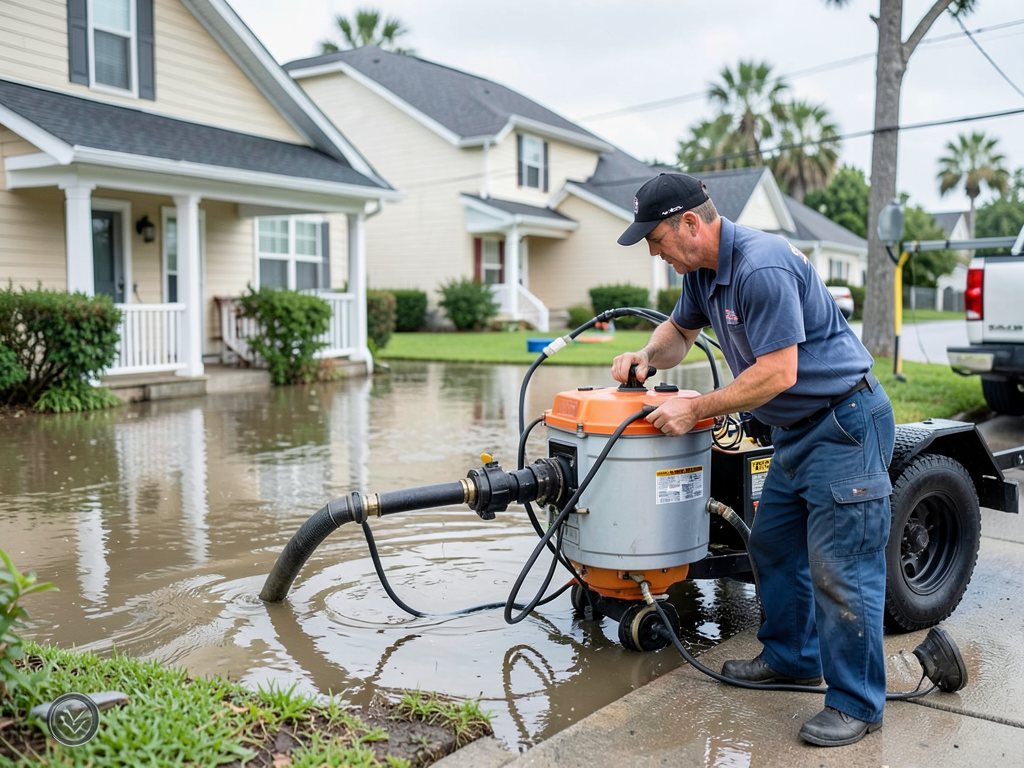
Using truck-mounted units that extract up to 20 gallons per minute, we remove standing water from all surfaces. For Jacksonville Beach’s common tile and laminate flooring, we use specialized wands that prevent damage while maximizing extraction.
- Moisture Mapping
We deploy thermal imaging cameras and penetrating moisture meters to identify hidden water in walls, under cabinets, and within the slab. This mapping creates a restoration plan that insurance adjusters accept without question.. Read more about Removing Hidden Mold from Your Historic Riverside Home Safely.
- Demolition Planning
Based on moisture readings and contamination levels, we determine what materials must be removed. In Jacksonville Beach’s coastal environment, salt water accelerates material degradation, often requiring more aggressive removal than freshwater flooding.
Every extraction job includes real-time moisture documentation. We create a drying goal based on IICRC S500 standards—typically achieving 12% moisture content in wood and 17% in concrete before considering the area dry. This prevents the costly callbacks that happen when hidden moisture causes mold months later.
Advanced Drying Technology & Equipment
Removing standing water is only half the battle. Jacksonville Beach’s high humidity means we must aggressively dry the structure to prevent secondary damage. Our equipment arsenal includes:
| Equipment Type | Purpose | Jacksonville Beach Application |
|---|---|---|
| LGR Dehumidifiers | Remove moisture from air | Handle 80%+ coastal humidity |
| Air Movers | Circulate dry air across surfaces | Target salt-corroded materials |
| Desiccant Dehumidifiers | Extreme moisture removal | Used after storm surge events |
| Thermal Imaging Cameras | Detect hidden moisture | Identify slab moisture pockets |
| Air Scrubbers | Remove airborne contaminants | Essential for Category 3 water |
Our drying strategy uses psychrometry—the science of moisture-air relationships. We calculate the exact number of air movers and dehumidifiers needed based on cubic footage and material types. For a typical Jacksonville Beach 2,000 sq ft home with water damage, we might deploy 8-12 air movers and 2-3 commercial dehumidifiers, running them continuously for 3-5 days.
We monitor progress daily using moisture meters. The goal isn’t just to make surfaces feel dry—it’s to achieve specific moisture content readings that prevent mold growth. In Jacksonville Beach’s climate, we often maintain drying conditions for 48 hours after surface moisture disappears to ensure deep materials are fully dry.. Read more about Restoring Your Home After Hurricane or Tropical Storm Flooding in Jacksonville.
Navigating Insurance Claims for Water Damage
Water damage insurance claims in Jacksonville Beach present unique challenges. Many homeowners discover too late that standard policies exclude flood damage, requiring separate National Flood Insurance Program (NFIP) coverage. Our team helps you understand exactly what’s covered before you file.
We provide comprehensive documentation that insurance companies cannot dispute. Our moisture mapping creates a visual record of damage extent. Daily drying logs show equipment usage and progress. Photos document pre-existing conditions versus damage caused by the flood event. This level of detail typically results in faster claim approvals and fewer disputes.
For Jacksonville Beach properties in FEMA-designated flood zones (Zones A, AE, VE), we understand the additional documentation requirements. We can provide elevation certificates, previous flood history, and mitigation recommendations that strengthen your claim. Our experience with local insurance adjusters means we know what documentation they need to approve your claim quickly. FEMA Flood Insurance.
We offer direct insurance billing, so you don’t pay upfront and wait for reimbursement. This service alone saves Jacksonville Beach homeowners thousands in out-of-pocket expenses during an already stressful time. We handle the paperwork while you focus on your family’s safety and recovery.
Why Jacksonville Beach Homeowners Trust Us
Local knowledge matters when your home floods. Fortress Water Damage Restoration has served Jacksonville Beach since before Hurricane Matthew devastated the area in 2016. We understand the specific vulnerabilities of coastal construction—from salt-air corrosion of electrical systems to the way storm surge exploits foundation cracks in older beach cottages.
Our technicians hold multiple certifications including IICRC Water Damage Restoration Technician (WRT), Applied Structural Drying (ASD), and Mold Remediation Technician (AMRT). We maintain Florida DBPR Mold Assessor licenses, which is mandatory for any company performing mold assessment or remediation in the state.
We’re not a national franchise operating from Atlanta. Our office is in Jacksonville, and our crews live in communities like Neptune Beach, Atlantic Beach, and Mandarin. When you call (904) 839-6500 at 2 AM during a tropical storm, you’re reaching someone who understands the sound of wind-driven rain against your windows and the panic of watching water rise toward your electrical outlets.
Our commitment extends beyond emergency response. We provide post-restoration consultations on waterproofing improvements, sump pump installations, and landscaping modifications that reduce future flood risk. Many Jacksonville Beach homes built before 2000 lack modern flood mitigation features that could have prevented your current damage.
Preventing Future Flood Damage
After we extract the water and dry your home, we help you prevent the next flood from causing similar damage. Jacksonville Beach’s flat terrain and high water table create unique challenges that require specific solutions.
We recommend installing backflow preventers on sewer lines—essential in areas near the Intracoastal where storm surge can reverse sewage flow. For homes with crawl spaces, we suggest encapsulation systems that prevent moisture intrusion from the sandy soil beneath. Many Jacksonville Beach properties built on fill dirt experience differential settling that creates foundation cracks, which we can seal with epoxy injection.
Landscaping modifications can dramatically reduce flood risk. We advise grading soil away from foundations, installing French drains in low spots, and choosing flood-resistant plants that absorb excess water. For waterfront properties, we recommend elevating critical mechanical systems above the base flood elevation identified in your FEMA flood map.
Our preventative waterproofing consultations include moisture barrier installations, exterior foundation sealing, and drainage system upgrades. These improvements not only protect against future floods but can lower your flood insurance premiums through the NFIP’s Community Rating System.
Common Causes of Jacksonville Beach Flooding
Understanding why your home flooded helps prevent future incidents. Jacksonville Beach experiences several distinct flooding scenarios:
- Storm Surge: Hurricane-driven waves push saltwater inland, overwhelming drainage systems and flooding structures miles from the coast
- Heavy Rainfall: Summer thunderstorms drop several inches of rain in hours, exceeding the capacity of aging storm drains
- Tidal Flooding: King tides and lunar cycles cause periodic flooding in low-lying areas near the Intracoastal
- Plumbing Failures: Burst pipes, failed water heaters, and washing machine hose ruptures cause sudden indoor flooding
- Sewer Backups: Combined storm and sanitary sewers overflow during heavy rain, backing sewage into homes
Each scenario requires different response strategies. Storm surge introduces salt and contaminants that accelerate corrosion and require specialized cleaning agents. Freshwater flooding from plumbing failures allows faster restoration but still requires proper drying to prevent mold. Sewer backups introduce pathogens requiring full PPE and EPA-approved disinfectants.
Jacksonville Beach’s aging infrastructure contributes to flooding problems. Many homes built before 1980 have clay sewer pipes that crack and allow root intrusion, leading to backups. The city’s combined sewer system in older neighborhoods can’t handle modern rainfall volumes, causing street flooding that enters homes through doorways and garage openings.
What to Do While Waiting for Help
When water starts flooding your Jacksonville Beach home, take these immediate actions while waiting for our team to arrive:
- Turn off electricity at the main breaker if water is near outlets or appliances
- Move valuable items to higher ground—water rises quickly during storm surge
- Document damage with photos and videos for insurance purposes
- Open windows and doors if weather permits to start ventilation
- Place aluminum foil under furniture legs to prevent staining on wet carpet
- Remove colored rugs from wet carpeting to prevent dye transfer
- Elevate furniture on blocks if possible to prevent water wicking
Never enter standing water if you’re unsure about electrical hazards or contamination. Wait for our certified technicians who carry proper safety equipment. Avoid using household vacuums to remove water—they can cause electrical shock and spread contamination throughout your home.. Read more about Why household fans aren’t enough to dry out a flooded Jacksonville room.
Keep children and pets away from flooded areas. Flood water often contains bacteria, chemicals, and sharp debris that pose serious health risks. Even clean water from a broken pipe can become contaminated within hours in Jacksonville’s warm, humid environment.
Frequently Asked Questions
How long does flood water extraction take?
Initial water removal typically takes 2-6 hours depending on the volume. Complete drying requires 3-7 days based on material types and humidity levels. We monitor moisture content daily until achieving industry-standard dryness levels.
Is flood water covered by homeowners insurance?
Standard policies exclude flood damage. You need separate NFIP or private flood insurance. However, sudden plumbing failures and appliance malfunctions are usually covered. We help document damage to support your claim.
Can I stay in my home during restoration?
It depends on damage extent and contamination level. Category 1 water damage might allow limited occupancy. Category 3 contamination requires temporary relocation for health safety. We’ll assess your specific situation and advise accordingly.
How much does flood water extraction cost?
Costs vary based on water volume, contamination level, and affected materials. We provide detailed estimates after assessment. Most Jacksonville Beach homeowners pay $2,000-$10,000 depending on damage extent, with insurance covering much of the cost for covered events.
Will my home smell like mold after flooding?
Proper drying prevents mold growth. Our equipment removes moisture before mold can establish. We use antimicrobial treatments on affected surfaces and maintain negative air pressure to prevent spore spread during restoration.
How soon can we rebuild after water damage?
Rebuilding begins only after achieving target moisture content—typically 12% for wood and 17% for concrete. Rushing reconstruction traps moisture, causing future problems. We provide written documentation proving your home is dry enough for rebuilding.
Don’t Wait—Call Now for Emergency Flood Water Extraction
Every hour of delay increases damage and restoration costs. Mold begins growing within 24-48 hours in Jacksonville’s humid climate. Salt water accelerates material degradation, and contaminated water poses serious health risks to your family.
Fortress Water Damage Restoration stands ready 24/7 to protect your Jacksonville Beach home. Our certified technicians arrive within 60 minutes with commercial-grade equipment and the expertise to handle any flood scenario. We work directly with your insurance company, provide real-time documentation, and restore your home to pre-flood condition.
Call (904) 839-6500 now. Don’t let flood water destroy your home and possessions. Our emergency dispatch team is ready to mobilize immediately and begin protecting what matters most to you.
Pick up the phone and call (904) 839-6500 before the next storm hits. Your home deserves protection from professionals who understand Jacksonville Beach’s unique flooding challenges and building requirements.