


Menu

Commercial Mold Remediation in Jacksonville – Protecting Your Business Operations and Bottom Line

Industrial-grade commercial mold removal that minimizes downtime, ensures regulatory compliance, and protects your Jacksonville property value with rapid deployment and verified containment protocols.

Slider Image 1
Slider Image 2
Slider Image 3
Slider Image 4
Slider Image 5
Slider Image 7
Slider Image 8
Slider Image 9
Slider Image 10
Slider Image 11

Why Jacksonville Businesses Face Aggressive Mold Growth

Jacksonville's coastal humidity creates an ideal environment for mold colonization in commercial facilities. Average relative humidity exceeds 75 percent year-round, and HVAC systems that serve large square footage often struggle to maintain adequate dehumidification. When you combine these conditions with the city's frequent afternoon thunderstorms and older commercial buildings in the Southside and Arlington districts, mold growth can accelerate from initial spore settlement to visible colonies in 48 to 72 hours.

The St. Johns River waterfront properties face additional exposure from moisture intrusion through aging foundation systems. Commercial spaces near the Trout River and McCoy's Creek experience elevated groundwater tables that contribute to persistent dampness in storage areas, utility rooms, and below-grade spaces.

Business mold remediation becomes urgent when you consider that unchecked growth impacts indoor air quality, threatens inventory, violates health codes, and exposes you to liability claims. Office buildings in the downtown core must maintain specific air quality standards, while food service operations face immediate closure risks if health inspectors identify active mold contamination.

Commercial mold mitigation differs fundamentally from residential cleanup. You need containment strategies that allow portions of your facility to remain operational. You need verification testing that satisfies insurance adjusters and regulatory inspectors. You need documentation that protects you from future liability. Standard residential approaches cannot deliver these requirements. The scope, the stakes, and the regulatory framework demand specialized commercial mold abatement protocols designed for business continuity.

Why Jacksonville Businesses Face Aggressive Mold Growth
How Fortress Water Damage Restoration Jacksonville Executes Commercial Mold Cleanup

How Fortress Water Damage Restoration Jacksonville Executes Commercial Mold Cleanup

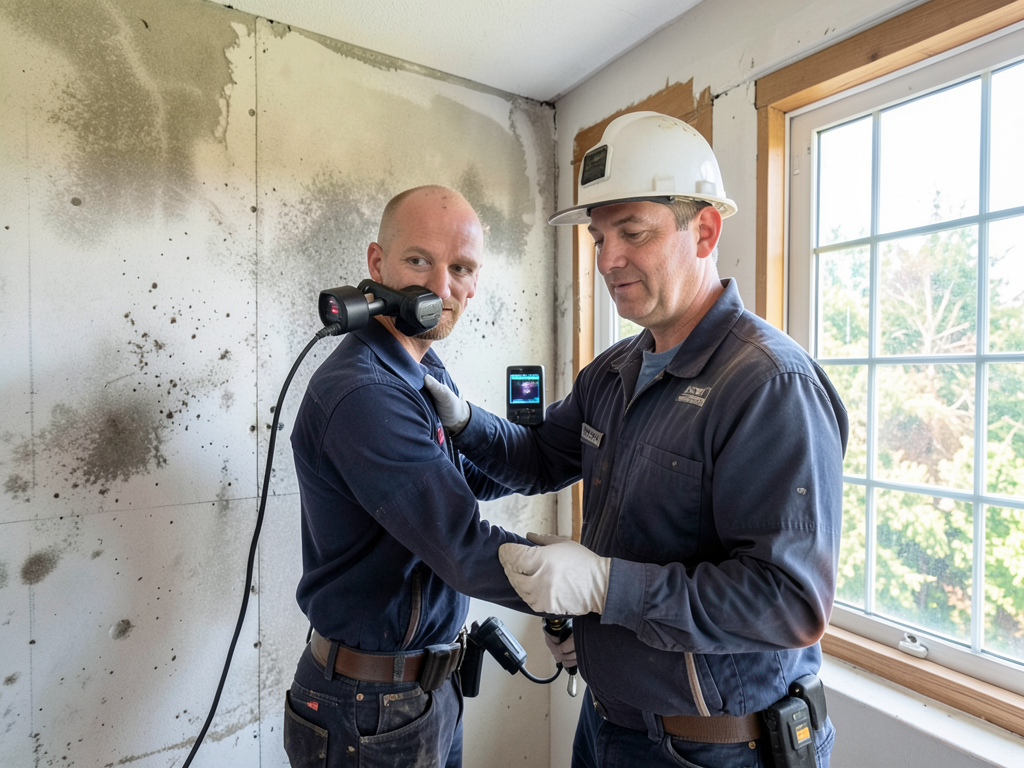
Our commercial mold removal methodology prioritizes containment, verification, and minimal operational disruption. We begin with thermal imaging and moisture mapping to identify the full extent of contamination, including hidden growth behind wall assemblies and above drop ceilings. This diagnostic phase prevents incomplete remediation that leads to recurrence.

We establish negative air pressure containment zones using HEPA-filtered air scrubbers that create differential pressure barriers. This prevents cross-contamination to unaffected areas of your facility and allows you to maintain operations in clean zones. For facilities that cannot shut down, we schedule work in phases, isolating and remediating one section at a time.

Material removal follows IICRC S520 guidelines. We remove contaminated porous materials, HEPA-vacuum non-porous surfaces, and apply antimicrobial treatments to structural elements. We do not rely on surface cleaning or encapsulation for active growth. Complete source removal is the only method that prevents recurrence.

Post-remediation verification includes third-party air quality testing that documents spore counts below outdoor baseline levels. This independent verification satisfies insurance requirements and provides documented proof of successful remediation. We also identify and correct the moisture source, whether that involves repairing roof penetrations, addressing condensation on chilled water lines, or improving ventilation in high-humidity spaces.

The difference between amateur cleanup and professional commercial mold mitigation becomes apparent when you examine the documentation trail. You need chain-of-custody protocols for testing samples, photographic documentation of pre- and post-conditions, and detailed moisture readings that prove the environment no longer supports mold growth. These records protect you during insurance claims, tenant disputes, and regulatory inspections.

Our Commercial Mold Remediation Protocol

Commercial Mold Remediation in Jacksonville – Protecting Your Business Operations and Bottom Line
01

Facility Assessment and Containment

We deploy thermal imaging cameras and moisture meters to map the complete contamination footprint, including concealed growth in wall cavities and above ceilings. Critical infrastructure mapping identifies HVAC systems, electrical panels, and operational equipment that require protection. We establish containment barriers using polyethylene sheeting and negative air machines, creating isolated work zones that prevent spore migration to clean areas while your business continues operating in unaffected sections.
02

Controlled Material Removal

Contaminated materials are removed under negative pressure conditions using HEPA-filtered equipment. Porous materials like drywall, insulation, and ceiling tiles are bagged at the point of removal to prevent spore dispersion. Non-porous surfaces receive HEPA vacuuming followed by antimicrobial treatment. We document material quantities removed for insurance documentation and dispose of contaminated waste according to local regulations. Air scrubbers run continuously throughout this phase to capture airborne particulates.
03

Verification and Clearance Testing

Independent third-party environmental consultants collect post-remediation air samples to verify spore counts meet clearance criteria. We provide comprehensive photographic documentation showing before, during, and after conditions. Moisture readings confirm all affected areas have been dried to levels that prevent regrowth. You receive a complete remediation report including lab results, material inventories, and warranty documentation. This clearance package satisfies insurance carriers, regulatory agencies, and tenant disclosure requirements.

Why Jacksonville Businesses Choose Fortress Water Damage Restoration

Commercial facilities in Jacksonville face specific code requirements that residential contractors cannot navigate. The city's building department enforces strict ventilation standards for commercial spaces, and health department inspections for food service, healthcare, and childcare facilities demand documented proof of proper remediation. We understand these regulatory frameworks because we work within them daily.

Our familiarity with Jacksonville's commercial building stock gives us an advantage when addressing mold in older structures. The historic buildings in Springfield and Riverside have different construction methods than modern tilt-up warehouses in the Westside Industrial Park. Brick and masonry buildings near the river require different drying strategies than metal buildings in the Imeson Industrial Area. This local knowledge prevents the trial-and-error approach that extends downtime and increases costs.

We maintain relationships with commercial property managers, insurance adjusters, and environmental consultants throughout the Jacksonville metro. These connections streamline the approval process for emergency work and facilitate faster claim resolution. When your facility needs immediate response, we can mobilize equipment and crews without the delays that out-of-area contractors face.

Our capacity to handle large-scale projects sets us apart from residential-focused competitors. We can deploy multiple crews simultaneously, operate around your business hours, and scale resources to match project demands. A 50,000-square-foot warehouse requires different logistics than a 2,000-square-foot office suite. We have the equipment inventory, trained personnel, and project management systems to execute both efficiently.

The cost of choosing an inexperienced contractor becomes apparent when incomplete remediation leads to recurrence, when improper containment contaminates clean areas, or when inadequate documentation complicates insurance claims. Business interruption losses from extended remediation timelines often exceed the initial remediation cost. Choosing the right contractor the first time protects your revenue stream and limits total exposure.

What to Expect During Commercial Mold Remediation

Rapid Response and Mobilization

We understand that mold contamination in commercial facilities creates immediate business continuity risks. Our response teams can be on-site within two to four hours of your call to assess the situation and begin containment. For after-hours emergencies, we maintain on-call crews that can mobilize equipment and establish initial containment overnight, allowing your staff to return to unaffected areas the next business day. Project timelines depend on contamination extent, but typical office suite remediation completes in three to five days, while larger warehouse or industrial projects may require one to three weeks when phased to maintain partial operations.

Comprehensive Site Assessment

Initial assessment includes visual inspection, moisture mapping, thermal imaging, and diagnostic air sampling to establish baseline contamination levels. We identify all affected building assemblies, including hidden growth in wall cavities, above ceiling tiles, and within HVAC ductwork. You receive a detailed scope of work that itemizes material removal, equipment deployment, and estimated project duration. This assessment phase typically completes within 24 hours for standard commercial spaces, providing you with the documentation needed for insurance notification and tenant communication. We coordinate with your insurance adjuster to streamline approval and avoid coverage disputes.

Verified Clean Environment

Project completion requires third-party verification that air quality meets or exceeds pre-loss conditions. Independent environmental consultants collect post-remediation samples and analyze them at accredited laboratories. Clearance criteria require spore counts below outdoor baseline levels and absence of amplification for toxigenic species. You receive lab reports, photographic documentation, moisture readings, and material inventories that prove successful remediation. This verification package satisfies insurance carriers, protects you from liability claims, and provides disclosure documentation for tenants or building sales. All affected areas are returned to pre-loss structural condition, ready for reconstruction.

Ongoing Monitoring and Prevention

We identify and document the moisture source that allowed mold growth, whether from roof leaks, plumbing failures, condensation issues, or inadequate ventilation. Recommendations include specific corrective actions to prevent recurrence, such as HVAC modifications, dehumidification systems, or building envelope repairs. For facilities with recurring moisture challenges, we offer quarterly monitoring programs that include moisture readings and visual inspections to catch problems before they escalate to active growth. These preventive services protect your investment in remediation and minimize future business interruption risks. Documentation of corrective actions can also reduce insurance premiums by demonstrating proactive risk management.

Frequently Asked Questions

You Have Questions,
We Have Answers

What do professionals use for mold remediation? +

Professionals use HEPA-filtered air scrubbers to capture airborne spores, antimicrobial agents to treat contaminated surfaces, and containment barriers to prevent cross-contamination during remediation. Commercial projects require industrial-grade dehumidifiers and negative air machines to maintain air pressure differentials. Technicians apply EPA-registered fungicides and encapsulants on structural materials. In Jacksonville's humid climate, moisture meters and thermal imaging cameras identify hidden water intrusion behind walls or above ceilings. Professionals remove porous materials like drywall or insulation that cannot be salvaged, then HEPA-vacuum all surfaces before final treatment. Documentation includes air quality testing pre- and post-remediation to verify clearance levels meet industry standards.

How much does it cost to professionally get rid of mold? +

Commercial mold remediation costs vary based on contamination extent, affected square footage, and structural materials involved. Small office spaces may require modest investment, while multi-story buildings or warehouses with extensive HVAC contamination demand higher budgets. Jacksonville properties face unique challenges due to high humidity and frequent storm exposure, which can increase scope. Costs include containment setup, labor, disposal fees, and post-remediation testing. Insurance may cover remediation if the mold resulted from a covered peril like burst pipes. Business interruption expenses and temporary relocation add indirect costs. Request detailed written estimates from licensed contractors who conduct thorough moisture assessments before quoting.

How much does professional mold removal cost? +

Professional mold removal pricing depends on contamination severity, building size, and accessibility challenges. Single-room containment differs significantly from multi-floor projects requiring HVAC decontamination. Jacksonville's coastal climate accelerates mold growth in poorly ventilated spaces, which can expand project scope. Costs cover containment barriers, HEPA filtration equipment, antimicrobial treatments, material removal, and disposal. Lab testing for air quality clearance adds to final expenses. Commercial properties may face higher costs due to code compliance requirements and business continuity needs. Licensed contractors provide itemized estimates after moisture mapping and visual inspection. Delaying remediation typically increases costs as contamination spreads through HVAC systems or structural cavities.

What is commercial mold remediation? +

Commercial mold remediation is the systematic removal and treatment of fungal contamination in business properties while maintaining operational continuity and minimizing liability exposure. The process includes source identification, containment installation, HEPA filtration, material removal, antimicrobial treatment, and verification testing. Commercial projects differ from residential work due to larger square footage, complex HVAC systems, and regulatory compliance requirements. Jacksonville businesses face elevated risk from hurricane-related water intrusion and year-round humidity. Remediation follows IICRC S520 protocols and may require coordination with building engineers, insurance adjusters, and health inspectors. The goal is restoring safe indoor air quality while protecting occupants and preventing business disruption.

What kills mold permanently? +

No single product kills mold permanently because mold is an environmental constant. Effective remediation requires removing the moisture source that allows growth. Professionals apply EPA-registered fungicides like quaternary ammonium compounds or hydrogen peroxide solutions to treat contaminated surfaces. Encapsulants seal treated areas to prevent spore release. Jacksonville's subtropical climate demands aggressive moisture control through dehumidification, improved ventilation, and building envelope repairs. Without fixing water intrusion from roof leaks, foundation seepage, or condensation issues, mold returns regardless of treatment products used. Long-term prevention requires maintaining indoor humidity below 60 percent and addressing plumbing failures or drainage problems promptly.

How do Japanese bathrooms not get mold? +

Japanese bathrooms resist mold through superior ventilation design, rapid-drying surfaces, and cultural cleaning practices. Most feature powerful exhaust fans, heated floors that accelerate evaporation, and non-porous wall panels instead of grout-lined tile. Daily squeegee use removes standing water before mold establishes. Jacksonville commercial properties can adopt similar strategies by installing commercial-grade ventilation systems, antimicrobial surface treatments, and automated dehumidification controls. The principle applies universally: reducing surface moisture and improving airflow prevents colonization. Japanese design prioritizes water removal over chemical treatments. Commercial facilities benefit from scheduled maintenance protocols that mirror these preventive practices rather than reactive remediation after contamination spreads.

Can black mold be fully remediated? +

Black mold can be fully remediated when professionals address both visible growth and underlying moisture sources. Stachybotrys chartarum requires removal of contaminated porous materials like drywall or ceiling tiles that cannot be adequately cleaned. Non-porous surfaces receive antimicrobial treatment and HEPA vacuuming. Jacksonville properties must resolve water intrusion from roof damage, plumbing leaks, or condensation issues to prevent recurrence. Post-remediation air quality testing verifies spore counts return to normal ambient levels. Complete remediation means eliminating active growth and preventing future colonization through moisture control. Licensed contractors follow containment protocols to prevent spore dispersal during removal. Documentation proves clearance for insurance and liability purposes.

Is professional mold removal worth it? +

Professional mold removal is worth the investment for commercial properties where liability exposure, health risks, and business continuity are priorities. DIY approaches risk inadequate containment, cross-contamination, and incomplete moisture remediation that allows regrowth. Jacksonville businesses face potential lawsuits from employees or customers exposed to contaminated environments. Professionals provide documentation proving compliance with industry standards and air quality clearance. Insurance claims require certified contractor invoices and testing reports. The cost of temporary closure, reputation damage, and ongoing health complaints far exceeds professional remediation expenses. Commercial properties have complex HVAC systems that spread spores throughout buildings when improperly handled. Professionals prevent expensive callbacks and legal complications.

Is mold remediation tax deductible? +

Mold remediation may qualify as a tax-deductible business expense if necessary for maintaining operational property or resulted from a deductible casualty loss. Consult your CPA to determine if costs fall under repairs, capital improvements, or casualty losses under current IRS guidelines. Jacksonville businesses should document that remediation addresses immediate operational needs rather than improvements increasing property value. If remediation follows hurricane damage or other insured events, deductibility rules differ. Insurance reimbursements reduce deductible amounts. Preventive treatments may not qualify, while emergency remediation addressing health hazards typically does. Maintain detailed invoices, moisture reports, and air quality testing documentation to support deductions during audits.

Can you permanently get rid of black mold? +

You can permanently eliminate black mold growth by removing contaminated materials and fixing moisture sources. Stachybotrys requires sustained water exposure, so resolving leaks, condensation, or drainage failures prevents recolonization. Jacksonville's humid climate demands mechanical dehumidification and improved ventilation to maintain humidity below 60 percent. Professionals remove affected drywall, insulation, and porous materials, then treat structural components with antimicrobial solutions. Without addressing water intrusion from roofs, foundations, or plumbing systems, mold returns regardless of cleaning efforts. Permanent elimination requires changing environmental conditions that support growth. Regular HVAC maintenance, building envelope repairs, and moisture monitoring prevent future outbreaks. Documentation proves remediation effectiveness through clearance testing.

How Jacksonville's Coastal Climate Accelerates Mold Growth in Commercial Buildings

Jacksonville's position at the confluence of the St. Johns River and Atlantic Ocean creates persistent high humidity that challenges commercial HVAC systems. Relative humidity routinely exceeds 75 percent, and salt air accelerates corrosion of metal building components, creating moisture intrusion points. The city's 52 inches of annual rainfall concentrates in afternoon thunderstorms from June through September, overwhelming roof drainage systems on flat commercial roofs common in warehouse districts. Commercial buildings in Riverside, San Marco, and the Southside face additional risks from the urban heat island effect, where temperature differentials between conditioned interior spaces and hot exterior walls create condensation within wall assemblies. These conditions make commercial mold abatement more complex in Jacksonville than in drier inland markets.

Jacksonville's building department enforces Florida Building Code requirements for commercial ventilation and moisture control, and our familiarity with local inspection protocols ensures your remediation project passes final inspection without delays. We maintain relationships with environmental consultants, industrial hygienists, and commercial property insurers throughout Duval County, streamlining the coordination required for large-scale projects. Local expertise matters when addressing mold in historic brick buildings downtown versus modern tilt-up construction in the Westside Industrial Park. These structures require different containment strategies, drying protocols, and material removal techniques. Choosing a contractor who understands Jacksonville's commercial building inventory, local climate challenges, and regulatory environment reduces project risk and protects your business operations.

Water Damage Restoration Services in The Jacksonville Area

Conveniently located to serve the entire region, Fortress is committed to reaching you swiftly when water damage strikes. Our centralized presence allows us to deploy rapid response teams across the service area, ensuring that expert assistance is always just a call away. Explore our location and service radius to see how we can provide immediate, professional water damage restoration solutions directly to your doorstep, minimizing disruption and expediting recovery.

Address:
Fortress Water Damage Restoration Jacksonville, 10752 Deerwood Park Blvd Suit 100, Jacksonville, FL, 32256

Additional Services We Offer

Our news updates

Latest Articles & News from The Blogs

Why Your New Bidet Attachment Might Be Slowly Flooding Your Girvin Bathroom Floor Your bathroom floor feels damp and you…

Why Your New Bidet Attachment Might Be Slowly Flooding Your Girvin Bathroom Floor

Why Your New Bidet Attachment Might Be Slowly Flooding Your Girvin Bathroom Floor Your bathroom floor feels damp and you…

How to Properly Shut Down Your Plumbing Before Leaving Isle of Palms for the Summer

How to Properly Shut Down Your Plumbing Before Leaving Isle of Palms for the Summer Summer vacation should mean relaxation…

The Hidden Meaning Behind Peeling Wallpaper and Bubbling Paint in Lackawanna Homes

The Hidden Meaning Behind Peeling Wallpaper and Bubbling Paint in Lackawanna Homes Peeling wallpaper and bubbling paint in Lackawanna homes…

Contact Us

Call Fortress Water Damage Restoration Jacksonville at (904) 839-6500 for immediate commercial mold assessment. We deploy containment teams 24/7 to minimize business interruption and protect your revenue stream. Get verified results that satisfy insurers and regulators.