




Menu

Hidden Moisture Detection in Jacksonville – Expert Diagnosis Before Damage Spreads

Our advanced thermal imaging and hygrometry pinpoint trapped water in walls, floors, and ceilings before mold colonizes or structural rot begins. Hidden Moisture Detection protects Jacksonville properties from cascading damage.

Slider Image 1
Slider Image 2
Slider Image 3
Slider Image 4
Slider Image 5
Slider Image 7
Slider Image 8
Slider Image 9
Slider Image 10
Slider Image 11

Why Hidden Water Damages Jacksonville Properties Without Warning

You notice a faint musty smell in the hallway. The baseboards look slightly warped. Your utility bills crept up last month. These are symptoms of a silent killer: concealed moisture accumulating where you cannot see it.

Jacksonville's subtropical climate creates perfect conditions for hidden water intrusion. Our annual rainfall averages 52 inches, with violent afternoon thunderstorms during summer months. High ambient humidity means damp building materials never fully dry out. Water that seeps behind vinyl siding or beneath floor tiles stays trapped, creating ideal conditions for microbial growth and wood decay.

The problem intensifies in older neighborhoods near the St. Johns River and Arlington. Many homes were built before modern vapor barriers became standard. Pier-and-beam foundations common in Riverside and Avondale allow moisture to migrate upward through floor joists. Slab homes in Mandarin and Southside face different risks. Hydrostatic pressure from the high water table forces groundwater through microscopic cracks in concrete.

You will not see the damage until it becomes catastrophic. Detecting invisible leaks requires equipment that measures what your eyes miss. Infrared cameras reveal temperature differentials caused by evaporation. Moisture meters quantify water content deep inside drywall and subflooring. Hygrometers measure relative humidity in wall cavities.

By the time you spot discoloration or feel soft drywall, structural damage has already progressed. Insurance adjusters deny claims when moisture damage is deemed gradual deterioration rather than sudden loss. Identifying unseen water intrusion early means the difference between a simple repair and a total gut job.

Why Hidden Water Damages Jacksonville Properties Without Warning
How We Locate Water You Cannot See or Touch

How We Locate Water You Cannot See or Touch

Finding trapped water demands more than visual inspection. We use a layered diagnostic approach combining thermal imaging, invasive moisture mapping, and environmental monitoring.

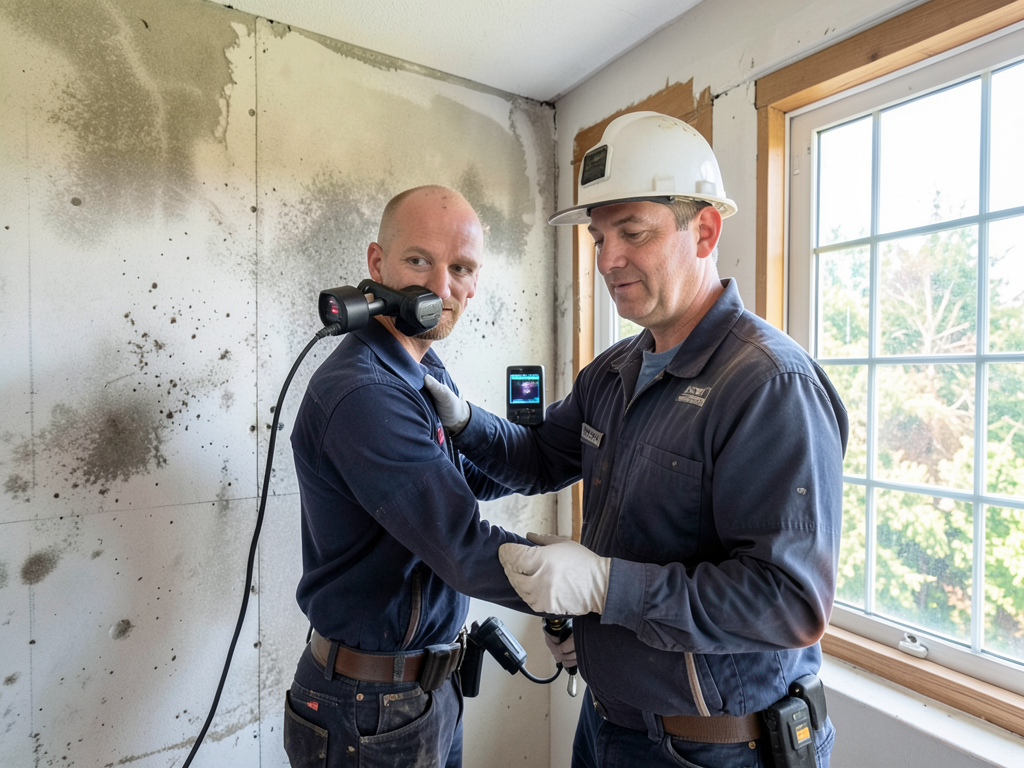
Our FLIR thermal cameras detect temperature variations as small as 0.1 degrees Fahrenheit. Wet materials evaporate moisture, creating cooler surface temperatures. The camera translates these thermal signatures into color-coded images that reveal moisture patterns behind finished surfaces. This non-invasive scan identifies problem areas without demolition.

Once thermal imaging flags suspect zones, we confirm with pin-type and pinless moisture meters. Pin meters drive electrodes into building materials, measuring electrical resistance to determine moisture content percentage. Pinless scanners use radio frequency to read moisture levels up to three-quarters of an inch deep without surface penetration. We take readings at multiple depths to map the full extent of saturation.

For complex cases involving concealed plumbing or roof leaks, we deploy thermo-hygrometers that log temperature and relative humidity over 24 to 48 hours. Abnormal humidity spikes indicate active water intrusion even when surfaces appear dry.

We also use tracer smoke and pressure testing for HVAC systems. Condensate line failures and duct leaks create hidden moisture problems in attics and crawlspaces. Spotting hidden water damage in these spaces prevents insulation compression and truss plate corrosion.

Our technicians document findings with digital photos, moisture maps, and psychrometric calculations. This evidence supports insurance claims and provides a baseline for post-remediation verification. You get a written report detailing every affected area, moisture content readings, and recommended corrective action.

What Happens During Your Moisture Detection Service

Hidden Moisture Detection in Jacksonville – Expert Diagnosis Before Damage Spreads
01

Initial Site Assessment

We start with a walkthrough to understand your concerns and document visible symptoms. Our technician asks about recent weather events, plumbing work, or HVAC issues. We inspect common failure points like window flashing, roof penetrations, and foundation perimeters. This context shapes where we focus our equipment. We also review your property's age and construction type to anticipate likely trouble spots.
02

Comprehensive Equipment Scanning

We systematically scan every suspect area with thermal imaging and moisture meters. Walls, ceilings, and floors get measured at multiple points to establish moisture gradients. We probe inside cabinets, closets, and mechanical spaces. Attics and crawlspaces receive full inspections for roof leaks or groundwater seepage. Each reading is logged with location notes and digital timestamps for your permanent record.
03

Detailed Findings Report

You receive a written report with thermal images, moisture content percentages, and affected square footage. We explain what caused the intrusion and what happens if left unaddressed. The report includes a scope of work for proper drying and restoration. We answer your questions and coordinate directly with your insurance adjuster if you file a claim. You get clarity and a roadmap for fixing the problem correctly.

Why Jacksonville Property Owners Trust Our Detection Accuracy

Moisture detection is not a guessing game. It requires calibrated equipment, trained operators, and local building knowledge.

Fortress Water Damage Restoration Jacksonville invests in professional-grade diagnostic tools, not consumer-level devices. Our FLIR cameras and Tramex meters are calibrated quarterly to manufacturer specifications. We follow IICRC S500 standards for moisture mapping and psychrometric analysis. This precision matters when insurance companies scrutinize claims or when you need to prove a contractor caused a leak.

Our technicians understand Jacksonville construction. We know that homes in Springfield and Murray Hill have different vulnerabilities than newer builds in Nocatee or Fruit Cove. Older properties often have galvanized plumbing that corrodes from the inside out, creating pinhole leaks inside walls. Homes built during the 1980s frequently have polybutylene supply lines prone to sudden failure. We recognize these risks and investigate accordingly.

We also understand how Jacksonville's weather patterns create moisture problems. Summer humidity above 70 percent prevents adequate drying between rain events. Poor attic ventilation in ranch-style homes traps moisture against roof decking. Improperly graded yards near Lakewood and Ortega channel stormwater toward foundations rather than away.

Our local knowledge extends to insurance protocols. We work with adjusters from every major carrier operating in Duval County. We document findings in the format they require, speeding up claim approval. When disputes arise over causation or extent of damage, our detailed reports provide the evidence you need.

You get straight answers, not sales pressure. If we find minor moisture that will dry naturally, we tell you. If the situation requires immediate intervention, we explain why waiting increases your risk and cost.

What to Expect When You Schedule Detection Service

Same-Day or Next-Day Availability

Hidden moisture becomes a bigger problem every day it goes unaddressed. We offer same-day service for urgent situations and next-day appointments for routine inspections. Our technicians arrive within the scheduled window with all necessary equipment. Most residential inspections take 90 minutes to two hours, depending on square footage and complexity. Commercial properties require more time based on building size and suspected problem areas. You will not wait weeks for answers while moisture spreads.

Non-Invasive Scanning with Targeted Verification

We start with non-destructive thermal imaging to map suspect areas. Most problems are confirmed without cutting into walls or ceilings. When necessary, we use small inspection ports to verify findings or access hidden cavities. Any invasive testing is discussed and approved before we proceed. We respect your property and minimize disruption. You get definitive answers about moisture location, severity, and source without unnecessary demolition. Our goal is accurate diagnosis, not creating extra work.

Comprehensive Written Documentation

You receive a detailed report with thermal images, moisture readings, and our professional assessment. The report identifies the water source, describes affected materials, and quantifies damage extent. We include recommendations for remediation and prevention. This documentation supports insurance claims and provides a paper trail if you discover the problem was caused by a contractor or product defect. You also get a digital copy for your records. Our findings are clear, specific, and actionable.

Post-Remediation Verification Available

After water extraction and structural drying, we offer follow-up testing to confirm moisture levels have returned to normal. This verification protects you from future mold growth or material failure. We take new readings in previously affected areas and compare them to baseline dry standards. You get written confirmation that remediation was successful and your property is safe. This documentation is valuable for resale disclosure and provides peace of mind that the problem is truly resolved.

Frequently Asked Questions

You Have Questions,
We Have Answers

Why does my phone say moisture detected when there is no moisture? +

Your phone triggers moisture alerts when condensation builds up inside the charging port, even without visible water. In Jacksonville's high humidity climate, this happens frequently. Moisture sensors detect electrical resistance changes caused by humidity, sweat, or residual dampness from pockets or hands. The alert protects your device from electrical shorts. To clear it, power off your phone, gently blow air into the port, and let it sit in a dry area for 30 minutes. Avoid rice, which leaves debris. If the alert persists after drying, the sensor may need professional cleaning or recalibration.

How do you detect moisture behind walls? +

Professionals use infrared thermal imaging cameras to detect temperature variations behind walls without demolition. Cool spots indicate moisture accumulation because water evaporates and cools surfaces. Non-invasive moisture meters measure electrical resistance in drywall and studs, pinpointing wet areas. In Jacksonville homes with concrete block construction, penetrating pin meters work better than surface scanners. We also use hygrometers to measure ambient humidity levels and tracer gas testing for hidden plumbing leaks. These tools identify moisture sources before mold grows or structural damage worsens. Visual inspection alone misses 80% of hidden water intrusion problems.

What do home inspectors use to detect moisture? +

Home inspectors rely on pin-type and pinless moisture meters as primary detection tools. Pin meters insert electrodes into materials to measure electrical resistance, while pinless scanners use electromagnetic signals to read moisture depth. Inspectors also use infrared cameras to map thermal patterns indicating water intrusion. In Jacksonville's humid climate, inspectors calibrate meters for elevated baseline moisture readings common to coastal areas. They check window frames, exterior walls, and attic spaces where humidity penetrates most. However, standard home inspections often miss concealed leaks requiring specialized water damage equipment and training to locate accurately.

How do I find out where my moisture is coming from? +

Start by checking visible sources like plumbing fixtures, water heaters, and roof penetrations. In Jacksonville, check AC drain lines and condensate pans, which clog frequently in humid weather. Use a moisture meter on walls near bathrooms, kitchens, and exterior walls. Look for watermarks, peeling paint, or buckled flooring. Check your water bill for unexplained usage spikes indicating hidden leaks. Inspect crawl spaces and attics after heavy rain. If you cannot locate the source, professional leak detection uses acoustic listening devices, tracer gas, and thermal imaging to pinpoint problems without destructive exploratory cuts.

How do I bypass the moisture detection? +

Do not bypass moisture detection alerts on phones or devices. The safety feature prevents electrical damage and potential fire hazards. Forcing a charge with wet ports causes corrosion and shorts the circuitry. If you need immediate charging, use wireless charging pads that avoid the wet port entirely. For persistent false alerts, clean the port with compressed air and isopropyl alcohol on a cotton swab. Let it dry completely before reconnecting. In Jacksonville's humidity, store devices in climate-controlled areas and use silica gel packets in cases to absorb ambient moisture that triggers sensors unnecessarily.

Will the moisture detection go away on its own? +

Phone moisture alerts typically clear within 30 minutes to several hours as ports dry naturally. However, in Jacksonville's 70-80% average humidity, drying takes longer without intervention. The sensor resets automatically once resistance levels normalize. Actual water damage behind walls will not resolve on its own. Trapped moisture spreads through materials, promoting mold growth and structural decay. What starts as a small leak compounds into expensive repairs if ignored. Standing water evaporates slowly in enclosed spaces, leaving humidity that continues damaging building materials. Professional extraction and dehumidification stop the cycle before permanent damage occurs.

How to tell if water is leaking behind a wall? +

Watch for paint bubbling, discoloration, or texture changes on wall surfaces. Baseboards often show watermarks or separation from walls. Run your hand along the wall to feel temperature differences. Cool, damp spots indicate moisture accumulation. Check for musty odors, which signal mold growth from hidden leaks. In Jacksonville homes, look for efflorescence (white chalky deposits) on concrete block walls where groundwater seeps through. Wallpaper peels at seams. Use a moisture meter on suspected areas. Readings above 16% in drywall confirm active water intrusion requiring immediate investigation and repair to prevent structural compromise.

How to tell if a wall is damp or cold? +

Press your palm flat against the wall surface. Damp walls feel cool and slightly tacky, while cold walls feel smooth and dry. Moisture evaporates and cools surfaces below room temperature. In Jacksonville's climate, exterior walls often feel cool from AC contact, which differs from moisture coolness. Use a moisture meter for accuracy. Readings above 15% indicate dampness. Visual clues include condensation beads, darker patches, or soft spots when pressed. Cold walls show consistent temperature without tackiness. Damp walls often smell musty. Check corners and lower sections first, where water accumulates from gravity and capillary action through porous materials.

How long can drywall be wet before mold? +

Mold spores begin colonizing wet drywall within 24 to 48 hours in Jacksonville's warm, humid environment. Visible growth appears within 72 hours under ideal conditions. Temperature above 70 degrees and humidity above 60% accelerate mold development. Porous drywall absorbs water quickly, creating perfect breeding conditions. Paper facing on drywall provides organic food for mold. Once growth starts, it spreads rapidly behind walls where air cannot circulate. Professional water extraction and dehumidification within 24 hours prevents mold establishment. Waiting beyond 48 hours often requires drywall replacement rather than drying, significantly increasing restoration costs and health risks.

How to tell if a house has moisture? +

Look for condensation on windows, especially during Jacksonville's humid summer months. Check for musty odors in closets, bathrooms, and crawl spaces. Inspect for visible mold on walls, ceilings, and grout lines. Feel for soft spots in flooring or spongy areas on walls. Check attic insulation for compression or discoloration from roof leaks. Examine exterior walls for efflorescence or paint failure. Use a hygrometer to measure indoor humidity. Readings consistently above 60% indicate moisture problems. Check AC drain pans and ductwork for standing water. Peeling wallpaper, warped wood, and rust on metal fixtures confirm excess moisture requiring professional assessment.

Why Jacksonville's High Water Table Makes Hidden Moisture Detection Critical

Jacksonville sits at an average elevation of just 16 feet above sea level, with many neighborhoods even lower. The shallow water table means groundwater often sits within three to five feet of the surface. During heavy summer rains or tropical systems, hydrostatic pressure drives moisture through foundation slabs and basement walls. Homes in low-lying areas near the Intracoastal Waterway or Trout River face constant pressure from saturated soil. Locating concealed dampness in these conditions requires understanding local hydrology and how groundwater migrates through sandy soils common to Northeast Florida. Standard visual inspections miss subsurface moisture wicking upward through capillary action.

Fortress Water Damage Restoration Jacksonville has served Duval County property owners for years, building expertise in moisture problems specific to our coastal environment. We understand local building codes regarding vapor barriers, drainage systems, and flood zone construction requirements. Our familiarity with Jacksonville's older neighborhoods means we recognize construction methods and materials that create vulnerability to water intrusion. When you need identifying unseen water intrusion, you want a team that knows the difference between a Riverside craftsman bungalow and a Ponte Vedra Beach coastal home. Local knowledge translates to faster diagnosis and accurate solutions.

Water Damage Restoration Services in The Jacksonville Area

Conveniently located to serve the entire region, Fortress is committed to reaching you swiftly when water damage strikes. Our centralized presence allows us to deploy rapid response teams across the service area, ensuring that expert assistance is always just a call away. Explore our location and service radius to see how we can provide immediate, professional water damage restoration solutions directly to your doorstep, minimizing disruption and expediting recovery.

Address:
Fortress Water Damage Restoration Jacksonville, 10752 Deerwood Park Blvd Suit 100, Jacksonville, FL, 32256

Additional Services We Offer

Our news updates

Latest Articles & News from The Blogs

Why Your New Bidet Attachment Might Be Slowly Flooding Your Girvin Bathroom Floor Your bathroom floor feels damp and you…

Why Your New Bidet Attachment Might Be Slowly Flooding Your Girvin Bathroom Floor

Why Your New Bidet Attachment Might Be Slowly Flooding Your Girvin Bathroom Floor Your bathroom floor feels damp and you…

How to Properly Shut Down Your Plumbing Before Leaving Isle of Palms for the Summer

How to Properly Shut Down Your Plumbing Before Leaving Isle of Palms for the Summer Summer vacation should mean relaxation…

The Hidden Meaning Behind Peeling Wallpaper and Bubbling Paint in Lackawanna Homes

The Hidden Meaning Behind Peeling Wallpaper and Bubbling Paint in Lackawanna Homes Peeling wallpaper and bubbling paint in Lackawanna homes…

Contact Us

Do not wait for visible damage to confirm what you suspect. Call Fortress Water Damage Restoration Jacksonville at (904) 839-6500 for professional moisture detection. We will identify the problem, document the evidence, and explain your options clearly.