When to patch and when to replace water damaged drywall in your home
Water damage to drywall can range from minor surface stains to serious structural problems that threaten your home’s safety. The first step is knowing whether you can patch the damage or if you need full replacement. This guide covers the key factors Jacksonville homeowners should consider when making that decision. Fast Flood Water Extraction for Jacksonville Beach Homeowners.
Living in Northeast Florida means dealing with high humidity, frequent storms, and the occasional hurricane. These conditions create unique challenges for drywall that homeowners in drier climates don’t face. Moisture can linger in wall cavities for days or weeks, creating the perfect environment for mold growth even after the visible water is gone. Water Damage Restoration Neptune Beach.
Before you grab your drywall saw or call a contractor, you need to assess the extent of the damage. Small water stains or minor warping might be repairable with a patch. But when water has been sitting for more than 24-48 hours, or when you see signs of mold, the situation changes dramatically. EPA Mold Resources.
Key factors that determine repair vs. replacement
Several factors influence whether drywall can be saved or must be removed. Understanding these will help you make the right call.. Read more about Does water damage under bathroom tiles always require a full tear-out?.
Time since exposure: Drywall that has been wet for less than 48 hours has a much better chance of being saved than material that has been saturated for days. The longer moisture sits, the more it breaks down the paper facing and core structure.
Water source: Clean water from a broken pipe is less problematic than contaminated water from a sewage backup or flood. Category 3 water (black water) always requires removal because of contamination risks.
Mold presence: Any visible mold growth means the affected drywall must be removed. Mold can spread through the paper facing and into the wall cavity, creating health hazards that go beyond the visible damage.
Structural integrity: If the drywall feels soft, crumbly, or has lost its rigidity, it cannot be patched. Sound drywall should feel solid and maintain its shape when pressed.
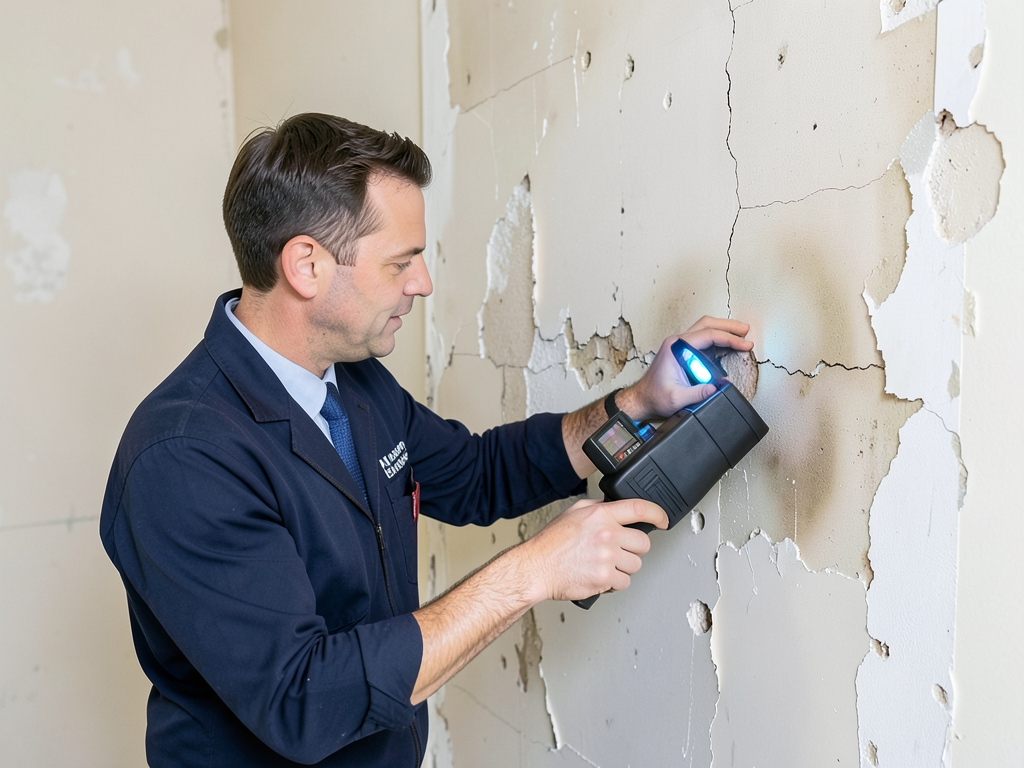
Moisture content: Using a moisture meter is the most reliable way to determine if drywall is dry enough to repair. Readings above 16-17% moisture content indicate the material needs more drying time or replacement.
Common signs of water damaged drywall
Recognizing the warning signs early can prevent more extensive damage. Here are the most common indicators: Water Damage Restoration Green Cove Springs.
- Discoloration or yellowing on the surface
- Soft or spongy areas when pressed
- Visible mold growth (black, green, or white spots)
- Bulging or warping of the wall surface
- Musty odors coming from the wall
- Peeling paint or bubbling wallpaper
- Cracks that appear after water exposure
When you notice these signs, it’s time to investigate further. Sometimes the damage extends beyond what’s visible on the surface.. Read more about Decoding a water damage restoration estimate so you don’t overpay.
The moisture meter test: your best diagnostic tool
A moisture meter is essential for determining the extent of water damage. This tool measures the electrical resistance in the drywall, which changes based on moisture content.. Read more about Who pays for water damage in a Bartram Park condo when the upstairs neighbor leaks?.
To use a moisture meter properly:
- Remove any paint or wallpaper from the test area
- Place the meter’s probes against the drywall surface
- Take readings at multiple points across the damaged area
- Compare readings to the surrounding dry areas
- Small water stains (less than 12 inches in diameter)
- Surface-level damage with no mold growth
- Drywall that has been wet for less than 24 hours
- Areas where the moisture content is below 16%
- Damage confined to the surface paper layer
- Visible mold growth of any size
- Water damage larger than 4 square feet
- Structural damage or sagging
- Moisture readings above 17%
- Damage from contaminated water sources
- Multiple areas of damage in the same wall
- Damage near electrical outlets or switches
- Removes all affected material, even if water wicked up behind the wall
- Allows access to inspect and dry the wall cavity
- Prevents mold growth in hidden areas
- Creates a clean edge for new drywall installation
- Initial inspection
Visual examination of all affected areas and surrounding spaces to identify the water source and extent of damage.
- Moisture mapping
Using moisture meters and thermal imaging to locate hidden water pockets and determine the true extent of damage.
- Category determination
Identifying whether the water is clean (Category 1), gray (Category 2), or black (Category 3) to determine safety protocols.
- Structural evaluation
Checking for damage to framing, insulation, and other components behind the drywall.
- Remediation plan
Developing a step-by-step plan for either repair or complete replacement.
- Stachybotrys chartarum (black mold) – thrives on cellulose materials like drywall
- Aspergillus – common in air conditioning systems and damp areas
- Penicillium – grows quickly on water-damaged materials
- Square footage: Larger areas cost more, but the per-square-foot rate often decreases with size
- Water category: Category 3 water requires more extensive safety protocols and disposal procedures
- Mold presence: Mold remediation adds significant costs due to containment and specialized equipment
- Accessibility: Hard-to-reach areas like high ceilings or tight spaces increase labor costs
- Finish matching: Textured walls or specialty finishes require more labor to match existing surfaces
- Burst pipes are typically covered; slow leaks are usually not
- Flood damage requires separate flood insurance
- Mold damage is often excluded unless it results from a covered loss
- Documentation of the damage and cause is essential for claims
- Install water leak detectors near water heaters, washing machines, and under sinks
- Maintain your roof and gutters to prevent water intrusion
- Check plumbing regularly for signs of corrosion or leaks
- Ensure proper grading around your home’s foundation
- Consider upgrading to moisture-resistant drywall in high-risk areas
- Replacing more than 32 square feet of drywall
- Modifying load-bearing walls
- Working near electrical or plumbing systems
- Making changes to fire-rated assemblies
- Magnesium oxide boards that resist mold and moisture
- Recycled content drywall products
- Modular drywall systems that reduce waste
Readings above 17% indicate significant moisture that may require professional drying equipment. Readings above 20% almost always mean the drywall needs replacement.
Important: Moisture meters can’t detect water behind the drywall. For that, you need thermal imaging or invasive testing.
When patching is appropriate
Patching works well for small, isolated damage where the structural integrity remains intact. Here are situations where patching is usually sufficient:
The patching process involves removing the damaged section, allowing the area to dry completely, then installing new drywall and finishing it to match the existing wall. Removing Hidden Mold from Your Historic Riverside Home Safely.
When replacement is necessary
Replacement becomes the only option in several scenarios:
Professional water damage restoration follows specific protocols for safe removal and disposal of contaminated materials.
The flood cut technique
When extensive water damage requires removal, professionals use a technique called a “flood cut.” This involves cutting out drywall at least 12-24 inches above the highest visible water line.
The flood cut serves several purposes:
Jacksonville-specific consideration: Our high humidity means water can travel further through drywall than in drier climates. A 24-inch flood cut is often necessary even for what appears to be minor damage.
Professional assessment process
Professional water damage restoration follows a systematic approach:
This assessment typically takes 1-2 hours but can prevent costly mistakes and ensure all damage is properly addressed.
Mold risks in Jacksonville’s climate
Jacksonville’s humid subtropical climate creates ideal conditions for mold growth. Mold can begin developing within 24-48 hours of water exposure, and our average humidity levels often exceed 80%.
Common mold types found in water damaged homes include:
According to the IICRC S520 Standard for Mold Remediation, any visible mold growth requires professional remediation. This isn’t just about cleaning the surface – it involves containing the affected area, removing contaminated materials, and addressing the moisture source.
DIY vs. professional restoration
Homeowners often wonder if they can handle water damage repairs themselves. Here’s a comparison to help you decide:
| Factor | DIY Approach | Professional Service |
|---|---|---|
| Safety equipment | Basic gloves and mask | Full PPE including respirators, containment barriers |
| Moisture detection | Visual inspection only | Thermal imaging, moisture meters, hygrometers |
| Mold identification | Guesswork | Laboratory testing if needed |
| Insurance documentation | Self-prepared | Professional reports and photos |
| Time to completion | Several days to weeks | Typically 3-5 days for most jobs |
| Guarantee | None | Warranty on workmanship |
For small, clean water incidents with no mold, DIY might be appropriate. But for anything larger or involving contaminated water, professional help is strongly recommended.
Cost factors for Jacksonville homeowners
Several factors affect the cost of drywall repair or replacement:
According to recent data from the Home Builders Association of Northeast Florida, drywall repair costs in Jacksonville typically range from $3 to $7 per square foot for clean water damage, with mold remediation adding $15 to $30 per square foot.
Insurance considerations
Most homeowners insurance policies cover sudden, accidental water damage but exclude gradual damage or flood damage. Understanding your coverage is crucial before beginning repairs.
Key points about water damage insurance:
Professional restoration companies can help with insurance documentation, providing detailed reports and photos that support your claim.
Preventing future water damage
After addressing current damage, take steps to prevent future problems:
Moisture-resistant drywall, often called “green board” or “purple board,” costs about 30% more than standard drywall but provides better protection in bathrooms, laundry rooms, and other humid areas.
Local building codes and permits
Duval County requires permits for most drywall replacement work, especially when it involves structural changes or affects electrical or plumbing systems.
According to the Jacksonville Building Inspection Division, permits are required when:
Working without permits can result in fines and may complicate future home sales. Professional contractors typically handle permitting as part of their service.
Environmental considerations
Water damaged drywall cannot be recycled due to contamination risks. It must be disposed of in landfills, which raises environmental concerns.
Some newer materials offer more sustainable options:
While these options cost more upfront, they may be worth considering for extensive damage or when building codes allow their use.
Final decision guide
Use this quick reference to help decide between patching and replacement:
| Condition | Action Recommended |
|---|---|
| Small stain, dry to touch, no mold | Patch |
| Visible mold growth | Replace |
| Moisture content >17% | Replace |
| Category 3 water damage | Replace |
| Structural damage or sagging | Replace |
| Damage larger than 4 sq ft | Replace |
When in doubt, err on the side of caution. The cost of professional assessment is small compared to the potential health risks and additional damage from missed problems.
Frequently Asked Questions
How long does it take for mold to grow on wet drywall?
Mold can begin growing within 24-48 hours of water exposure. In Jacksonville’s humid climate, this timeline can be even shorter. That’s why rapid response to water damage is critical.
Can I just paint over water damaged drywall?
No. Painting over water damage without addressing the underlying moisture problem will only hide the issue temporarily. The damage will continue to worsen underneath, and mold may develop unseen.
What’s the difference between green board and purple board drywall?
Green board is moisture-resistant but not waterproof. Purple board (also called mold-resistant drywall) offers better moisture and mold resistance. Neither is suitable for areas with direct water exposure like showers.
How do I know if the damage extends behind the drywall?
Without specialized equipment, you can’t be certain. Moisture meters and thermal imaging cameras can detect hidden moisture, but the only way to confirm is through invasive inspection by cutting small inspection holes.
Will my insurance cover drywall replacement?
It depends on the cause. Sudden, accidental damage from covered perils is usually covered. Gradual damage, flood damage, and mold are often excluded. Check your policy or consult with your insurance agent.
Take action before the damage spreads
Water damage to drywall is not a problem that improves with time. Every hour that passes allows moisture to spread deeper into your walls and creates conditions for mold growth.
If you’re seeing signs of water damage, don’t wait. Call (904) 839-6500 today to schedule a professional assessment. Our team uses advanced moisture detection equipment and follows IICRC standards to ensure your home is properly restored.
Early intervention can mean the difference between a simple patch job and extensive reconstruction. Pick up the phone and call (904) 839-6500 before the next storm hits. Your home’s structural integrity and your family’s health depend on it.
For more information about water damage restoration services in Jacksonville, visit our website or contact us for a free consultation. We serve all neighborhoods including Riverside, San Marco, Mandarin, and throughout Duval County. For more information, visit FEMA Flood Insurance Information.
You may also find this helpful. Fixing the window frame leaks that only show up during Normandy thunderstorms.