Does water damage under bathroom tiles always require a full tear-out?
Water trapped beneath bathroom tiles can cause serious damage, but a full tear-out is not always necessary. In many cases, professional water damage restoration technicians can save your tiles by using specialized drying equipment and moisture detection tools. The key is acting quickly and getting an accurate diagnosis of the extent of the damage. In Jacksonville’s humid climate, moisture problems can escalate rapidly, making early intervention critical. Fast Flood Water Extraction for Jacksonville Beach Homeowners.
How to Tell if Water is Trapped Under Your Tiles
Before deciding on a course of action, you need to confirm whether water is actually present beneath your tiles. Several telltale signs indicate moisture problems: Water Damage Restoration Neptune Beach.
- Grout lines that appear darker or discolored compared to surrounding areas
- A hollow sound when tapping on tiles with a hard object
- Efflorescence (white, chalky residue) appearing on grout lines
- A persistent musty odor that won’t go away even with cleaning
- Tile edges that feel slightly raised or uneven
- Cold spots on tile surfaces that remain cooler than surrounding areas
Professional technicians use moisture meters and thermal imaging cameras to detect water without damaging your bathroom. These tools can identify moisture levels within the tile assembly and pinpoint the exact location of the problem. Water Damage Restoration Green Cove Springs.
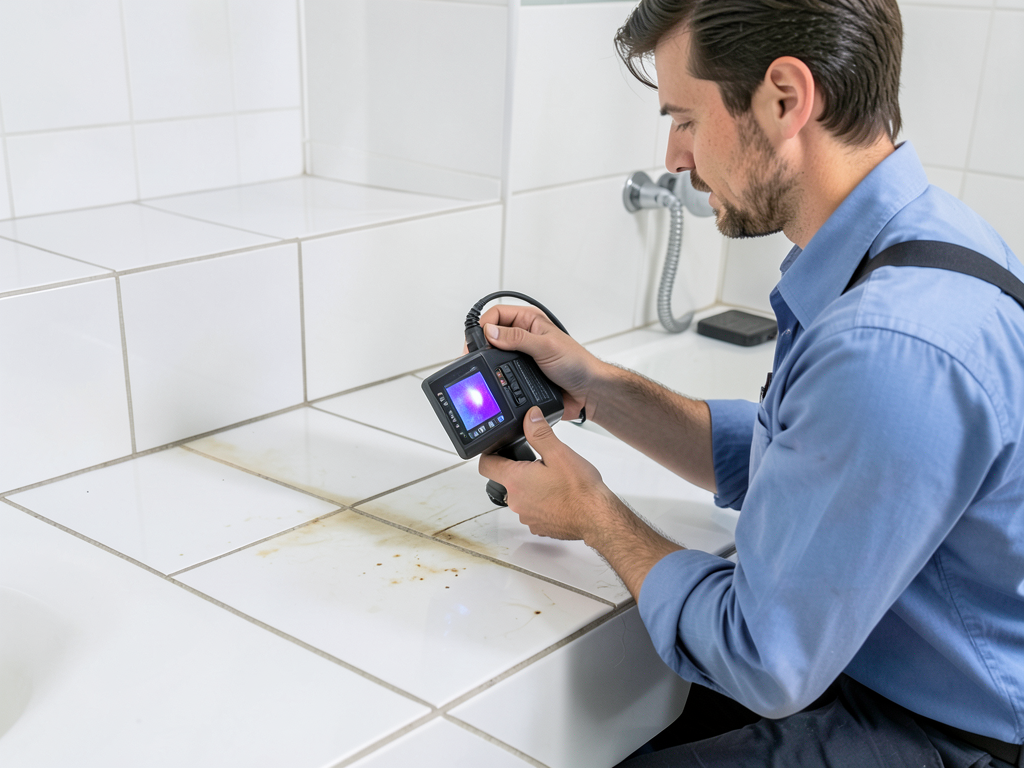
Technician using thermal imaging camera to detect moisture under bathroom tiles without demolition
Common Causes of Bathroom Subfloor Water Damage
Understanding what causes water to get under your tiles helps prevent future problems. The most common sources include:
- Leaking shower pans or failing waterproofing membranes
- Damaged or deteriorating toilet wax rings
- Pipe bursts or slow leaks in supply lines
- Improper tile installation with inadequate waterproofing
- High humidity in Jacksonville homes causing condensation
- Slab leaks in homes built on concrete foundations
Jacksonville’s high humidity levels (averaging 75% year-round) can exacerbate moisture problems by slowing evaporation rates. This means water damage can persist longer than in drier climates, making professional intervention even more important.
The Dangers of Delay: Mold and Structural Rot
Time is critical when dealing with water under bathroom tiles. Mold can begin growing within 24-48 hours of water exposure, and the warm, humid conditions in Jacksonville create ideal conditions for rapid mold colonization.
The risks of waiting include:
- Structural weakening of the subfloor (especially in older homes with wood subfloors)
- Expansion and warping of adjacent flooring materials
- Musty odors that penetrate drywall and cabinetry
- Potential health issues from mold exposure
- Increased restoration costs as damage spreads
Florida’s building code (Florida Building Code Section 1403.6) requires proper waterproofing in wet areas, but many older Jacksonville homes were built before these standards were implemented. This makes them particularly vulnerable to water damage.
The Professional Restoration Process
When you call a professional water damage restoration company, they follow a systematic process based on IICRC S500 standards for water damage restoration: IICRC S500 Standards.
- Comprehensive Inspection
Technicians use moisture meters, thermal imaging, and sometimes small test holes to assess the extent of damage without unnecessary demolition.
- Water Source Identification
Finding and stopping the source of moisture is critical before any drying can begin.
- Moisture Mapping
Creating a detailed map of affected areas helps determine whether tear-out is necessary.
- Targeted Drying Strategy
Based on the assessment, technicians decide between in-place drying or selective demolition.
- Industrial Drying Equipment Setup
High-capacity dehumidifiers and air movers are strategically placed to remove moisture.
- Daily Monitoring
Moisture levels are checked daily until the subfloor reaches acceptable dryness (typically below 16% moisture content).
- Sanitization and Prevention
Antimicrobial treatments prevent mold growth in the treated areas.
In many cases, if caught early enough, the tile can remain in place while moisture is extracted from beneath using specialized drying mats and low-profile air movers. This non-invasive approach can save thousands in replacement costs.
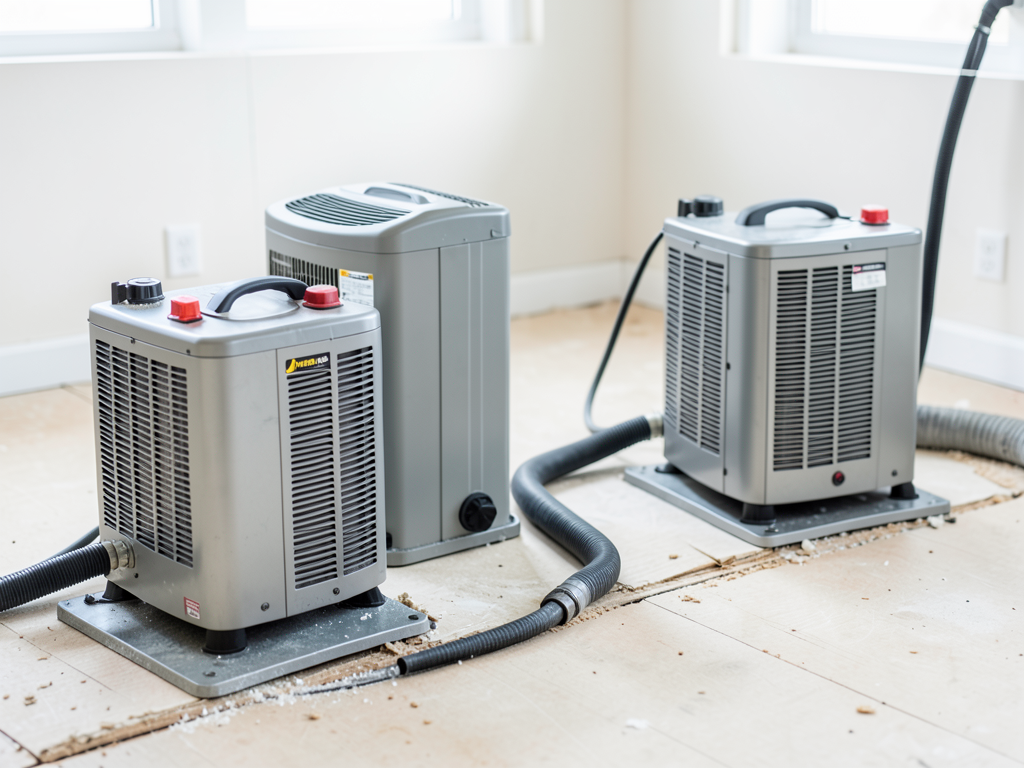
Industrial-grade dehumidifiers and air movers used to dry subfloor without removing bathroom tiles
Insurance and Costs in Jacksonville
Homeowners insurance typically covers sudden and accidental water damage, but not gradual damage or lack of maintenance. In Jacksonville, working with a restoration company that has experience with Florida insurance claims can make a significant difference.
Factors affecting restoration costs include:
- The extent of visible damage
- The type of subfloor material (concrete vs. wood)
- Whether mold remediation is required
- The accessibility of the affected area
- The urgency of the situation (emergency services cost more)
Many Jacksonville restoration companies offer free inspections and can provide documentation for insurance claims, which is crucial for maximizing your coverage.
DIY vs. Professional Assessment: When to Call the Experts
While you can perform basic checks for water damage, professional assessment is crucial because:
- Moisture can travel laterally and create hidden damage
- Professional-grade moisture meters provide accurate readings
- Thermal imaging can reveal problems behind walls
- Professionals understand when partial demolition is more cost-effective than full tear-out
- Insurance companies often require professional documentation
Attempting to dry water damage yourself with household fans and dehumidifiers often leads to incomplete drying, which can cause mold growth and structural problems that cost more to fix later.
Prevention: Protecting Your Bathroom from Future Water Damage
Once you’ve addressed the immediate problem, consider these preventive measures:
- Regularly inspect grout lines and caulk for deterioration
- Address plumbing leaks immediately
- Ensure proper ventilation in your bathroom
- Consider applying a high-quality sealer to grout lines annually
- Install water leak detection devices near toilets and under sinks
In Jacksonville’s climate, maintaining indoor humidity below 60% can significantly reduce condensation problems that lead to water damage.
Call (904) 839-6500 Today to Schedule Your Inspection
Don’t let water damage under your bathroom tiles become a costly nightmare. Our certified technicians can assess your situation and recommend the most cost-effective solution, whether that’s professional drying or selective tile removal. We serve all of Jacksonville including Riverside, Southside, Mandarin, and surrounding areas. Call (904) 839-6500 now for a free inspection before the damage spreads further.
Frequently Asked Questions
How long does it take to dry water under bathroom tiles?
Professional drying typically takes 3-5 days, depending on the extent of moisture and the materials involved. Concrete subfloors may take longer than wood subfloors to dry completely.
Can I just replace the damaged tiles instead of fixing the moisture problem?
No. Replacing tiles without addressing the underlying moisture will cause the new tiles to fail as well. The moisture source must be eliminated first.
Will my insurance cover water damage under bathroom tiles?
Insurance typically covers sudden and accidental damage but not gradual damage from maintenance issues. Coverage depends on your specific policy and the cause of the damage.
How can I prevent water damage in my Jacksonville home?
Regular maintenance, proper ventilation, humidity control, and prompt attention to plumbing issues are key. Consider annual inspections of wet areas in your home.
What’s the difference between Category 1, 2, and 3 water damage?
Category 1 is clean water, Category 2 is gray water with some contamination, and Category 3 is black water with harmful pathogens. The category affects the restoration approach and whether materials can be saved.
Before and after comparison showing successful in-place drying of water-damaged bathroom tile without demolition For more information, visit EPA Mold Resources.