Preventing structural wood rot after a major plumbing leak in Baldwin
When a major plumbing leak occurs in a Baldwin home the damage often extends far beyond wet floors. The humid Jacksonville climate creates the perfect conditions for wood rot to take hold within days. Many homeowners discover the true extent of the problem only after walls are opened or flooring is removed. By then the structural integrity of the home may already be compromised.. Read more about How to protect your Baldwin plumbing during those rare but dangerous North Florida freezes.
Baldwin’s older housing stock combined with Florida’s year round moisture exposure means that even a small leak can lead to significant structural decay. The key to preventing catastrophic failure is understanding how quickly wood rot progresses and what steps are required to properly remediate it. This guide explains the diagnostic process treatment options and why professional intervention is critical for Baldwin properties. Florida Building Code Structural Requirements.
Identifying structural wood rot in Baldwin homes
Structural wood rot in Baldwin homes often begins silently. A slow leak from a bathroom supply line or a cracked drain pipe can saturate floor joists and sill plates for weeks before any visible signs appear. By the time homeowners notice sagging floors or musty odors the rot may have advanced to a critical stage. Repairing Sagging or Water Damaged Ceilings in Springfield.
The diagnostic process starts with moisture mapping. Technicians use thermal imaging cameras and penetrating moisture meters to locate hidden damp areas within wall cavities and under flooring. These tools reveal temperature variations and moisture content that indicate active rot even when wood appears dry to the touch. Removing Hidden Mold from Your Historic Riverside Home Safely.
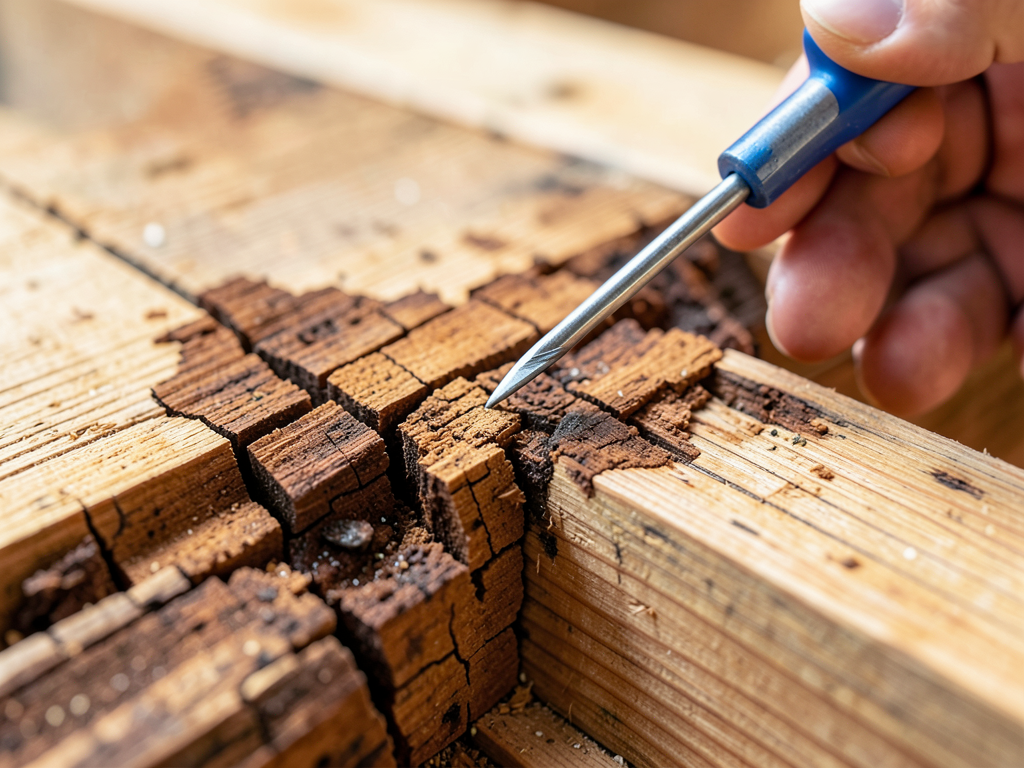
Visual inspection follows. Professionals look for discoloration fungal growth and the characteristic cuboidal cracking pattern of brown rot. The screwdriver test is a simple but effective diagnostic tool. When a screwdriver can be pushed into a structural member with minimal pressure that wood has lost its structural integrity.
Common failure points in Baldwin homes include sill plates where the wood frame meets the concrete foundation. These areas are particularly vulnerable because they sit at the moisture transition zone. Floor joists in crawl spaces also frequently show rot especially in homes built before modern pressure treated lumber requirements.
Understanding the types of wood decay
Wood decay in Jacksonville falls into three main categories. Brown rot causes wood to crack across the grain creating a characteristic brown discoloration and cubical fracture pattern. This type of rot makes wood brittle and prone to sudden failure.
White rot attacks both the cellulose and lignin in wood leaving it spongy and whitish in appearance. This decay type often progresses more slowly but can affect larger areas of structural members. Soft rot typically occurs in hot humid environments and creates a gradual degradation that may go unnoticed for extended periods.
The fungi responsible for these decays thrive in Baldwin’s climate. Coniophora puteana commonly called cellar fungus grows readily in the 65 to 90 degree temperature range typical of North Florida. Serpula lacrymans another destructive species can spread through masonry and attack wood from a distance.. Read more about Why water is leaking through your shower grout and ruining the Cedar Hills subfloor.
Distinguishing between active rot and conditions that promote it is critical. Some wood may appear sound but retain enough moisture to support fungal growth. A moisture content above 20 percent creates conditions where dormant spores can reactivate and begin new decay cycles.
The hazards of ignoring structural decay
Structural wood rot creates multiple safety hazards that extend beyond the immediate area of damage. Floor joists that have lost 40 percent of their cross sectional area can no longer support design loads. This creates a risk of sudden collapse particularly in areas where people gather like living rooms and bedrooms.
The interconnected nature of residential framing means that rot in one area can compromise entire structural systems. A rotted sill plate can cause stud walls to shift outward leading to roof sagging and window misalignment. These secondary effects often appear as the most visible damage but represent only part of the problem.
Mold growth frequently accompanies wood rot. While not all molds produce mycotoxins the presence of extensive fungal colonies indicates conditions that support decay organisms. These same conditions can harbor bacteria and other microorganisms that pose health risks to occupants.
Insurance complications arise when structural rot is discovered. Many policies exclude coverage for damage resulting from long term moisture exposure or lack of maintenance. However sudden plumbing failures that lead to rot may be covered if addressed promptly. The distinction between sudden damage and gradual deterioration often determines coverage eligibility.
Our structural repair process
The structural repair process begins with source elimination. Before any wood can be replaced the moisture source must be identified and corrected. This may involve repairing plumbing replacing failed flashing or improving drainage around the foundation. Without source control repairs will fail within months. EPA Mold Resources.
Shoring and temporary support follow. When load bearing members are compromised the structure must be stabilized before removal can begin. This involves installing temporary walls or posts that transfer loads to sound portions of the foundation. The shoring design must account for both dead loads and live loads including furniture and occupants.
Removal of decayed members requires careful demolition to avoid collateral damage. Rotted wood often crumbles when disturbed releasing spores and fungal fragments into the air. Containment barriers and negative air pressure systems prevent contamination of unaffected areas during removal.
Replacement with pressure treated lumber ensures long term durability. Florida Building Code requires UC4A rated lumber for structural members in contact with masonry or within 18 inches of exposed ground. For areas with severe decay or termite activity UC4B provides enhanced protection.
The new members must match the load bearing capacity of the originals. This often requires engineering calculations to verify that replacement sizes provide adequate strength. Simple dimensional matching is insufficient when the original wood has significantly deteriorated.
Why Jacksonville’s climate requires specialized solutions
Jacksonville’s climate creates unique challenges for structural repairs. The combination of high humidity summer thunderstorms and salt air exposure accelerates wood degradation. Baldwin’s location inland provides some protection from salt spray but still experiences the humidity and rainfall patterns that drive decay.
Duval County’s building code requirements reflect these challenges. The Florida Building Code High Velocity Hurricane Zone provisions mandate specific fasteners corrosion resistant connectors and uplift resistance for structural members. These requirements apply to Baldwin even though it lies outside the strictest coastal zones.
Termite activity compounds wood rot problems. Formosan subterranean termites thrive in the same moist conditions that support fungal decay. Wood that has been weakened by rot becomes more attractive to termites creating a compounding deterioration cycle.
Moisture content monitoring is essential for successful repairs. Even pressure treated lumber can rot if installed at high moisture content and then sealed before drying. Professional restoration includes moisture content verification before final enclosure ensuring that replacement materials start at safe moisture levels.
Prevention strategies for Baldwin homeowners
Preventing structural wood rot begins with regular inspection. Homeowners should check crawl space access points for signs of moisture staining or fungal growth. Pay particular attention to areas where plumbing lines penetrate floors or walls as these are common leak points.
Plumbing maintenance prevents many rot situations. Replace supply lines showing signs of corrosion or mineral buildup. Insulate pipes in unconditioned spaces to prevent condensation. Address even small leaks promptly as the damage they cause compounds over time.
Proper ventilation reduces moisture accumulation. Bathrooms and laundry areas need exhaust fans vented to the exterior not into attics. Ensure that soffit vents remain clear of insulation to maintain airflow through attics. This prevents the condensation that can lead to roof deck rot. Fixing Attic Water Damage After a Northside Jacksonville Storm.
Grading and drainage improvements protect foundations. Soil should slope away from the home at a minimum of six inches over ten feet. Extend downspouts at least five feet from the foundation and ensure that drainage systems remain clear of debris.
Professional inspections provide early detection. Annual inspections by qualified contractors can identify moisture problems before they cause structural damage. These inspections include thermal imaging moisture meter readings and visual assessment of vulnerable areas.
Insurance and permitting considerations
Navigating insurance coverage for structural rot repairs requires understanding policy limitations. Most homeowner policies cover sudden accidental water damage but exclude damage from long term leaks or lack of maintenance. The key distinction is often whether the damage was discoverable through reasonable inspection. Fast Flood Water Extraction for Jacksonville Beach Homeowners.
Permitting requirements in Duval County mandate structural repairs be performed to current code standards. This means that repairs often involve upgrading connections and fasteners beyond simple replacement. The permitting process includes plan review by building officials to verify that repairs meet safety requirements.
Documentation supports insurance claims. Before and after photographs moisture readings and contractor assessments provide evidence of damage extent and repair necessity. This documentation becomes critical when dealing with insurance adjusters or code officials.
Professional restoration companies maintain relationships with insurance providers. These relationships facilitate the claims process and ensure that all required documentation is properly prepared. This expertise often results in faster claim resolution and more complete coverage.
When to call a professional
Certain indicators signal the need for immediate professional intervention. Sagging floors that feel spongy when walked on indicate significant structural compromise. Musty odors that persist despite cleaning suggest active decay within wall cavities or under flooring.
Visible mold growth on structural members requires professional assessment. While surface mold can sometimes be cleaned extensive growth indicates conditions that support decay organisms. The extent of growth often exceeds what is visible to untrained observers.
Plumbing leaks that have gone unaddressed for more than 24 hours create conditions for rapid rot development. The combination of water supply and warm temperatures accelerates fungal growth. Professional drying and assessment prevent the escalation that occurs when leaks are ignored.
Older homes in Baldwin particularly those built before 1980 may contain untreated lumber in critical structural locations. These homes require special attention during any water damage event as the materials used lack modern decay resistance.
Frequently Asked Questions
How quickly does wood rot develop after a plumbing leak?
Wood rot can begin within 24 to 48 hours of continuous moisture exposure in Jacksonville’s climate. Fungal spores that are naturally present in wood become active when moisture content exceeds 20 percent. The visible signs of decay typically appear within one to three months but structural weakening can occur much sooner.
Can I repair structural wood rot myself?
Structural wood rot affecting load bearing members should always be repaired by professionals. The risks of collapse during repair and the need for proper shoring make DIY repair dangerous. Additionally building codes require specific materials and connection methods that most homeowners cannot verify.
Will my insurance cover wood rot repairs?
Insurance coverage depends on the cause of the moisture. Sudden accidental damage from a burst pipe is typically covered while damage from long term leaks or lack of maintenance is usually excluded. The timing of discovery and the source identification documentation are critical for coverage determination.
How can I tell if wood is rotted or just wet?
Wet wood will often dry without permanent damage if the moisture source is removed. Rotted wood shows permanent structural changes including discoloration cracking and loss of strength. The screwdriver test where the tool penetrates easily indicates rot rather than simple moisture.
What is the cost difference between repair and replacement?
Early intervention when rot is limited to small areas typically costs 60 to 70 percent less than waiting until structural members require full replacement. The cost multiplier increases dramatically once shoring temporary walls and extensive demolition become necessary.

[IMAGE_PLACEHOLDER_3>
Structural wood rot after a plumbing leak represents a serious threat to Baldwin homes. The humid Jacksonville climate accelerates decay making prompt professional intervention essential. By understanding the signs of rot the repair process and prevention strategies homeowners can protect their investment and ensure their family’s safety.
Don’t wait until sagging floors or musty odors indicate advanced decay. Call (904) 839-6500 today to schedule a structural integrity inspection. Our experienced technicians will identify moisture sources assess structural damage and provide a comprehensive repair plan that restores your home’s safety and value.
Pick up the phone and call (904) 839-6500 before the next storm hits. The cost of prevention is always less than the cost of emergency structural repairs. Getting 24 Hour Emergency Water Extraction in Downtown Jacksonville.
You may also find this helpful. How clogged gutters end up rotting the foundation of your Oceanway home.
You may also find this helpful. Clever ways to tell if a Dinsmore house had previous water damage before you buy it.