Comparing Commercial Dehumidifiers and Retail Fans for Managing North Florida Humidity
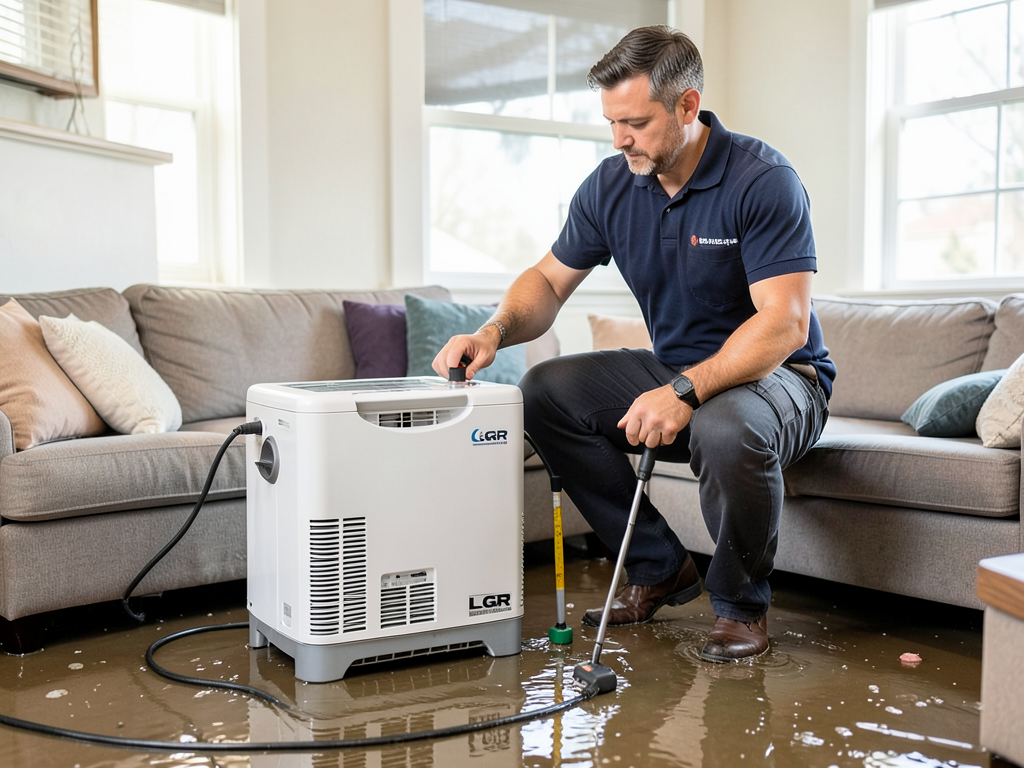
North Florida’s subtropical climate creates unique water damage challenges that retail fans simply cannot overcome. Jacksonville’s average relative humidity exceeds 70 percent year-round, with summer dew points often climbing above 70 degrees Fahrenheit. This moisture-laden air prevents proper evaporation, allowing water to remain trapped in building materials for days or weeks. Commercial-grade dehumidifiers using LGR (Low Grain Refrigerant) technology extract moisture at rates retail units cannot match, preventing secondary damage like mold growth that begins within 24 to 48 hours in Florida’s heat. Florida Building Code.
Why Jacksonville’s Climate Requires Professional-Grade Dehumidification
Florida Building Code Section 1203.3 mandates specific moisture control measures for coastal construction, recognizing that Jacksonville’s proximity to the Atlantic Ocean creates persistent high-humidity conditions. Standard refrigerant dehumidifiers struggle when ambient humidity exceeds 60 percent, which occurs daily during Jacksonville summers. LGR units maintain efficiency even when outdoor air holds maximum moisture, extracting water from materials at 38 to 50 grains per pound of air compared to conventional units operating at 70 to 90 grains per pound. Fast Flood Water Extraction for Jacksonville Beach Homeowners.
The psychrometric properties of Jacksonville’s air mean that water damage restoration requires equipment capable of creating strong vapor pressure differentials. Retail fans move air but cannot reduce the moisture content of that air below the saturation point of materials being dried. This limitation means that while a retail fan might circulate humid air across a wet carpet, it cannot extract the moisture from the carpet pad beneath or prevent wicking into drywall. Water Damage Restoration Neptune Beach.
Key Features to Look for in a Restoration Dehumidifier
Professional restoration equipment uses specific metrics that reveal true performance in Florida conditions. AHAM (Association of Home Appliance Manufacturers) ratings test dehumidifiers at 80 degrees Fahrenheit and 60 percent relative humidity, conditions rarely found in Jacksonville. Saturation ratings at 90 degrees and 90 percent humidity better reflect real-world performance in North Florida. A quality LGR unit should extract 100 to 150 pints per day at saturation conditions.. Read more about Professional Techniques for Managing Flooded Warehouse Floors and Industrial Inventory in Talleyrand.
Airflow capacity measured in cubic feet per minute determines how quickly a dehumidifier can process room air. Commercial units typically provide 350 to 500 CFM, while retail models offer 150 to 250 CFM. This difference means commercial equipment can handle larger spaces and maintain lower humidity levels throughout the drying chamber. The internal condensate pump allows continuous operation without manual tank emptying, essential when running equipment for 72 to 96 hours during restoration.
Top 5 Dehumidifiers for Water Damage (Ranked by Category)
Best Overall LGR: Phoenix 200 Max LGR delivers 180 PPD at saturation with 475 CFM airflow. The unit maintains 38 GPP (grains per pound) outlet conditions even when inlet air exceeds 100 GPP, making it ideal for Jacksonville’s coastal humidity. Digital controls allow precise humidity targeting at 30 to 50 percent RH.
Best Portable for Crawlspaces: Dri-Eaz Revolution LGR weighs 63 pounds and fits through standard 24-inch crawlspace openings. The unit extracts 85 PPD at saturation with 320 CFM, sufficient for confined spaces where moisture accumulates rapidly due to poor ventilation and high water table levels common in Jacksonville’s sandy soil areas.
Best Heavy Duty Industrial: Phoenix 270HTX provides 270 PPD at saturation with 475 CFM. The unit operates in temperatures from 33 to 125 degrees Fahrenheit, critical for unconditioned spaces like garages and attics where Jacksonville summer heat can exceed 100 degrees. Built-in hour meter tracks runtime for insurance documentation.
Professional vs. Consumer Grade: When to Call an Expert
Retail dehumidifiers typically extract 30 to 70 PPD at AHAM conditions, dropping to 15 to 35 PPD when Jacksonville humidity climbs above 80 percent. This performance gap means that while a retail unit might process 400 cubic feet of air per minute, it cannot reduce the moisture content below the material’s equilibrium moisture content. The result is extended drying times that allow mold spores to germinate and multiply.
Commercial units create conditions where materials dry at 2 to 4 inches per day, compared to 0.5 to 1 inch per day with retail equipment. This speed difference determines whether Category 1 water damage remains cleanable or progresses to Category 2 or 3, requiring material removal and replacement. The cost difference between 3 days of professional drying versus 10 days of inadequate DIY attempts often exceeds the price of professional service. Water Damage Restoration Green Cove Springs.
How to Set Up Your Dehumidifier for Maximum Drying Efficiency
- Assess the Space:
Measure the affected area and calculate cubic footage. A 1,000 square foot room with 8-foot ceilings contains 8,000 cubic feet. Professional guidelines recommend one dehumidifier per 1,000 to 1,500 cubic feet for initial drying.
- Position Air Movers:
Place air movers at 45-degree angles to walls, creating a vortex pattern that directs moist air toward the dehumidifier intake. Use one air mover per 10 to 16 linear feet of wall for optimal circulation.
- Seal the Environment:
Close windows and doors to prevent humid outdoor air from entering. Even small air exchanges can overwhelm equipment designed for sealed spaces. Use plastic sheeting to isolate affected areas from unaffected zones.. Read more about The Hidden Problem with Window AC Units Leaking into the Walls of Your Springfield Rental.
- Monitor Progress:
Check humidity levels every 4 to 6 hours using a hygrometer. Target 30 to 45 percent relative humidity for structural materials. Document readings for insurance purposes and adjust equipment placement based on moisture mapping results.
Understanding LGR Technology and Its Advantages
LGR dehumidifiers use a two-stage cooling process that pre-cools incoming air before it passes over the evaporator coil. This design allows the unit to operate efficiently in conditions where conventional dehumidifiers ice up or shut down. The technology maintains water extraction rates even when ambient temperatures drop below 65 degrees Fahrenheit, common in Jacksonville’s air-conditioned buildings during summer.. Read more about How to Properly Shut Down Your Plumbing Before Leaving Isle of Palms for the Summer.
The enhanced refrigeration system in LGR units can achieve dew point temperatures 20 to 30 degrees Fahrenheit lower than conventional models. This capability means that even when Jacksonville outdoor air holds maximum moisture, the dehumidifier can still create conditions that promote rapid evaporation from wet materials. The technology proves essential for drying hardwood floors, which require sustained low humidity to prevent warping and cupping.
Common Mistakes When Using Retail Equipment for Water Damage
Many Jacksonville homeowners discover that retail fans and dehumidifiers create a false sense of progress. The equipment may reduce surface moisture visible to the eye while leaving moisture trapped in subfloors, wall cavities, and insulation. This hidden moisture creates perfect conditions for mold growth behind baseboards and under flooring where air circulation cannot reach. Removing Hidden Mold from Your Historic Riverside Home Safely.
Another frequent error involves underestimating the volume of air that must be processed. A single retail dehumidifier might handle a small bedroom but cannot adequately dry an open floor plan common in Jacksonville’s newer construction. The equipment runs continuously but cannot achieve the low humidity levels necessary for complete drying, resulting in extended rental periods and escalating costs.
Cost-Benefit Analysis: Rent vs. Professional Service
| Equipment Type | Daily Rental Cost | PPD Capacity | Operating Temp Range | Best For |
|---|---|---|---|---|
| Retail Dehumidifier | $25-$40 | 30-70 | 65-90°F | Small, contained spills |
| Commercial LGR | $100-$150 | 150-270 | 33-125°F | Whole-room water damage |
| Professional Service | $300-$500 per day | Multiple 200+ PPD units | All conditions | Large losses, insurance claims |
The mathematical reality becomes clear when calculating moisture removal requirements. A 1,000 square foot area with 1 inch of standing water contains approximately 500 gallons of water. At 8.34 pounds per gallon, this equals 4,170 pounds of water that must be converted to vapor and extracted. Retail equipment operating at 50 PPD would require 83 days of continuous operation, while professional LGR units at 200 PPD complete the task in 21 days under optimal conditions.
Insurance Considerations and Documentation
Insurance companies increasingly require documentation of drying conditions and progress when processing water damage claims. Professional restoration companies use moisture meters, hygrometers, and thermal imaging cameras to create detailed reports showing affected areas, moisture content readings, and drying progress. This documentation proves essential when demonstrating that proper mitigation prevented secondary damage.
Many Jacksonville policies include specific provisions for water damage mitigation costs. The policies often cover professional drying equipment rental and labor when used to prevent further damage after a covered loss. However, these provisions typically exclude coverage for inadequate DIY attempts that result in mold growth or structural damage, making the initial investment in professional service a cost-effective decision.
Local Building Considerations for Jacksonville Properties
Jacksonville’s diverse housing stock presents unique challenges for water damage restoration. Historic homes in Riverside and Avondale often feature plaster walls and wood lath that absorb moisture differently than modern drywall. The pier-and-beam construction common in older neighborhoods creates crawlspaces where moisture accumulates and spreads throughout the structure.
Newer construction in areas like Nocatee and St. Johns uses engineered wood products and synthetic materials that respond differently to moisture exposure. These materials may swell, delaminate, or support mold growth at moisture levels that would not affect traditional lumber. Professional assessment determines the appropriate drying strategy based on building materials and construction methods.
Environmental Factors Affecting Drying Times
Jacksonville’s proximity to the St. Johns River and Atlantic Ocean creates microclimates that affect drying rates. Properties within 5 miles of the coast experience higher humidity levels and salt air that can accelerate corrosion of equipment components. The urban heat island effect in downtown Jacksonville can raise ambient temperatures 5 to 10 degrees above surrounding areas, affecting equipment performance.
Seasonal variations also impact restoration timelines. Summer thunderstorms can introduce additional moisture through roof leaks or flooding, while winter cold fronts may require equipment to operate in cooler conditions. Professional restoration companies maintain equipment inventories capable of handling these variable conditions, ensuring consistent performance regardless of weather patterns.
Safety Considerations When Using Dehumidification Equipment
Commercial dehumidifiers draw 8 to 12 amps at 115 volts, requiring dedicated circuits to prevent overloading Jacksonville’s older electrical systems common in neighborhoods like San Marco and Springfield. The equipment generates significant heat during operation, necessitating proper ventilation to prevent overheating in confined spaces. Extension cords rated for the equipment’s amperage must be used to prevent fire hazards.
The continuous operation of restoration equipment creates noise levels that may require hearing protection for workers and notification to building occupants. The equipment also consumes substantial electricity, potentially adding $50 to $100 per day to utility costs during extended operations. Professional companies often coordinate with utility providers to ensure adequate electrical service for multiple equipment units.
Final Thoughts on Professional vs. DIY Drying
The decision between retail equipment and professional restoration services ultimately depends on damage extent, building materials, and response time. Small, contained spills in easily accessible areas may respond to DIY efforts, while widespread damage affecting multiple rooms or building systems requires professional intervention. The cost of professional service often proves less expensive than the long-term consequences of inadequate drying.
Jacksonville’s unique climate and building characteristics make water damage restoration particularly challenging. The combination of high humidity, frequent storms, and diverse construction methods requires equipment and expertise that retail solutions cannot provide. When water damage occurs, the question becomes not whether to use professional services, but how quickly those services can be deployed to prevent escalating damage.
Frequently Asked Questions
How long does it take to dry water damage with professional equipment?
Professional LGR dehumidifiers typically dry structural materials in 3 to 5 days under optimal conditions. The exact timeline depends on water category, material types, and ambient conditions. Category 1 clean water in drywall and carpeting usually dries within 72 hours, while Category 3 contaminated water may require material removal and replacement.
Can I use my home’s air conditioner instead of a dehumidifier?
Air conditioners remove some moisture but cannot achieve the low humidity levels required for rapid structural drying. Most AC units maintain 50 to 60 percent relative humidity, while professional drying targets 30 to 45 percent. Additionally, AC systems are not designed for continuous operation and may freeze or fail under the load of water damage restoration.
What size dehumidifier do I need for my water-damaged room?
Calculate room volume by multiplying length, width, and height. Professional guidelines recommend one 200 PPD LGR unit per 1,500 to 2,000 cubic feet for initial drying. Adjust based on water category, material porosity, and ambient humidity. Severe flooding or contaminated water may require multiple units for adequate moisture removal.
Call (904) 839-6500 today to schedule your inspection and protect your Jacksonville property from escalating water damage. Professional restoration services provide the equipment, expertise, and documentation necessary for complete recovery. For more information, visit IICRC S500 Standards.