Fixing the window frame leaks that only show up during Normandy thunderstorms
Your window leaks during a storm and you are watching water drip down your wall. That is not just an annoyance. It is a warning sign of bigger problems inside your walls. In Jacksonville, the combination of heavy rain, high humidity, and salt air creates the perfect storm for window frame failures. This guide explains what causes these leaks, how to stop the immediate damage, and when to call a professional before mold or rot sets in. Fast Flood Water Extraction for Jacksonville Beach Homeowners.
Immediate Steps: What to do While it is Still Raining
Water is coming in. You need to act fast to limit damage. Grab towels, a bucket, and a flashlight. Place towels along the window sill to catch drips. If possible, use a fan to move air toward the leak. Do not try to seal the window from the outside during a storm. That can trap water inside. Instead, focus on containing the water inside until the rain stops. Water Damage Restoration Neptune Beach.
Once the storm passes, inspect the leak area with a flashlight. Look for the exact entry point. Is it coming through the glass seal, the frame corner, or the wall around the frame? Take photos. This will help a professional diagnose the problem later.
Why Jacksonville Windows Leak: Common Culprits
Window leaks in Jacksonville often start with failed caulking. Florida’s intense UV rays and salt air break down sealants faster than in other climates. Over time, the caulk shrinks and cracks. Wind-driven rain then pushes water through these gaps. Florida Building Code.
Another common issue is clogged weep holes. These small drainage holes at the bottom of the window frame are designed to let water escape. When dirt, bugs, or paint fill them, water backs up and enters your home.
Stucco homes in neighborhoods like Riverside and San Marco face a unique problem. Hairline cracks in the stucco allow water to travel by capillary action behind the wall. Once behind the stucco, water finds its way to the window frame.
Improper flashing is another major cause. Flashing is the waterproof barrier installed around the window during construction. If it was not installed correctly or has deteriorated, water has a direct path into your wall cavity.
Hidden Dangers: Why It’s Not Just a Window Problem
When water gets past your window frame, it does not stop there. It soaks into the drywall, insulation, and wooden studs behind the wall. In Jacksonville’s humid climate, this moisture creates the perfect breeding ground for mold within 24 to 48 hours.
Mold spores spread quickly through your home’s air. They can cause respiratory issues, especially in children and older adults. Black mold, in particular, is toxic and requires professional remediation under Florida’s DBPR licensing rules.
Wood rot is another silent destroyer. Wet wood loses its structural integrity. Over time, window headers and studs can weaken, leading to sagging walls or even window failure. Repairing Sagging or Water Damaged Ceilings in Springfield.
Insulation that gets wet loses its R-value. This means your home becomes less energy efficient. You will notice higher cooling bills as your air conditioner works harder to compensate.
Restoration vs. Simple Repair
Not every leak needs a full restoration team. If the water damage is minor and caught quickly, recaulking and repainting might be enough. But there are clear signs you need professional help. EPA Mold Guidelines.
If you see water stains spreading beyond the window area, that indicates the leak has been active for a while. Discoloration on walls or ceilings means water traveled inside the wall cavity.
A musty smell is a red flag for mold growth. Even if you cannot see mold, the odor means it is there. Florida’s high humidity accelerates mold growth, so time is critical.
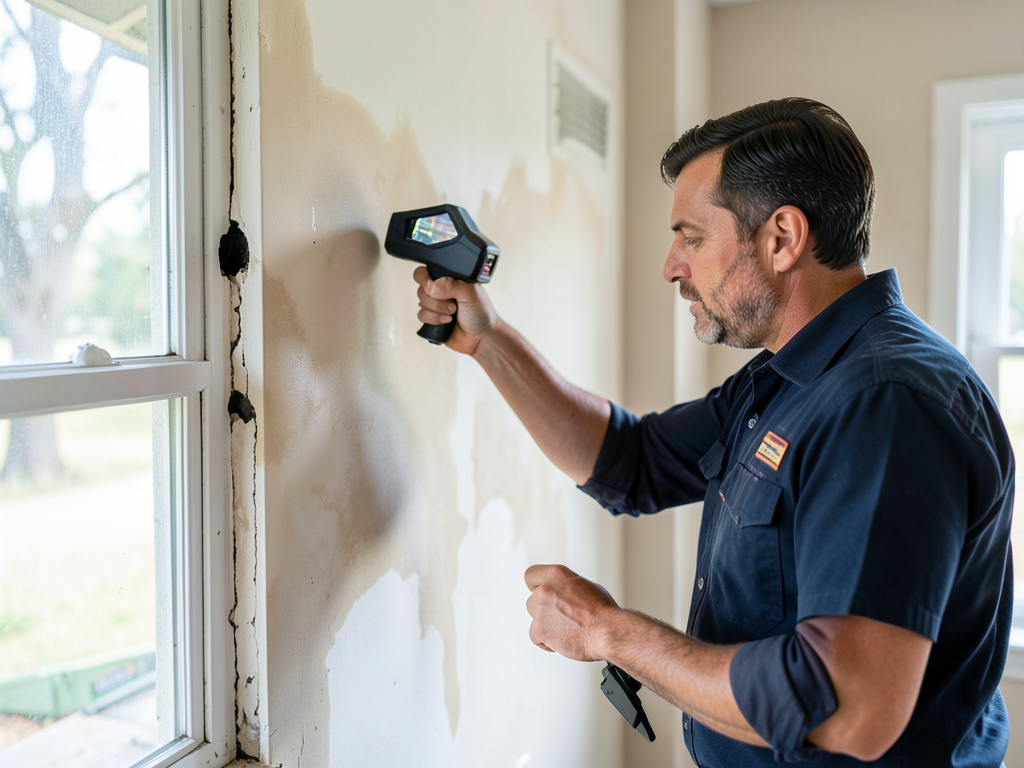
Professional restoration teams use moisture meters and thermal imaging cameras to find hidden water. These tools can detect moisture behind drywall without tearing it out. This saves time and prevents unnecessary damage. Removing Hidden Mold from Your Historic Riverside Home Safely.
Restoration also includes proper drying. Industrial-grade dehumidifiers and air movers can dry walls and studs in 3 to 5 days. This prevents secondary damage and mold growth.
Preventative Maintenance for Florida Homeowners
Preventing window leaks starts with annual maintenance. Check your window caulking every spring. Look for cracks, gaps, or areas where the caulk has pulled away from the frame. Replace any damaged caulk with a high-quality, UV-resistant silicone sealant.
Clean your weep holes at least twice a year. Use a small brush or compressed air to clear debris. Make sure water flows freely through them when you test with a spray bottle.
Inspect your stucco for cracks annually. Even hairline cracks can let water in. Use a masonry caulk to seal small cracks. For larger damage, call a professional.
Check your roof and gutters. Clogged gutters cause water to overflow and run down walls. Make sure your downspouts direct water at least 5 feet away from your foundation.
Consider impact-resistant windows if you live in a high-wind area like Jacksonville Beach or Atlantic Beach. These windows are designed to withstand hurricane-force winds and reduce the risk of water intrusion.
Understanding Jacksonville’s Storm Pattern
Jacksonville’s summer thunderstorms are notorious for wind-driven rain. These storms can produce wind speeds over 30 mph, enough to push water horizontally through the smallest gaps. The rain often comes in sudden bursts, overwhelming drainage systems.
The St. Johns River and Atlantic Ocean influence our weather. Moist air from the ocean fuels afternoon thunderstorms. This means your windows face constant exposure to salt and humidity, accelerating material breakdown.
Florida Building Code Section 1609.1 requires windows in coastal zones to meet specific wind load ratings. If your home was built before 2002, it may not meet current standards. This puts older homes at higher risk during storms.
When to Call a Professional
Call a professional if you notice any of these signs: water damage spreading beyond the window, mold smell, soft or spongy walls, or if the leak returns after you repair the caulking. These indicate deeper structural issues.
Professionals can also help with insurance claims. Many homeowners’ policies cover sudden water damage but not gradual leaks. A restoration company can document the damage and provide the evidence your insurance company needs.
Time matters. The longer water sits in your walls, the more damage it causes. Mold can start growing within 24 hours in Jacksonville’s climate. Do not wait for the next storm to make the problem worse.
Cost Factors to Consider
The cost of fixing window leaks varies widely. Simple recaulking might cost $100 to $300. Full window replacement can run $300 to $700 per window. Restoration of water-damaged walls typically costs $1,000 to $3,000 depending on the extent of damage. Fixing Attic Water Damage After a Northside Jacksonville Storm.
Insurance coverage depends on the cause. Sudden storm damage is usually covered. Long-term neglect or maintenance issues often are not. A professional assessment can help you understand what your insurance will pay.
Prevention is always cheaper than restoration. Annual maintenance costs $100 to $200 but can save you thousands in repair bills later.
Frequently Asked Questions
How do I know if my window leak is serious?
If water stains spread beyond the window, you smell mold, or the wall feels soft, the leak is serious. These signs indicate water has penetrated deep into your wall structure.
Can I fix a window leak myself?
Minor leaks from failed caulking can often be fixed with DIY recaulking. But if you see mold, water damage spreading, or the leak returns quickly, call a professional. Hidden damage requires expert diagnosis.
How long does it take to dry water-damaged walls?
Professional drying typically takes 3 to 5 days using industrial dehumidifiers and air movers. This timeframe prevents mold growth and secondary damage.
Will my insurance cover window leak damage?
Insurance usually covers sudden storm damage but not gradual leaks from maintenance issues. A professional assessment can help document the damage for your claim.
How can I prevent window leaks during hurricane season?
Check and replace caulking annually, clean weep holes, inspect stucco for cracks, and consider impact-resistant windows if you live in a high-wind area.
Take Action Before the Next Storm
Water damage only gets worse with time. If you are dealing with a window leak right now, do not wait. The combination of Jacksonville’s storms and humidity means mold can start growing within a day. A quick inspection can save you thousands in restoration costs later.
Call (904) 839-6500 today to schedule your inspection. Our team uses moisture meters and thermal imaging to find hidden damage. We provide a clear plan to fix the leak and restore your home. Do not let the next storm catch you unprepared.
Pick up the phone and call (904) 839-6500 before the next storm hits. Your home deserves protection from Jacksonville’s toughest weather.