How to clean up after your holiday tree stand leaks and ruins the living room floor
Water from a leaking Christmas tree stand can cause serious damage to your Jacksonville home’s flooring within hours. The combination of tannins from tree water and Florida’s high humidity creates the perfect conditions for stains and mold growth. Here’s what to do immediately when you discover a leak. Fast Flood Water Extraction for Jacksonville Beach Homeowners.
First remove the tree safely to stop the source of water. Then blot excess moisture with clean towels. For hardwood floors avoid rubbing which can push water deeper into seams. Place fans around the affected area to begin drying. The clock is ticking mold can start growing within 24-48 hours in Jacksonville’s humid climate. Water Damage Restoration Neptune Beach.
Why Jacksonville’s Climate Makes Tree Stand Leaks Dangerous
Jacksonville’s average humidity sits above 75% year-round creating an environment where water damage escalates quickly. When tree water seeps under floorboards the moisture becomes trapped in the subfloor assembly. This creates a microclimate perfect for mold spores already present in most homes.
Local building codes require moisture barriers in new construction but many Jacksonville homes built before 2010 lack adequate protection. The moisture content in wood flooring should stay below 12% to prevent warping. After a tree stand leak readings often climb to 18-20% indicating severe saturation.
Addressing water intrusions within 24-48 hours prevents mold growth. In Jacksonville’s climate that window shrinks to 18-24 hours due to higher ambient moisture levels.
Common Signs of Christmas Tree Water Damage
Wood floors show several warning signs after water exposure. Cupping occurs when edges of boards rise higher than centers creating a concave surface. This happens when moisture causes wood to expand unevenly. Dark staining along board edges often indicates tannin migration from tree water.
Carpet padding can absorb several times its weight in water. Even if the carpet surface feels dry the padding underneath may stay saturated for days. This creates conditions for mold growth and unpleasant odors.
Baseboards may show signs of swelling or separation from walls. Paint or finish may bubble or peel where water has wicked up from the floor. These visual indicators help determine the extent of damage before professional assessment. EPA mold prevention guidelines.
Emergency Steps for Water Damage Control
Time matters more than technique in the first hours after discovering a leak. Remove standing water immediately using clean towels or a wet vacuum. For large spills a shop vac can extract water more effectively than towels alone.
Move furniture away from wet areas to prevent staining and allow airflow. Prop up furniture legs with aluminum foil or plastic to prevent finish transfer to damp floors. Open windows if weather permits to increase air circulation.
Set up fans to create cross-ventilation across the affected area. Position at least one fan blowing directly across the wet surface. For severe damage industrial air movers provide much stronger airflow than household fans.
Monitor humidity levels if you have a hygrometer. Indoor humidity should stay below 60% during drying. Higher levels slow the drying process and increase mold risk.
Professional Assessment: When DIY Isn’t Enough
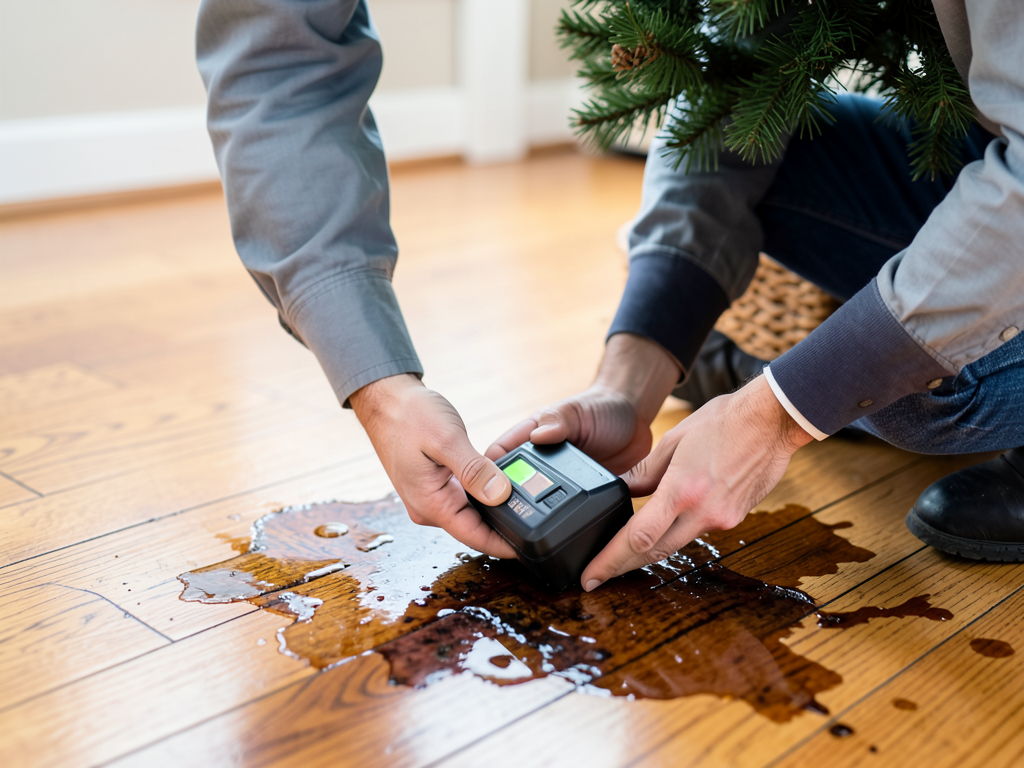
Surface drying often misses water trapped in subfloors wall cavities or under cabinets. Professional moisture meters can detect water in materials that feel dry to touch. These tools use electromagnetic signals or pin probes to measure moisture content accurately.
Infrared cameras reveal temperature differences that indicate moisture presence. Cold spots on thermal images often correspond to wet areas. This technology helps locate damage without destructive testing.
Professional drying equipment removes moisture more efficiently than household fans. Industrial dehumidifiers can extract 20-30 gallons of water from the air daily. Combined with high-velocity air movers they create optimal drying conditions.
Moisture mapping documents the extent of damage and guides the drying strategy. Technicians create detailed reports showing affected areas and tracking progress throughout the restoration process.
The Science of Hardwood Floor Restoration
Hardwood floors respond differently to water damage based on wood species and finish type. Oak and maple absorb water more slowly than pine or fir. Pre-finished floors with aluminum oxide coatings resist water penetration better than site-finished floors.
Engineered hardwood has a plywood base that swells when wet. This can cause irreversible damage even if the top veneer appears intact. Solid hardwood can sometimes be salvaged through controlled drying and refinishing.
The drying process must be gradual to prevent additional damage. Rapid drying can cause checking splitting or further warping. Professionals use specialized drying chambers that control temperature and humidity precisely.
Moisture content must equalize throughout the floor assembly. This process can take several days for severely affected areas. Monitoring continues until moisture levels stabilize within acceptable ranges.
Tannin Stains and Carpet Contamination
Tree water contains tannins that can permanently stain light-colored carpets and grout. These organic compounds bind to fibers and create yellowish-brown discoloration. Standard cleaning often fails to remove tannin stains completely.
Carpet backing materials provide food sources for mold when wet. Synthetic backings resist mold growth better than natural fiber backings. The age and condition of carpet affects its ability to withstand water exposure.
Padding acts like a sponge holding moisture against the subfloor. Even after surface drying padding may stay damp for extended periods. This creates ongoing moisture problems and odor issues.
Professional cleaning uses specialized solutions that break down organic compounds. Hot water extraction removes both stains and contaminants effectively. Some severe cases require padding replacement to eliminate odor sources.
Mold Prevention in Florida’s Humid Climate
Florida’s climate creates unique challenges for water damage restoration. High outdoor humidity means indoor air already contains significant moisture. This slows natural drying and requires aggressive dehumidification.
Mold spores need moisture food sources and suitable temperatures to grow. Jacksonville’s warm temperatures year-round provide ideal conditions when water is present. Common food sources include wood paper fabric and even dust.
Airborne mold spores are present in virtually all indoor environments. They become problematic when moisture allows them to colonize surfaces. Some species can begin growing within 24 hours under favorable conditions.
Professional remediation follows established protocols to prevent cross-contamination. Containment barriers isolate affected areas during cleanup. HEPA filtration captures airborne spores during demolition and cleaning. Sump Pump Failure Cleanup.
Insurance Considerations for Holiday Water Damage
Homeowners insurance typically covers sudden accidental water damage. A Christmas tree stand leak usually qualifies as a covered event. However damage from gradual leaks or poor maintenance may be excluded.
Documentation becomes crucial for insurance claims. Photos showing the extent of damage and the source of the leak support your claim. Keep receipts for any emergency services or repairs. Getting 24 Hour Emergency Water Extraction in Downtown Jacksonville.
Many policies require prompt mitigation to prevent further damage. Failing to take reasonable steps to protect your property could result in claim denial. This makes immediate response essential.
Professional restoration companies often work directly with insurance companies. They can provide detailed estimates and documentation that satisfy insurance requirements. Some offer direct billing to insurance companies.
Preventing Future Tree Stand Leaks
Choose a sturdy tree stand with a large water reservoir. The stand should accommodate your tree’s trunk diameter without forcing or trimming. A proper fit prevents instability that can cause tipping and spills.
Check the stand daily for water level and stability. Add water regularly to keep the tree hydrated and reduce needle drop. A dry tree is more likely to tip than a well-watered one.
Place a waterproof barrier between the stand and floor. Commercial tree mats or plastic sheeting can catch minor spills. Ensure the barrier extends beyond the stand’s footprint to catch overflow.
Consider artificial trees for homes with extensive hardwood flooring. Modern artificial trees look realistic and eliminate water damage risk entirely. They also reduce fire hazard concerns.
Professional Restoration vs. DIY Repair
DIY approaches work for minor spills on sealed surfaces. For extensive damage or valuable flooring professional restoration provides better results. The cost difference often balances against potential for further damage.
Professionals bring specialized equipment unavailable to homeowners. Industrial dehumidifiers air movers and moisture meters cost thousands of dollars. Professional-grade cleaning solutions remove stains more effectively than household products.
Time savings represent another advantage. Professionals can often complete restoration in days rather than weeks. This minimizes disruption to your holiday plans and prevents secondary damage.
Quality assurance matters for valuable flooring. Professional work includes documentation and warranties. DIY repairs may fail to address underlying issues leading to recurring problems.
Jacksonville-Specific Restoration Services
Local restoration companies understand Jacksonville’s unique climate challenges. They know which materials perform best in high-humidity environments and how to address mold concerns specific to Florida.
Many Jacksonville homes feature open floor plans that allow water to spread quickly. Professional assessment considers how water moves through your specific home layout. This affects drying strategy and equipment placement.
Local building codes influence restoration approaches. Jacksonville requires specific moisture levels for floor installation and repair. Professionals ensure work meets these standards to prevent future issues.
Emergency response times matter in water damage situations. Local companies can typically arrive within hours not days. This rapid response minimizes damage and reduces restoration costs.
Cost Factors in Water Damage Restoration
Restoration costs vary based on damage extent materials affected and required services. Minor damage to small areas might cost a few hundred dollars. Extensive damage requiring structural repairs can cost thousands.
Hardwood floor restoration typically costs $5-10 per square foot. This includes drying sanding and refinishing. Replacement costs range from $8-15 per square foot depending on wood species and quality.
Carpet replacement costs average $3-5 per square foot including padding. Cleaning and restoration of salvageable carpet costs $1-2 per square foot. Severely contaminated carpet often requires complete replacement.
Insurance deductibles affect out-of-pocket costs. Many homeowners policies have $500-2000 deductibles. Understanding your coverage helps make informed decisions about restoration options.
Frequently Asked Questions
How long before mold starts growing after a tree stand leak?
Mold can begin growing within 24-48 hours in Jacksonville’s humid climate. The combination of moisture warm temperatures and organic materials creates ideal conditions for rapid mold colonization.
Can I save my hardwood floors after a tree stand leak?
Many hardwood floors can be saved if addressed quickly. The success depends on wood type finish and how long water remained in contact. Professional assessment determines salvageability and restoration options.
Will my homeowners insurance cover Christmas tree water damage?
Most policies cover sudden accidental water damage from tree stand leaks. Coverage typically includes water removal drying and restoration of damaged materials. Check your specific policy for details and limitations.
How can I prevent tree stand leaks in the future?
Use a sturdy stand with adequate water capacity check water levels daily and place waterproof barriers under the stand. Consider artificial trees for homes with extensive hardwood flooring.
What should I do first when I discover a tree stand leak?
Remove the tree safely blot excess water and begin drying the area with fans. Call a professional restoration company immediately to assess damage extent and prevent mold growth.
Taking Action Against Water Damage
Water damage from a Christmas tree stand leak requires immediate attention in Jacksonville’s humid climate. The combination of tannins moisture and warmth creates conditions for rapid damage escalation. Quick response can mean the difference between simple cleanup and extensive restoration.
Professional assessment provides peace of mind and prevents costly mistakes. Experts can identify hidden damage prevent mold growth and restore your home efficiently. The investment in professional services often pays for itself through prevented secondary damage. Removing Hidden Mold from Your Historic Riverside Home Safely.
Don’t let holiday traditions turn into restoration nightmares. Take preventive measures respond quickly to leaks and know when to call professionals. Your home deserves protection from water damage year-round.