Is Your Water Damaged Ceiling Fan Safe? A Jacksonville Homeowner’s Guide
A ceiling fan that’s been exposed to roof leak water is not just an inconvenience. It is a potential electrical fire hazard and a structural danger that could literally fall on you. In Jacksonville’s humid climate, that water can quickly lead to mold growth inside the motor housing and rust in the mounting bracket, weakening the entire assembly. This guide explains the immediate safety steps you must take, the hidden dangers you might not see, and when to call a professional restoration team. Fast Flood Water Extraction for Jacksonville Beach Homeowners.
Immediate Safety Steps: Do This First
The moment you notice water dripping from your ceiling fan or see water stains around the fixture, your first priority is safety. Do not touch the fan or try to dry it with a towel. Water conducts electricity and a wet fan can deliver a dangerous shock. Follow these steps:
- Turn off the power at the circuit breaker. Do not rely on the wall switch. Find the breaker that controls the fan and switch it to OFF.
- Clear the area directly below the fan. Move furniture, electronics, and anything valuable out from under the fixture.
- Stop using the room if possible. If the leak is active, keep people and pets away until the source is controlled.
- Call a licensed electrician if you see sparks, smell burning, or the fan housing is warm to the touch.
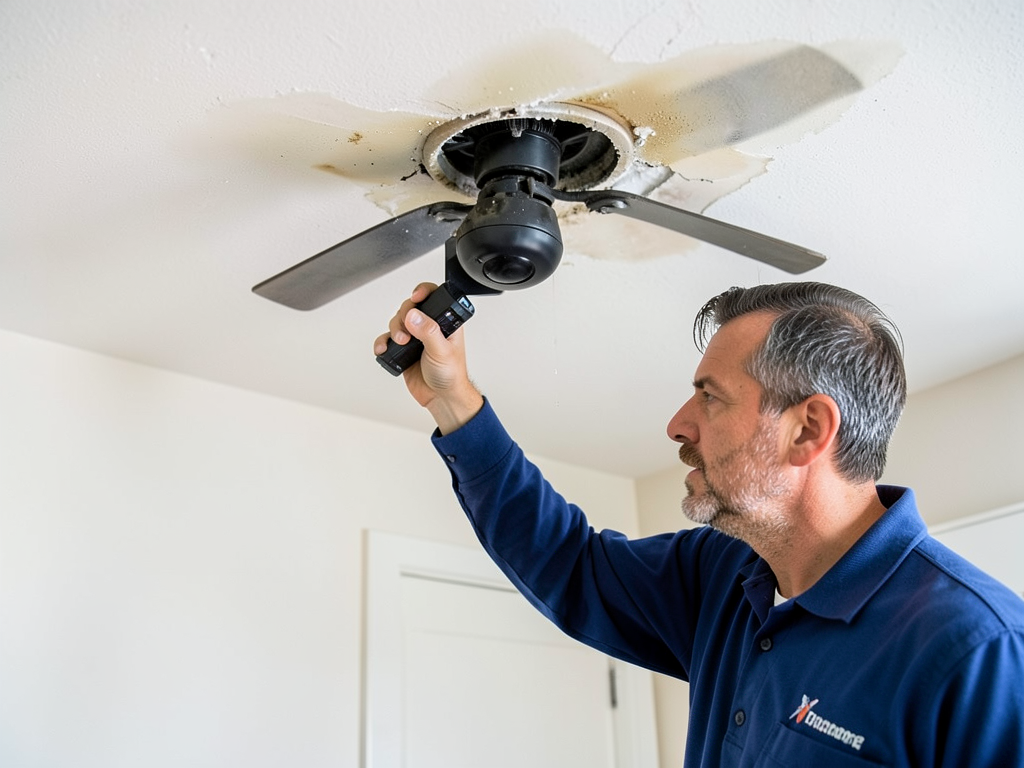
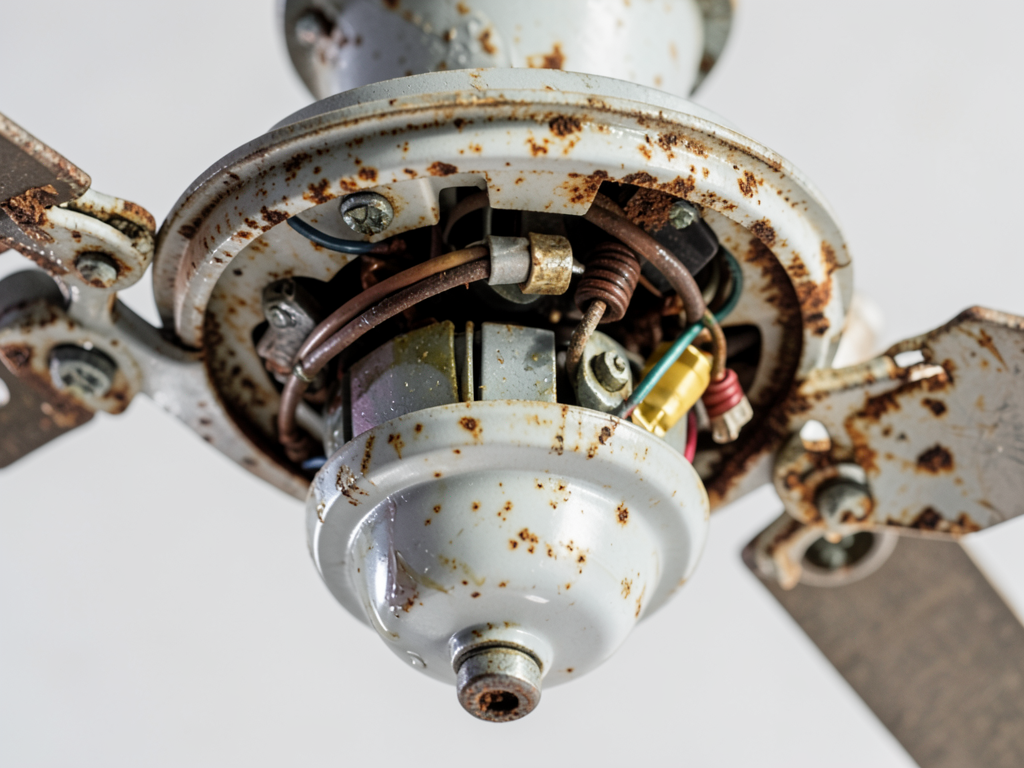
Once the power is off, you can safely inspect for visible damage. Look for water pooling in the light kit, rust on the blades, or sagging drywall around the mount. If you see any of these signs, the fan must be professionally removed before it can be safely used again. Repairing Sagging or Water Damaged Ceilings in Springfield.
The Hidden Dangers of a Wet Ceiling Fan
Water inside a ceiling fan creates multiple failure points that are not always visible. The motor windings can short out, causing an electrical fire. The bearings can seize, leading to wobbling or imbalance. Most critically, the mounting bracket that secures the fan to the ceiling joist can rust through, causing the entire unit to fall.
In Jacksonville’s climate, the danger is amplified. High humidity means wet materials stay damp longer, giving mold and mildew time to grow inside the fan housing. Category 2 or 3 water from a roof leak (which may contain dirt, bacteria, or roofing tar) accelerates corrosion of metal parts. The National Fire Protection Association reports that electrical failures cause over 45,000 home fires per year in the U.S., and water-damaged fixtures are a known ignition source. National Fire Protection Association electrical fire data.
Even if the fan appears to work after drying, internal damage may remain. A corroded capacitor can fail without warning, and a weakened mounting box can pull out of the ceiling under the fan’s weight. The only way to be certain it is safe is to have a professional inspect and test the unit.
Evaluating the Damage: Can It Be Saved?
Not every water-damaged ceiling fan needs replacement, but many do. The decision depends on the water category, the extent of exposure, and the fan’s construction. Here is a quick reference:
| Water Category | Clean (Category 1) | Grey (Category 2) | Black (Category 3) |
|---|---|---|---|
| Examples | Rainwater, pipe leak | Washing machine overflow | Sewer backup, floodwater |
| Fan Salvage Chance | Possible with full drying | Low. Replace recommended | Replace immediately |
| Health Risk | Minimal | Moderate (bacteria) | High (pathogens) |
If the water was clean rainwater and the fan was quickly dried by a professional, it might be restored. However, if the water sat for more than 24-48 hours, mold can begin growing inside the motor housing, making restoration unsafe. Black water exposure always requires replacement due to contamination risks.
A professional restoration team will use moisture meters to test the drywall around the mount, thermal imaging to find hidden damp spots, and antimicrobial treatments to prevent mold. They will also inspect the ceiling joist for rot, which can compromise the fan’s structural support. Removing Hidden Mold from Your Historic Riverside Home Safely.
The Jacksonville Factor: Humidity and Mold
Jacksonville’s average relative humidity stays above 70% for much of the year. That means materials stay wet longer after a leak, and mold can colonize in as little as 24-48 hours. A ceiling fan motor housing provides a dark, enclosed space where mold spores can thrive out of sight.
According to the Florida Department of Health, Stachybotrys chartarum (black mold) and Aspergillus species are common in water-damaged buildings. These molds can cause respiratory issues, especially in children and the elderly. The warm, moist air from a running fan can spread spores throughout the home. Florida Department of Health mold information.
Professional drying is not just about removing visible water. It involves industrial dehumidifiers, HEPA air scrubbers, and moisture mapping to ensure every cubic foot of affected space is returned to safe levels. In Jacksonville, where afternoon thunderstorms can drop several inches of rain in an hour, rapid response is critical to prevent secondary damage.
When to Call a Restoration Professional
Some ceiling fan water damage is limited to the fixture itself. Other times, the leak is a symptom of a larger problem that requires professional restoration. Call a certified team if you notice:
- Water stains spreading across the ceiling or down walls
- Soft or sagging drywall around the fan mount
- A musty odor that persists after the fan is off
- Active dripping that continues even when it is not raining
- Evidence of roof damage such as missing shingles or visible holes
Restoration professionals follow the IICRC S500 Standard for water damage, which classifies water into three categories and prescribes specific drying and cleaning methods for each. They use moisture meters to test materials behind walls, inject drying air into wall cavities, and apply antimicrobial agents to prevent mold growth.
In Jacksonville, where many homes have attic-mounted HVAC units, a leak from an air handler can mimic a roof leak. A professional will identify the true source, whether it is a cracked drain pan, a clogged condensate line, or damaged roofing, and coordinate repairs to stop the problem at its root. Fixing Attic Water Damage After a Northside Jacksonville Storm.
Frequently Asked Questions
Can I dry my ceiling fan with a hair dryer?
No. A hair dryer does not provide enough airflow or heat to safely dry internal motor components. It can also push water deeper into the housing. Professional drying uses controlled heat and airflow to remove moisture without damaging electrical parts.
Does homeowners insurance cover water-damaged ceiling fans?
Most policies cover sudden, accidental damage from events like a roof leak or burst pipe. Gradual damage or neglect may not be covered. Document the damage with photos and keep receipts for any emergency repairs to support your claim. Getting 24 Hour Emergency Water Extraction in Downtown Jacksonville.
How long does it take to dry a water-damaged ceiling?
Depending on the material and extent of saturation, drying can take 24-72 hours. Porous materials like drywall and insulation hold water longer than wood. Professionals use moisture meters to confirm when materials are dry to industry standards.
Can I reinstall the fan myself after it dries?
Only if you are a licensed electrician and the fan has been inspected for internal damage. A compromised motor or mount can fail catastrophically. Professional inspection ensures the fan is safe to operate.
What if the leak is from my HVAC unit instead of the roof?
HVAC condensate leaks are common in Jacksonville due to high humidity. A clogged drain line or cracked pan can cause water to pool in the attic and drip through the ceiling. An HVAC technician can repair the unit, but a restoration team must address the water damage to prevent mold.
Take Action Before It’s Too Late
A wet ceiling fan is more than an inconvenience. It is a safety hazard that can lead to electrical fires, ceiling collapse, and toxic mold growth. In Jacksonville’s humid climate, every hour counts. If you see water around your fan, turn off the power and call a professional immediately.
Fortress Water Damage Restoration Jacksonville has the equipment and expertise to handle water-damaged fixtures, hidden moisture, and mold prevention. Our team is on call 24/7 to respond to emergencies across Duval County and surrounding areas.
Don’t wait for the next storm. Call (904) 839-6500 today to schedule your inspection and keep your home safe.