Why Your Second Floor Laundry Room Leak is a Disaster for Your Fleming Island Home
A washing machine hose bursts on your second floor and suddenly you are standing in two inches of water watching it cascade through the ceiling below. In Fleming Island homes gravity accelerates the destruction. Water travels through floor joists and saturates ceilings within minutes creating electrical hazards and structural damage that can cost thousands to repair. EPA mold guidelines.
Second floor laundry rooms are common in Fleming Island split-level and two-story homes built over the past two decades. These homes sit on sandy soils near Doctors Lake where the water table can rise quickly during Florida’s rainy season. When a leak occurs on an upper floor the water does not just pool. It follows the path of least resistance straight down through ceiling cavities into your living room or kitchen below. Florida Building Code.
Time matters more than you think. A slow leak behind your washer can soak subflooring for days before you notice. A supply line burst dumps 600 gallons per hour. Within sixty minutes water can penetrate drywall ceiling tiles and light fixtures creating a collapse hazard. The humid Florida climate means that even after visible water is gone moisture lingers in wood and insulation creating perfect conditions for mold growth within forty-eight hours. Fast Flood Water Extraction for Jacksonville Beach Homeowners.
Why Second Floor Leaks Hit Fleming Island Homes Harder
Fleming Island’s building stock includes many homes built between 2000 and 2015 with second floor laundry closets off master bedrooms. These setups often use flexible rubber hoses that degrade faster in Florida’s heat and UV exposure. The island’s proximity to the St. Johns River means higher ambient humidity which keeps materials damp longer after a leak.
Many Fleming Island homes use engineered I-joists for floor framing. These joists have a top flange a bottom flange and a web in between. Water running along the web can travel laterally across rooms before dripping down. This hidden movement means the leak source and the visible damage below may be twenty feet apart. Removing Hidden Mold from Your Historic Riverside Home Safely.
The sandy soil under Fleming Island homes allows rapid water infiltration. If a second floor leak reaches an exterior wall the water can exit near the foundation and saturate the ground around your crawl space or slab edge. This creates hydrostatic pressure that can push water back up through tiny cracks later.. Read more about Emergency Water Cleanup for Vacation Rental Owners in Jacksonville Beach.
Common Laundry Room Leak Sources on Upper Floors
Supply line failures cause about sixty percent of upper floor laundry floods. Rubber hoses crack from heat and age especially in Florida’s warm interiors. A one-eighth inch split can release over ten gallons per minute. Stainless steel braided hoses resist bursting but their fittings can still fail if overtightened. Sump Pump Failure Cleanup.
Drain pump and hose leaks are the second most common cause. These leaks start small then grow as vibration loosens clamps. Because the water is soapy it leaves a residue that can hide the dampness until flooring or ceiling damage appears.. Read more about Removing Mold and Water from Behind Your Kitchen Backsplash Tiles.
Clogged condensate lines from high-efficiency washers can back up into the drum. When the machine spins this trapped water sprays out under pressure. In Florida’s humid climate condensate lines clog faster due to algae growth inside the narrow tubing.
Overflow from a floor drain clog is less common but more severe. If your laundry room has a floor drain and the main sewer line backs up soapy wash water can erupt from the drain and spread under pressure across the floor into the room below.
The Gravity Effect How Water Travels Through Your Home
Water falling from a second floor laundry room behaves like a slow motion flood. It first saturates the subfloor. From there it seeps into ceiling drywall below. Because most second floor laundry rooms sit above kitchens or living rooms the damage often affects expensive fixtures and electronics.
Light fixtures become hazards when wet. Water conducts electricity and can cause short circuits or shock risks. Ceiling fans with drooping blades indicate severe saturation. In worst cases the entire ceiling section between joists can collapse under the weight of retained water.. Read more about How a Small Ice Maker Leak Can Ruin Your Entire Green Cove Springs Kitchen.
Water also travels along wiring paths. If your home has structured wiring or security system cables running through floor cavities water can use those pathways to spread horizontally before dropping again. This creates hidden damp zones inside walls that feed mold growth.
The heat and humidity of a Florida laundry room accelerate evaporation into surrounding cavities. Moisture drives into wood subflooring and ceiling joists where it stays trapped. Without industrial drying equipment these areas remain wet for weeks providing a breeding ground for fungi.
Immediate Actions to Take When You Discover a Second Floor Leak
Shut off the water supply at the washer’s shutoff valve. If you cannot reach it turn off the home’s main water valve. This stops the source while you address the damage.
Turn off electricity to the affected floor. Use the breaker panel not wall switches. Water and electricity together create lethal shock hazards especially in older Fleming Island homes with aging wiring.
Remove standing water with mops towels or a wet vacuum. The goal is to prevent further migration. Do not use household fans alone. They recirculate humid air and can spread mold spores.
Document the damage with photos before moving anything. This helps with insurance claims. Include wide shots of the room and close ups of water lines on walls and ceilings.
Call a professional water damage restoration company that serves Fleming Island. Look for firms with IICRC certification and experience with multi-story residential leaks. They bring moisture meters thermal cameras and commercial dehumidifiers that homeowners cannot rent.
Professional Restoration Process for Second Floor Laundry Leaks
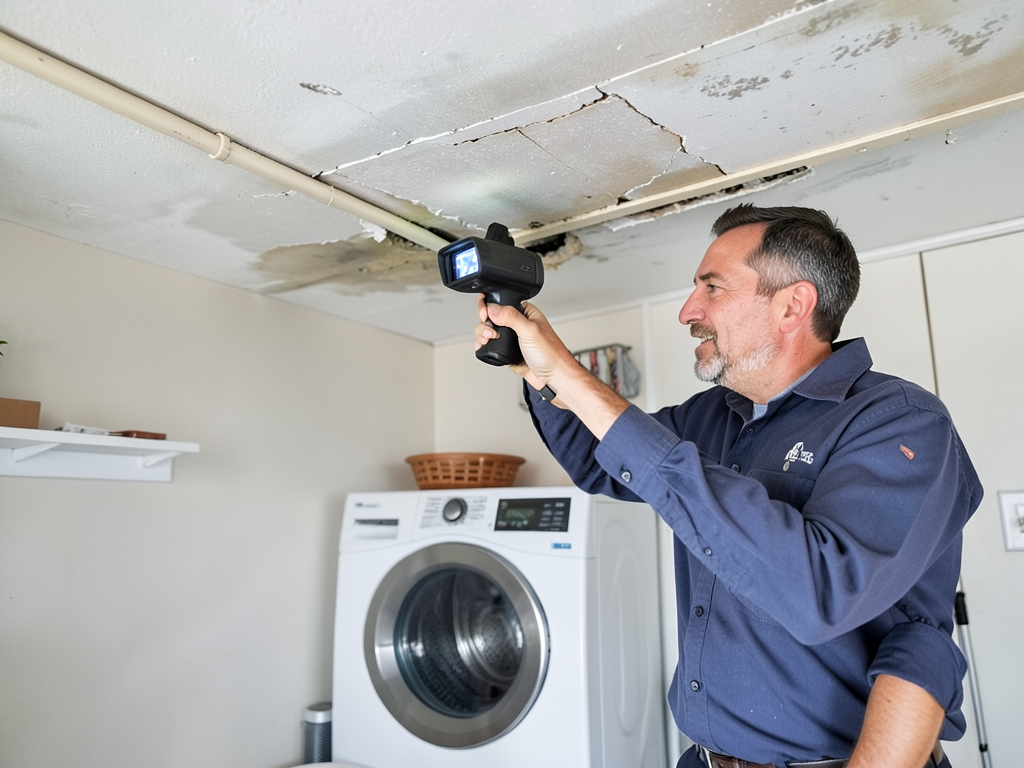
Inspection starts with moisture mapping. Technicians use thermal imaging to find hidden damp zones inside walls and ceilings. They also check subfloor moisture with penetrating meters. This step reveals the true extent of damage beyond what is visible.
Water extraction removes bulk moisture. Truck mounted extractors pull water from carpets padding and flooring. For hard surfaces like tile they use weighted wands to squeeze water from grout lines.
Structural drying uses industrial dehumidifiers and high speed air movers. LGR low grain refrigerant dehumidifiers pull moisture from deep in wood and drywall. Air movers create evaporation across wet surfaces. This combination can reduce drying time from weeks to three to five days.
Antimicrobial treatment prevents mold. After drying technicians apply EPA registered antimicrobials to all affected surfaces. This step is critical in Florida where ambient humidity can re-wet materials if they are not treated.
Repairs may include replacing ceiling drywall insulation and sometimes subflooring. If water traveled along wiring paths electricians must inspect and replace damaged cables. In severe cases floor joists need drying or reinforcement.
Preventing Future Second Floor Laundry Room Leaks
Replace rubber washer hoses every five years. Stainless steel braided hoses last longer but still need inspection. Look for bulges cracks or corrosion at the fittings.
Install an automatic shutoff valve with moisture sensors. These devices detect leaks and close the water supply within seconds. Some integrate with smart home systems to send alerts to your phone.
Use a drain pan under the washer. Connect the pan to a standpipe or indirect waste line. This catches small leaks before they reach the floor. In Florida consider a secondary overflow pan for extra protection.
Clean the washer’s condensate line annually. Flush it with a vinegar solution to prevent algae buildup. Replace the line every three years even if it looks clear.
Check floor drain traps regularly. Pour water down the drain to ensure the trap holds and prevents sewer gas from entering the laundry room.
Insurance Coverage for Second Floor Laundry Room Water Damage
Most Florida homeowners policies cover sudden and accidental water discharge from appliances. This includes burst washer hoses. However they often exclude damage from continuous leakage or lack of maintenance.
Flood damage from external sources like storm surge or rising water tables requires separate flood insurance through the National Flood Insurance Program. Fleming Island homes near Doctors Lake may need this coverage depending on FEMA flood zone designation.
Mold remediation coverage varies. Many policies limit mold claims to a few thousand dollars or exclude them entirely unless the mold results from a covered water loss. Document the source of water and timing of the leak to support your claim.
Restoration companies often help with insurance documentation. They provide moisture maps drying logs and repair estimates that adjusters need. Some firms in Fleming Island have dedicated insurance coordinators to streamline this process.
Local Building Codes and Laundry Room Requirements in Fleming Island
Fleming Island homes fall under the Florida Building Code which adopts strict standards for multi-story residential construction. Laundry rooms on upper floors must have floor drains or indirect waste connections to prevent water accumulation.
Supply lines must be protected from physical damage. This means hoses cannot run through walls without protection and must have accessible shutoff valves. The code also requires leak detection devices in new construction but does not mandate them for existing homes.
Electrical outlets in laundry areas must be GFCI protected to reduce shock risk. This is especially important in multi-story homes where water can travel to lower floors and create cross circuit hazards.
Ventilation requirements help control humidity. Laundry rooms must have either a window or mechanical exhaust to the exterior. This reduces condensation on cold water pipes which can drip and mimic a leak.
Why Professional Help Matters More in Florida’s Climate
Florida’s average relative humidity stays above sixty percent most of the year. This means materials dry slower than in drier climates. A leak that might dry in two days elsewhere can take a week here.
High humidity also means higher mold risk. The EPA states that mold can begin growing on damp surfaces within forty-eight hours. In Florida’s warmth that timeline shortens. Professional drying targets moisture levels below sixteen percent in wood which is the threshold for mold growth.
Termites thrive in damp wood. A slow leak that keeps subflooring moist can attract subterranean termites within months. These pests cause more damage than storms in Florida and are often discovered only after extensive structural harm.
Professional restoration firms use moisture meters calibrated for local wood species common in Florida construction. This ensures accurate readings and prevents premature repair that traps moisture inside walls.
Cost Factors for Second Floor Laundry Room Water Damage Repair
Restoration costs depend on damage extent not just visible water. A small visible stain may hide saturated insulation and wet joists. Extracting water and drying a typical second floor laundry leak runs between one thousand and three thousand dollars.
Repairing ceiling drywall and repainting adds five hundred to one thousand five hundred dollars depending on finish quality. If electrical fixtures need replacement budget another three hundred to eight hundred dollars. Repairing Sagging or Water Damaged Ceilings in Springfield.
Subfloor replacement can cost one thousand five hundred to four thousand dollars if the OSB or plywood has delaminated. This is common when leaks go unnoticed for days.
Mold remediation if needed starts around fifteen hundred dollars for a small area and can exceed five thousand for extensive growth. Early drying prevents this expense.
Case Study A Fleming Island Second Floor Laundry Disaster
A Fleming Island family returned from vacation to find their second floor laundry room had leaked for five days. The rubber hose on the cold water supply split. Water ran down through the master bedroom ceiling below pooling on the carpet and soaking into the drywall.
Moisture readings showed twenty percent moisture content in the subfloor and twenty five percent in the ceiling joists. Without professional drying these levels would support mold growth within days.
The restoration team extracted standing water set up dehumidifiers and air movers and dried the structure in four days. They replaced six square feet of ceiling drywall and treated all affected areas with antimicrobial solution.
Total cost came to three thousand two hundred dollars. The homeowners avoided mold damage and structural rot. They also upgraded to stainless steel hoses and installed a leak detection system to prevent recurrence.
Frequently Asked Questions
How fast does water from a second floor leak reach the floor below?
Water can pass through floor penetrations within minutes. A burst hose at full pressure can saturate ceiling drywall in under an hour creating visible stains and sagging.
Can I dry a second floor leak myself with fans and dehumidifiers?
Household fans recirculate humid air and rarely achieve the low vapor pressure needed for deep drying. Professional LGR dehumidifiers and air movers are required to reach moisture levels that prevent mold and structural damage.
Does homeowners insurance cover second floor laundry leaks?
Policies typically cover sudden and accidental discharge from appliances. Damage from lack of maintenance or continuous leakage may be excluded. Document the event and contact your insurer promptly.
What is the most common cause of second floor laundry leaks?
Failed supply hoses account for about sixty percent of incidents. Rubber hoses degrade from heat and age especially in Florida’s warm interiors. Stainless steel braided hoses are more reliable but still need inspection.
How can I prevent second floor laundry leaks?
Replace rubber hoses every five years use stainless steel braided hoses install an automatic shutoff valve with moisture sensors and maintain floor drain traps. Annual condensate line cleaning also prevents backups.
Take Action Before Your Laundry Room Leak Becomes a Nightmare
A second floor laundry room leak can turn your Fleming Island home into a waterlogged mess within hours. The sandy soil high humidity and common multi-story construction in the area make these leaks especially destructive. Fast action and professional drying are the only way to prevent mold structural rot and costly repairs.
Do not wait until you see a ceiling stain. Inspect your washer hoses today. Replace rubber lines with stainless steel. Install a leak detection system. These simple steps can save you thousands and protect your home from Florida’s harsh climate.
If you already have a leak call (904) 839-6500 now. Our IICRC certified team serves Fleming Island and surrounding communities with twenty four seven emergency response. We bring industrial drying equipment moisture mapping and insurance documentation to get your home back to normal fast. Getting 24 Hour Emergency Water Extraction in Downtown Jacksonville.
Pick up the phone and call (904) 839-6500 before the next storm hits. Your home deserves the protection of a professional water damage restoration team that understands Fleming Island’s unique risks.