Southside Jacksonville homeowners often see small stucco cracks and dismiss them as cosmetic issues. But those hairline fractures can be the gateway to serious structural damage. High humidity levels combined with driving rain during Florida’s hurricane season force water through these cracks and into your home’s wooden framing. Once moisture reaches untreated wood, it creates the perfect environment for rot and mold to spread silently behind your walls. Florida Building Code.
The stucco on your home is not waterproof. It is water-resistant when properly installed with a drainage plane and weep screed. But even the best systems fail when cracks develop. In Southside Jacksonville’s climate, where summer humidity often exceeds 80 percent, trapped moisture accelerates wood decay at a rate that surprises many homeowners. What starts as a tiny crack can lead to thousands of dollars in hidden damage before you ever notice a problem inside your home. Fast Flood Water Extraction for Jacksonville Beach Homeowners.
Understanding Southside Jacksonville’s Stucco Problem
Southside Jacksonville features many homes built between the 1980s and early 2000s using either traditional three-coat stucco or Exterior Insulation and Finish Systems (EIFS). Both systems have different failure modes, but both share one critical weakness: they depend on perfect installation and ongoing maintenance to keep water out. Sump Pump Failure Cleanup.
Traditional stucco uses a cement-based mixture applied over metal lath. When cracks form from building settlement or thermal expansion, water enters the wall cavity. EIFS, often called “synthetic stucco,” uses a foam insulation board covered with a polymer-based finish. While EIFS can be more energy-efficient, it is also more vulnerable to water intrusion if the surface is breached. Water Damage Restoration Neptune Beach.
Southside’s soil composition adds another layer of risk. The area sits on sandy soil with a high water table, which means homes experience more foundation movement than in other parts of Jacksonville. This movement causes stucco to crack even in relatively new homes. Combined with the region’s exposure to Category 2 hurricane winds, your stucco exterior faces constant stress. Water Damage Restoration Green Cove Springs.
Warning Signs You Cannot Ignore
Stucco damage often hides behind what looks like simple discoloration or minor surface flaws. Learning to recognize the warning signs can save you from major structural repairs later. EPA Mold Information.
Brown streaks running down your stucco walls indicate rust from corroding metal lath or fasteners. These streaks mean water has penetrated deep enough to reach the metal components inside your wall. The rust expands and pushes stucco outward, creating larger entry points for moisture.
Bubbling or peeling paint on interior walls near exterior stucco surfaces suggests water is already inside your wall cavity. The moisture pushes through from behind, separating paint from drywall. You might notice this near windows or along floor lines where stucco meets other materials.. Read more about The Hidden Problem with Window AC Units Leaking into the Walls of Your Springfield Rental.
Musty odors inside rooms adjacent to exterior walls often indicate active mold growth within the wall cavity. The smell comes from microbial volatile organic compounds released by mold colonies feeding on damp wood. If you smell this odor consistently, you likely have a serious moisture problem.
Efflorescence appears as white, chalky deposits on stucco surfaces. This occurs when water dissolves salts inside the wall and carries them to the surface as it evaporates. While efflorescence itself is not harmful, it proves that water is moving through your wall system.
The Hidden Damage Behind Your Walls
When water reaches your home’s wooden framing, the damage begins immediately but remains invisible for months or years. Wood rot fungi need moisture content above 20 percent to thrive. Once established, these organisms break down cellulose and lignin, weakening structural members from the inside out.. Read more about Deciding Between Structural Drying and a Full Demolition for Your Wet Walls.
Termites also prefer damp wood. A moisture problem behind your stucco walls creates an invitation for these destructive pests. Termite damage compounds the structural issues, often making repairs more extensive and expensive.
Mold growth poses health risks to your family. Stachybotrys chartarum, commonly called “black mold,” thrives in the constant moisture conditions found behind failing stucco. This mold produces mycotoxins that can cause respiratory problems, especially in children, elderly individuals, and those with compromised immune systems.
Electrical wiring running through affected walls becomes a fire hazard when moisture causes corrosion or creates short circuits. The combination of water, electricity, and wood creates dangerous conditions that require immediate professional attention.
Professional Moisture Detection Methods
Identifying hidden moisture requires specialized equipment that goes beyond visual inspection. Professional water damage restoration companies use several diagnostic tools to map the extent of water intrusion. Removing Hidden Mold from Your Historic Riverside Home Safely.
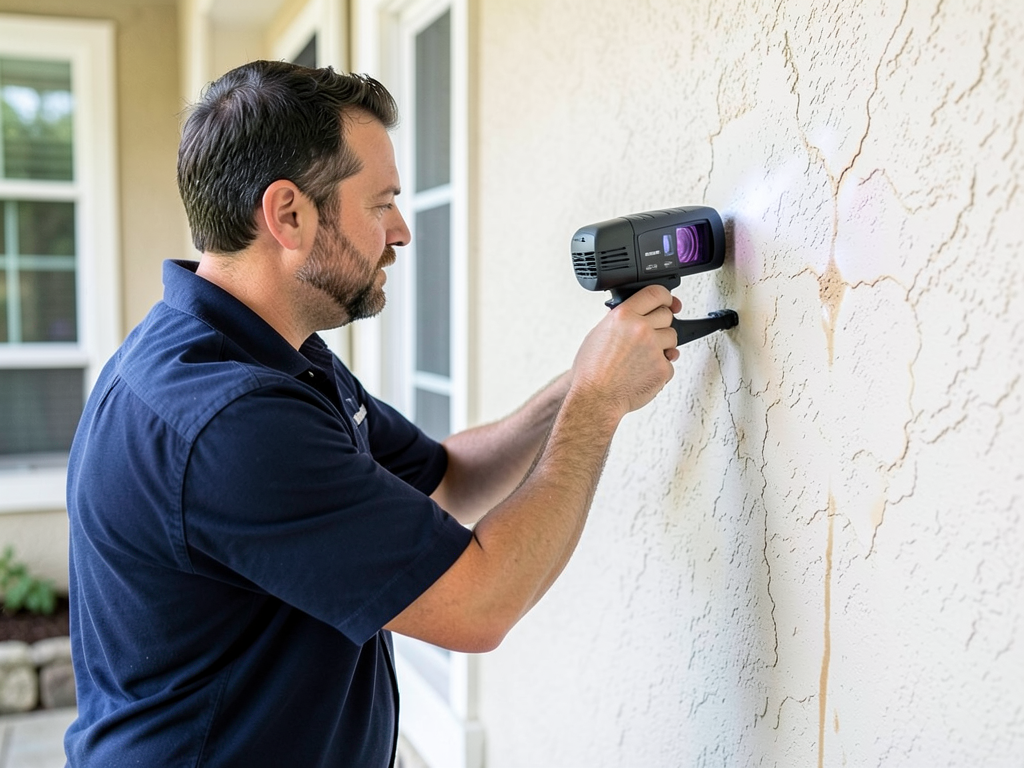
Infrared thermography detects temperature differences caused by moisture presence. Wet materials hold heat differently than dry materials, creating thermal patterns visible through infrared cameras. This technology allows technicians to scan large wall areas quickly and identify moisture pockets without destructive testing.. Read more about How to Identify Siding Failure that is Secretly Rotting Your Sheathing in World Golf Village.
Moisture meters measure the electrical resistance of materials to determine water content. Pin-type meters penetrate the surface to measure moisture at specific depths, while non-invasive meters use radio frequency to scan without damaging the surface. Both methods help create a moisture map of affected areas.
Boroscope inspection involves inserting a small camera through tiny holes drilled in walls. This allows direct visual confirmation of moisture damage, mold growth, and structural conditions inside wall cavities. The camera reveals the true extent of damage that surface inspection cannot detect.
Relative humidity testing in wall cavities helps determine if conditions support ongoing mold growth. Even after visible water is removed, high humidity levels can sustain microbial activity. Professional testing ensures all moisture sources are identified and addressed.
Repair Process and Building Code Requirements
Florida Building Code Section 1405.13 requires proper moisture protection for exterior wall assemblies. This code mandates specific details for weep screed installation, flashing integration, and drainage plane construction. Repairs must comply with these requirements to prevent future water intrusion.
The repair process begins with complete moisture mapping to determine the affected area’s boundaries. This step prevents unnecessary demolition while ensuring all damaged materials are identified. Infrared scanning and moisture metering create a comprehensive picture of the damage extent.
Damaged stucco removal follows the moisture map. Technicians remove all compromised material, typically cutting back to sound substrate. This process often reveals more extensive damage than initially visible, as rot and mold spread beyond the immediate water entry point.
Structural repairs address any compromised framing members. Rotted wood requires complete removal and replacement with pressure-treated lumber. In severe cases, this may involve floor joist or wall stud replacement to restore structural integrity.
New moisture barriers install according to current building code requirements. This includes proper integration with existing flashings, windows, and other penetrations. The drainage plane must direct water outward, away from the building envelope.
Stucco reapplication matches the original texture and color as closely as possible. Professional applicators use the same techniques and materials to ensure the repair blends seamlessly with surrounding areas. This step requires skill and experience to achieve invisible repairs.
Insurance Coverage Considerations
Most homeowners insurance policies cover sudden, accidental water damage but exclude long-term moisture intrusion. Insurance companies often argue that stucco cracks develop gradually, making the damage a maintenance issue rather than a covered peril.
Hurricane-related damage typically receives better coverage treatment than gradual deterioration. If a storm event caused your stucco to crack and allowed water entry, you have a stronger claim case. Document storm damage with photos and professional assessments immediately after any severe weather event.
Mold remediation coverage varies significantly between insurance companies and policy types. Some policies exclude mold entirely, while others limit coverage to specific amounts. Understanding your policy’s mold provisions before damage occurs helps you make informed decisions about repairs.
Professional restoration companies often assist with insurance documentation and claims filing. Their experience with similar cases helps present your damage in the most favorable light for coverage approval. This service adds value beyond the physical repair work.
Prevention Strategies for Southside Homeowners
Regular stucco inspection prevents minor issues from becoming major problems. Examine your home’s exterior annually, paying special attention to areas around windows, doors, and roof lines where different materials meet. Look for new cracks, discoloration, or surface deterioration.
Seal small cracks promptly using elastomeric caulk designed for stucco repair. These flexible sealants move with building expansion and contraction while maintaining a water-resistant barrier. Address cracks wider than 1/8 inch with professional evaluation to determine underlying causes.
Maintain proper drainage around your home’s foundation. Ensure gutters and downspouts direct water away from stucco walls. Grade soil to slope away from the foundation, preventing water from pooling against exterior walls during heavy rains.
Install or repair kick-out flashing where roofs meet walls. This metal flashing directs water into gutters rather than allowing it to flow behind stucco surfaces. Missing or damaged kick-out flashing is a common cause of water intrusion in Southside homes.
Consider professional moisture barrier upgrades for older homes. Building codes have evolved significantly since many Southside homes were constructed. Modern moisture management systems provide better protection against Jacksonville’s humid climate.
Cost Factors and Timeline Expectations
Repair costs vary widely based on damage extent, accessibility, and required structural repairs. Minor stucco crack sealing might cost a few hundred dollars, while comprehensive moisture remediation with structural repairs can exceed ten thousand dollars.
The repair timeline depends on damage severity and weather conditions. Simple crack repairs might complete in one day, while major remediation projects often require one to two weeks. Hurricane season timing affects scheduling, as storm damage creates high demand for restoration services.
Permit requirements add time to the process but ensure repairs meet current building codes. Southside Jacksonville falls under Duval County permitting jurisdiction, and most structural repairs require permits and inspections. Professional restoration companies handle permitting as part of their service.
Living arrangements during repairs depend on the affected area’s extent. Minor repairs allow you to remain in your home, but major structural work might require temporary relocation for safety reasons. Your restoration company should discuss these logistics during the initial assessment.. Read more about Why Your Chimney is Leaking Into Your Living Room During an Arlington Thunderstorm.
Choosing the Right Restoration Partner
Water damage restoration requires specialized knowledge beyond general contracting. Look for companies with specific experience in stucco moisture remediation and building science understanding. The right partner brings technical expertise and insurance navigation experience to your project.
Verify credentials including Florida contractor licenses, IICRC certifications, and mold remediation licenses from the Florida Department of Business and Professional Regulation. These credentials ensure compliance with state regulations and industry best practices.
Request references from Southside Jacksonville homeowners with similar stucco repair projects. Local experience matters because it includes understanding of neighborhood-specific construction methods and common failure patterns in your area.
Professional restoration companies provide detailed written proposals outlining the scope of work, materials specifications, and warranty information. Avoid companies offering vague estimates or pressure sales tactics. Quality work requires thorough assessment and clear communication.
Insurance coordination capability represents a crucial service differentiator. Companies experienced with Southside homeowners’ insurance claims can help maximize your coverage while ensuring all necessary repairs receive proper documentation.
Frequently Asked Questions
How can I tell if my stucco has water damage?
Look for brown streaks, bubbling paint, musty odors, white efflorescence deposits, or visible cracks wider than 1/8 inch. These signs indicate moisture has penetrated your wall system and requires professional inspection.
Is stucco repair covered by homeowners insurance?
Coverage depends on the damage cause. Sudden storm damage typically receives better coverage than gradual deterioration. Most policies exclude long-term moisture intrusion as a maintenance issue rather than a covered peril.
How long does stucco water damage repair take?
Timeline varies from one day for minor crack sealing to two weeks for major remediation with structural repairs. Hurricane season demand and permit requirements also affect scheduling.
Can I repair stucco cracks myself?
Small cracks under 1/8 inch can be sealed with elastomeric caulk. However, larger cracks or those with signs of moisture damage require professional assessment to address underlying causes and prevent recurring problems.
What causes stucco to crack in Jacksonville’s climate?
High humidity, driving rain, hurricane winds, and sandy soil with high water tables create constant stress on stucco systems. Building settlement and thermal expansion also contribute to crack development over time.
How much does stucco water damage repair cost?
Costs range from a few hundred dollars for minor repairs to over ten thousand dollars for comprehensive remediation with structural repairs. The extent of hidden damage significantly impacts final costs.
Take Action Before More Damage Occurs
Small stucco cracks in your Southside Jacksonville home are not just cosmetic flaws. They are warning signs of potential structural damage, mold growth, and costly repairs waiting to happen. Florida’s humid climate and frequent storms create conditions where minor issues escalate quickly into major problems.
Professional moisture detection and repair services can identify hidden damage before it compromises your home’s structural integrity. The cost of inspection and early repairs typically saves thousands compared to addressing advanced rot and mold remediation.
Don’t wait for water stains to appear on your interior walls or for musty odors to signal active mold growth. The damage behind your stucco is already progressing with each passing storm and humid day.
Call (904) 839-6500 today to schedule your professional stucco inspection. Our experienced technicians use infrared thermography and moisture meters to detect hidden water intrusion and provide comprehensive repair solutions that protect your Southside Jacksonville home for years to come.
Pick up the phone and call (904) 839-6500 before the next storm hits. Early detection and repair prevent the extensive structural damage and mold problems that turn simple stucco cracks into major restoration projects.