How long does it actually take to dry out a house in North Florida?
Most Jacksonville homes need 3-5 days of professional drying after water damage. But here’s the critical catch: North Florida’s 70-80% average humidity means your house could stay damp for weeks without industrial equipment. That extra moisture creates perfect conditions for mold growth within 24-48 hours. Fast Flood Water Extraction for Jacksonville Beach Homeowners.
The real answer depends on water category, structural materials, and whether you’re dealing with a slab home in Mandarin or a pier-and-beam house in Riverside. Let’s break down exactly what affects drying time in Jacksonville’s unique climate. Water Damage Restoration Neptune Beach.
What determines house drying time in Jacksonville?
Three factors control how long your home stays wet after a pipe burst or flood. First is water volume. A small bathroom leak dries faster than standing water in your living room. Second is water category. Clean water from a broken supply line poses less risk than black water from a sewage backup. Third is structural materials. Concrete blocks in newer Mandarin homes absorb differently than the wood framing in historic Riverside houses. Water Damage Restoration Green Cove Springs.
Jacksonville’s coastal humidity adds another layer of complexity. When outdoor air holds 80% moisture, your wet walls can’t evaporate water into that saturated environment. Standard household fans won’t overcome this physics problem.. Read more about When to patch and when to replace water damaged drywall in your home.
Professional drying equipment for North Florida homes
Professional restorers use Low Grain Refrigerant (LGR) dehumidifiers that can pull 20-30 gallons of water from the air daily. These machines work by cooling air below its dew point, then reheating it to create a vapor pressure differential. This process continues until materials reach their dry standard.. Read more about Decoding a water damage restoration estimate so you don’t overpay.
Air movers create the airflow needed to evaporate surface moisture. Technicians place them at 45-degree angles every 10-16 linear feet along wet walls. The combination of dehumidification and airflow can reduce drying time by 60% compared to natural evaporation.
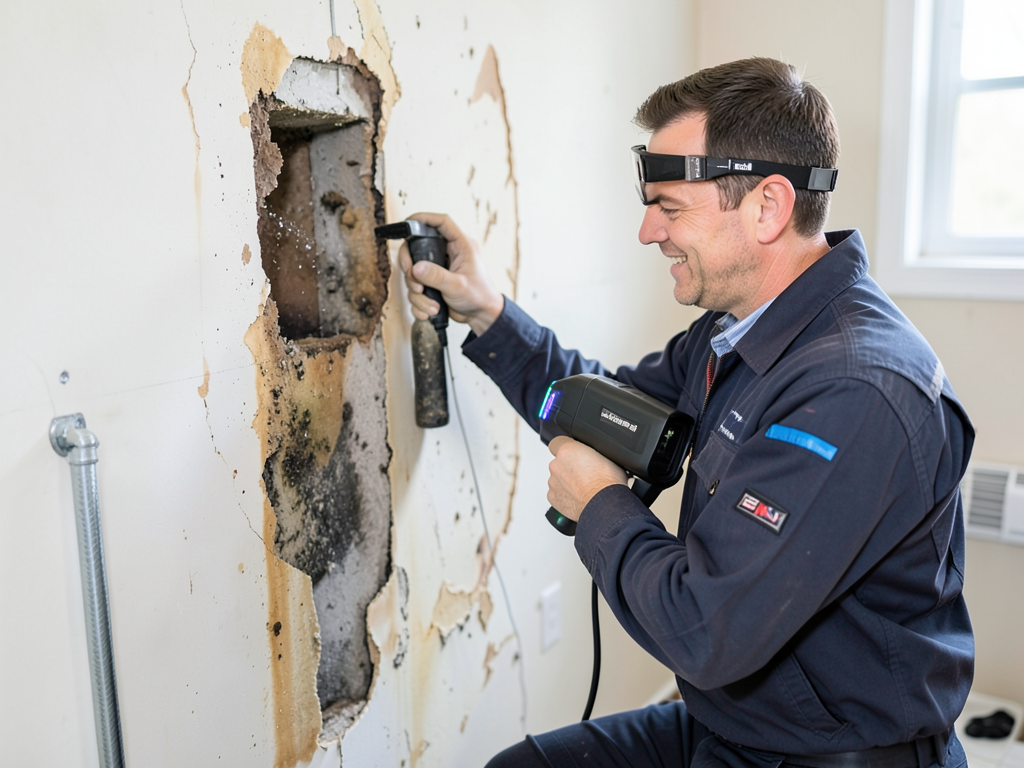
Moisture meters and thermal imaging cameras help professionals verify when materials are actually dry. A wood stud might feel dry to touch but still contain 20% moisture content. The IICRC S500 standard requires materials to reach 12% moisture content or less for wood framing. IICRC S500 Standard.
Material-specific drying timelines in Jacksonville homes
Different materials in your home dry at vastly different rates. Understanding these timelines helps you know what to expect during restoration.
| Material | Typical Drying Time | Jacksonville Factor |
|---|---|---|
| Standard drywall | 24-72 hours | Coastal humidity may extend to 4-5 days |
| Hardwood flooring | 7-14 days | Engineered wood swells faster in humidity |
| Concrete slab | 7-21 days | High water table slows evaporation |
| Crawl space wood | 5-10 days | Ground moisture adds drying complexity |
| Carpet and pad | 24-48 hours | Padding must be removed in most cases |
Concrete presents unique challenges in Jacksonville. The city’s high water table means groundwater pressure can force moisture back into drying concrete. This often extends slab drying times beyond the national average.. Read more about Which pieces of water damaged furniture are actually worth saving in your Sunbeam home.
The mold growth risk in Jacksonville’s climate
Mold begins growing within 24-48 hours when materials stay above 16% moisture content. Jacksonville’s heat accelerates this timeline. A wet carpet pad left for 72 hours in July might need complete replacement due to mold contamination.
The St. Johns River’s proximity affects indoor humidity levels throughout the year. Homes near the river often experience 5-10% higher indoor humidity than those in inland neighborhoods like Argyle or Oakleaf. This means mold prevention requires more aggressive drying in waterfront communities.
Professional restorers track humidity using psychrometric charts. These charts show the relationship between temperature, relative humidity, and moisture content. When outdoor conditions prevent effective drying, technicians create micro-environments using containment barriers and specialized equipment.
DIY vs. professional drying: what actually works
Homeowners often ask if they can dry their own homes after minor water damage. The answer depends on water category and affected area size. Clean water from a supply line break in a small area might dry with household fans in 5-7 days. But that timeline assumes perfect conditions.
Professional drying uses 200-300 CFM air movers and 70-100 pint dehumidifiers per 1,000 square feet. A homeowner’s box fan moves 2,000 CFM but lacks the pressure differential needed for deep material drying. The result is surface drying that leaves moisture trapped in walls and subfloors.
Insurance companies often require professional documentation of drying progress. Without moisture mapping and drying logs, you might face denied claims for secondary damage that occurs during inadequate DIY drying attempts.
Jacksonville building codes and drying requirements
Florida Building Code Section 1403.3 requires proper moisture control in all residential construction. This means homes must be built to resist moisture intrusion, but it also means restoration must meet specific standards when water damage occurs.
The Florida Department of Business and Professional Regulation (DBPR) licenses mold assessors and remediators. Any restoration project involving mold growth over 10 square feet requires licensed professionals. This protects homeowners from improper remediation that could cause health issues. EPA Mold Guidelines.
Jacksonville’s building age affects drying strategies. Homes built before 1980 often contain plaster walls that dry much slower than modern drywall. The city’s historic districts like San Marco and Riverside have unique construction methods that require specialized drying approaches.
Preventing secondary damage during the drying process
Secondary damage occurs when water migrates to previously unaffected areas. This happens through capillary action in materials, vapor pressure differentials, and gravity. A wet wall can transfer moisture to adjacent drywall within 24 hours.
Professional restorers use containment strategies to prevent this spread. They might create drying chambers with polyethylene sheeting and negative air pressure. This focuses equipment on affected areas while protecting the rest of your home from humidity increases.
Content manipulation is another critical step. Furniture on wet carpet wicks moisture upward. Paper documents absorb humidity from the air. Electronics can suffer corrosion from elevated moisture levels. Proper content management prevents thousands in secondary damage.. Read more about Can you actually save wet electronics and documents after a flood in Southpoint?.
Cost factors in professional house drying
Drying costs depend on equipment needs, labor time, and monitoring requirements. A typical 1,500 square foot home might need 4-6 air movers and 2-3 dehumidifiers running 24/7 for 3-5 days. This equipment rental alone costs $200-400 per day.
Labor includes moisture mapping, equipment setup, daily monitoring, and final verification. Technicians take readings every 24 hours to track progress. They adjust equipment placement based on these readings, which affects total drying time and cost.
Insurance coverage varies significantly. Most policies cover sudden water damage but exclude gradual damage or maintenance issues. The cause of loss determines whether drying costs are covered or considered part of the overall claim.. Read more about Five plumbing maintenance tasks to prevent flooding in your Deerwood estate.
Emergency steps before professionals arrive
If you discover water damage, your immediate actions affect drying time and damage extent. First, stop the water source if possible. Second, remove standing water using mops, towels, or a wet vacuum. Third, move wet items to dry areas.
Open windows only if outdoor humidity is below 60%. Jacksonville’s typical afternoon humidity makes this ineffective most days. Running your air conditioner helps but won’t replace professional equipment for significant water events.
Document everything with photos and videos before cleanup begins. This documentation helps with insurance claims and provides a baseline for damage assessment. Note the time water was discovered and any steps taken to mitigate damage. Sump Pump Failure Cleanup.
Frequently Asked Questions
How can I tell if my house is actually dry?
Professionals use moisture meters that penetrate materials to check internal moisture content. Surface dryness doesn’t indicate internal dryness. Wood should read below 12% moisture content, and drywall should show no moisture reading at all.
Will my insurance cover the drying process?
Most homeowner policies cover sudden and accidental water damage, including professional drying. Coverage depends on the water source and whether the damage was gradual or sudden. Document all damage and contact your insurance company immediately.
How long before mold becomes a problem?
Mold can begin growing within 24-48 hours in Jacksonville’s warm, humid climate. The risk increases significantly after 72 hours of continuous moisture exposure. Professional drying within 24-48 hours prevents most mold growth scenarios.
Can I stay in my home during the drying process?
Small drying projects might allow you to stay home with some inconvenience. Large projects with extensive equipment and containment barriers often require temporary relocation. The noise from air movers and equipment placement affects livability.
Getting your Jacksonville home dry quickly
Time matters more than you think when water damages your home. Every hour of delay increases mold risk and extends drying time. Jacksonville’s humidity means natural drying rarely works without professional equipment.
Professional restorers bring industrial-grade equipment, moisture detection technology, and experience with local building materials. They understand how Jacksonville’s climate affects drying times and can adjust strategies accordingly.
The right equipment makes the difference between 3-day and 3-week drying times. LGR dehumidifiers, commercial air movers, and moisture monitoring systems work together to return your home to pre-loss condition as quickly as possible.
Don’t let water damage turn into a mold nightmare. Call (904) 839-6500 today to schedule your inspection. Our team serves all Jacksonville neighborhoods and understands the unique challenges of drying homes in North Florida’s humid climate.
Pick up the phone and call (904) 839-6500 before the next storm hits. We’re ready to protect your home with professional drying services that work in Jacksonville’s challenging climate.
You may also find this helpful. Saltwater vs freshwater flooding and what it means for your Mayport property.