Why your Fort Caroline attic is dripping water even when it isn’t raining
Your Fort Caroline attic shouldn’t feel like a tropical rainforest. When you walk up there and feel cold, damp air or see water droplets forming on wood beams, something is wrong. The good news is that the problem usually isn’t a roof leak. The bad news is that Florida’s high humidity combined with poor attic ventilation can create a perfect storm for moisture damage. Florida Building Code.
Fort Caroline sits in a unique microclimate where the St. Johns River’s proximity and dense tree canopy trap humidity. This creates attic conditions where warm, moist air meets cold surfaces from your air conditioning system. The result is condensation that looks and feels exactly like a roof leak, but the water is actually coming from inside your home’s air. Fast Flood Water Extraction for Jacksonville Beach Homeowners.
Understanding attic condensation in Fort Caroline
Attic condensation happens when warm, humid air contacts cold surfaces. In Fort Caroline homes, this typically occurs around your HVAC ductwork, roof decking, and insulation. When your air conditioner runs, the metal ducts become cold. If humid air from your living space or outside leaks into the attic, it hits these cold surfaces and releases moisture as water droplets. Fixing Attic Water Damage After a Northside Jacksonville Storm.
The science is simple but the damage is real. Water dripping in your attic can lead to mold growth, wood rot, and ceiling stains below. Many Fort Caroline homeowners mistake this for a roof leak and call a roofer, only to find the problem persists after expensive repairs. EPA Mold Resources.
Common causes of attic moisture in Fort Caroline homes
Several factors contribute to attic condensation in Fort Caroline. The area’s average relative humidity stays above 75% for much of the year. When this moist air enters your attic through gaps around light fixtures, plumbing vents, or poorly sealed attic hatches, it creates the perfect conditions for condensation.
HVAC ductwork is often the biggest culprit. When supply and return ducts aren’t properly insulated, they sweat like a cold drink on a hot day. This condensation can drip onto insulation, ceiling joists, and eventually through your ceiling below. The problem gets worse when your AC runs constantly during Florida’s long cooling season.
Another common issue is inadequate attic ventilation. Fort Caroline homes need proper soffit and ridge vents to create airflow that carries moisture out. When these vents are blocked by insulation or never installed correctly, humid air gets trapped and condenses on cold surfaces.
How to identify attic condensation versus a roof leak
Knowing what you’re dealing with saves time and money. Roof leaks typically show up as water stains that grow larger after rain and often follow roof lines or penetrate around chimneys and vents. Condensation problems appear as uniform moisture across large areas, especially near HVAC equipment or in the center of the attic away from exterior walls. Water Damage Restoration Neptune Beach.
Condensation often creates a musty smell before you see visible water. You might notice mold growing on the north side of roof trusses where airflow is poorest. The water from condensation is usually clean and doesn’t carry the brown or gray tint that roof leak water often has from dirt and debris. Water Damage Restoration Green Cove Springs.
A simple test involves checking the attic during different weather conditions. If you see moisture during dry, humid weather but not during rainy periods, you’re likely dealing with condensation rather than a roof leak.
The role of HVAC systems in attic moisture problems
Your air conditioning system is both a blessing and a potential problem in Fort Caroline attics. While it cools your home, it also creates cold surfaces that attract moisture. The issue becomes severe when your HVAC system has undersized or damaged ductwork insulation.
Supply ducts carrying cold air should have R-8 insulation minimum in Florida’s climate. Return ducts need similar protection. When insulation is missing or degraded, metal ducts sweat profusely. This water can collect in insulation, drip onto drywall below, or create mold-friendly environments in your attic.. Read more about What to do first when you see water dripping through the ceiling in Duval Station.
Another HVAC-related issue involves the air handler and condensate drain lines. If these drain improperly or the drain pan cracks, water can accumulate in your attic. Unlike condensation, this water comes from the AC system itself and requires different repairs than humidity-related moisture.
Building code requirements for attic ventilation in Florida
Florida Building Code Section 1203.2 requires minimum attic ventilation to prevent moisture accumulation. For Fort Caroline homes, this means providing net free ventilation area equal to 1/150 of the attic floor area, or 1/300 if certain conditions are met like balanced high and low ventilation.
The code specifically addresses Florida’s humid climate by requiring proper vapor barriers and ventilation strategies. Soffit vents should provide balanced intake air, while ridge vents or gable vents create exhaust flow. Without this balanced system, humid air gets trapped and creates condensation problems.
Many Fort Caroline homes built before 2002 may not meet current ventilation standards. Retrofitting proper ventilation often solves chronic moisture problems without expensive mold remediation or roof repairs.
Warning signs of attic moisture damage
Early detection prevents expensive repairs. Watch for these warning signs in your Fort Caroline home: water stains on ceilings below the attic, especially in the center of rooms away from exterior walls; mold growth on attic rafters or roof decking; a persistent musty odor in upper floors; and insulation that feels damp or heavy.
Condensation often creates patterns you can recognize. You might see water droplets forming on nail heads poking through roof decking, creating what looks like a line of rust spots. This happens because the metal conducts cold better than wood, attracting more condensation.
Another sign is frost formation during cooler months. When humid air hits freezing metal ducts or roof surfaces, it creates frost that melts into water once temperatures rise. This freeze-thaw cycle can damage wood and create ongoing moisture problems.
Health risks from attic moisture and mold
Moisture in your attic isn’t just a structural problem it affects your family’s health. The humid conditions that cause condensation also promote mold growth. Common molds in Fort Caroline attics include Aspergillus, Cladosporium, and in severe cases, Stachybotrys chartarum (black mold).
These molds release spores and microbial volatile organic compounds that can trigger allergies, asthma attacks, and respiratory infections. Children, elderly family members, and those with compromised immune systems are especially vulnerable. The musty smell you notice often comes from these compounds, not just the moisture itself.
Beyond mold, excess moisture attracts pests like termites and carpenter ants. These insects thrive in damp wood and can cause additional structural damage beyond what the moisture alone creates.
Professional solutions for attic moisture problems
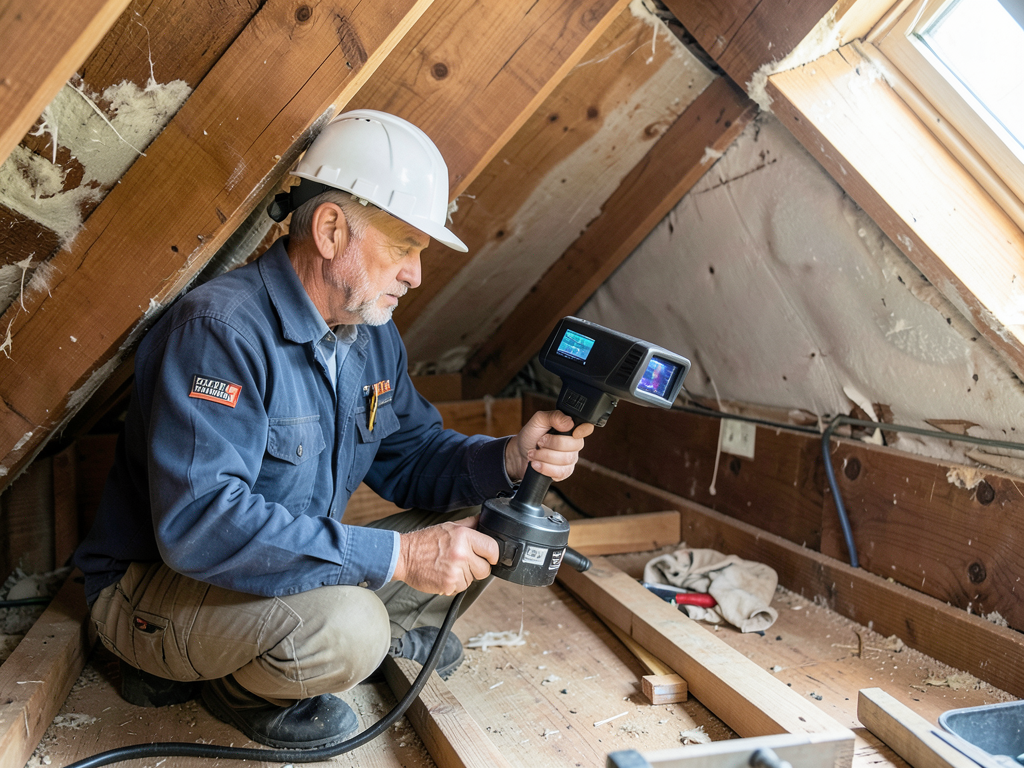
Fixing attic condensation requires a systematic approach. A professional inspection starts with moisture mapping using thermal imaging cameras to identify cold spots where condensation forms. This technology reveals temperature differences that indicate where humid air contacts cold surfaces.. Read more about Comparing thermal imaging and moisture meters for finding hidden leaks.
The next step involves checking HVAC ductwork insulation. Technicians measure existing R-values and identify gaps where humid air can infiltrate. They also inspect the air handler for proper condensate drainage and check for any system leaks that could contribute to moisture problems.
Ventilation assessment follows. This includes measuring existing vent areas, checking for blockages, and ensuring proper intake and exhaust balance. In some cases, adding powered attic ventilators or improving passive ventilation can solve chronic moisture issues.
Prevention strategies for Fort Caroline homeowners
Preventing attic condensation starts with controlling humidity levels in your home. Keep indoor humidity between 40-50% using dehumidifiers during Florida’s wet seasons. This reduces the amount of moisture that can enter your attic through gaps and penetrations.
Seal attic penetrations around light fixtures, plumbing vents, and attic hatches using fire-rated caulk or foam. These small gaps can let surprising amounts of humid air into your attic space. Pay special attention to areas where walls meet ceilings, as these are common infiltration points.
Regular HVAC maintenance prevents many condensation problems. Change filters monthly during peak cooling season, schedule annual professional tune-ups, and ensure condensate drain lines flow freely. A well-maintained system produces less condensation and operates more efficiently.
When to call a professional
Some attic moisture problems require professional intervention. Call an expert if you notice persistent water stains that don’t go away, see visible mold growth covering more than a few square feet, or smell musty odors that worsen when your AC runs.
Professional remediation becomes critical when moisture has caused structural damage. If you notice sagging roof decking, soft wood, or extensive mold colonies, the problem has progressed beyond simple fixes. These situations often require containment, HEPA filtration, and specialized cleaning to address safely. Repairing Sagging or Water Damaged Ceilings in Springfield.
Insurance considerations also matter. Many homeowners policies exclude mold damage unless it results from a covered peril like a sudden pipe burst. Understanding your coverage helps you make informed decisions about professional versus DIY approaches.
Cost factors for attic moisture remediation
The cost to fix attic condensation varies widely based on the extent of the problem. Simple fixes like adding insulation or improving ventilation might cost $500-$2,000. More complex issues involving mold remediation can range from $3,000 to $15,000 depending on the affected area size.
Factors affecting cost include the need for mold testing and clearance, extent of structural repairs required, and whether HVAC modifications are necessary. Homes with extensive mold growth often need temporary containment and air scrubbing, which adds to the overall expense.
Preventative measures typically cost less than remediation. Investing in proper attic ventilation during construction or early in your home ownership can save thousands in potential future repairs.
DIY steps you can take safely
Homeowners can address some moisture issues safely. Start by checking your attic during daylight hours with the lights off. Look for daylight coming through roof penetrations, which indicate gaps that need sealing. Use a flashlight to inspect ductwork insulation for tears or missing sections.
Check your attic ventilation by ensuring soffit vents aren’t blocked by insulation. You should see light coming through these vents from inside the attic. If they’re blocked, you can carefully move insulation back to allow airflow, being careful not to compress it against the roof decking.
Monitor your indoor humidity using a hygrometer. If levels consistently exceed 60%, consider using portable dehumidifiers or having your HVAC system evaluated for proper sizing and operation.
Long-term solutions for Fort Caroline homes
Fort Caroline’s unique climate requires specific long-term strategies. Consider upgrading to closed-cell spray foam insulation in your attic. This type of insulation provides both thermal resistance and moisture control, creating a more stable attic environment.
Install smart humidity monitors that alert you to rising moisture levels before damage occurs. These devices can connect to your smartphone and provide early warnings about developing condensation problems.
Evaluate your home’s overall building envelope. Older Fort Caroline homes may benefit from whole-house dehumidification systems that work with your existing HVAC to maintain optimal humidity levels year-round.
Understanding the impact of seasonal changes
Attic moisture problems often follow seasonal patterns in Fort Caroline. Summer brings the highest humidity levels, while spring and fall can create temperature differentials that promote condensation. Understanding these patterns helps you anticipate and prevent problems.
During hurricane season, power outages can disable your AC system. Without active cooling, attic temperatures rise and humidity levels increase dramatically. This creates prime conditions for condensation once power returns and cold surfaces form again.
Winter months, though mild in Fort Caroline, can still create condensation when outdoor temperatures drop below indoor levels. This is especially true on north-facing roof slopes that receive less sun warming.
Comparing moisture sources and solutions
| Moisture Source | Common Signs | Primary Solutions | Prevention Cost Range |
|---|---|---|---|
| Condensation on ducts | Water droplets on metal, insulation stains | Duct insulation upgrade, sealing gaps | $800 – $3,000 |
| Poor ventilation | Uniform moisture, hot attic in summer | Vent addition, airflow improvement | $500 – $2,500 |
| Roof leak | Stains following roof lines, active dripping | Roof repair, flashing replacement | $1,000 – $8,000 |
| Plumbing leak | Localized wet spots, mold near pipes | Plumbing repair, drywall replacement | $500 – $4,000 |
Frequently Asked Questions
Why does my attic smell musty even when it’s dry outside?
A musty smell usually indicates mold growth from past moisture problems. Even after the water source is fixed, mold can continue releasing volatile compounds. The smell often comes from microbial volatile organic compounds (mVOCs) produced by active mold colonies in your attic insulation or on wood surfaces.
Can I install a dehumidifier in my attic to solve moisture problems?
While possible, attic dehumidifiers are often ineffective as standalone solutions. They require regular maintenance, proper drainage, and significant energy use. They work best as part of a comprehensive moisture control strategy that includes ventilation improvements and source elimination.
How long does it take for mold to grow in a damp attic?
Under optimal conditions, mold can begin growing within 24-48 hours of moisture exposure. In Fort Caroline’s humid climate, this timeline can be even shorter. Once established, mold colonies can spread rapidly across wood surfaces and insulation.
Will improving my attic ventilation increase my energy bills?
Properly designed attic ventilation typically improves energy efficiency by reducing heat buildup in summer and moisture problems year-round. While powered ventilators use electricity, the overall impact on your bills is usually positive when compared to the cost of moisture damage repairs.
Should I remove all my attic insulation if it gets wet?
Not necessarily. Fiberglass insulation can often be dried and reinstalled if it hasn’t been contaminated by sewage or been wet for extended periods. However, if you notice mold growth or the insulation has lost its insulating properties, replacement is usually the better option.
How can I tell if my attic moisture problem is covered by insurance?
Coverage depends on the cause. Sudden, accidental damage like a pipe burst is typically covered, while gradual problems like condensation from poor ventilation often aren’t. Review your policy or consult with your insurance agent about specific coverage for moisture and mold damage.
Take action before moisture becomes mold
Attic condensation in Fort Caroline homes is a common but fixable problem. The key is early detection and proper diagnosis. Don’t wait until you see ceiling stains or smell musty odors. A professional inspection can identify moisture sources before they cause expensive damage.
If you’re noticing any signs of attic moisture water stains, musty smells, or visible condensation call (904) 839-6500 today to schedule your inspection. Our experienced technicians understand Fort Caroline’s unique climate challenges and can provide targeted solutions that address the root cause, not just the symptoms.
Don’t let a simple condensation problem turn into a major mold remediation project. Pick up the phone and call (904) 839-6500 before the next humid night creates more attic moisture. Your home and your family’s health deserve professional attention from experts who know Fort Caroline attics inside and out.